
Poached Salmon Fillets
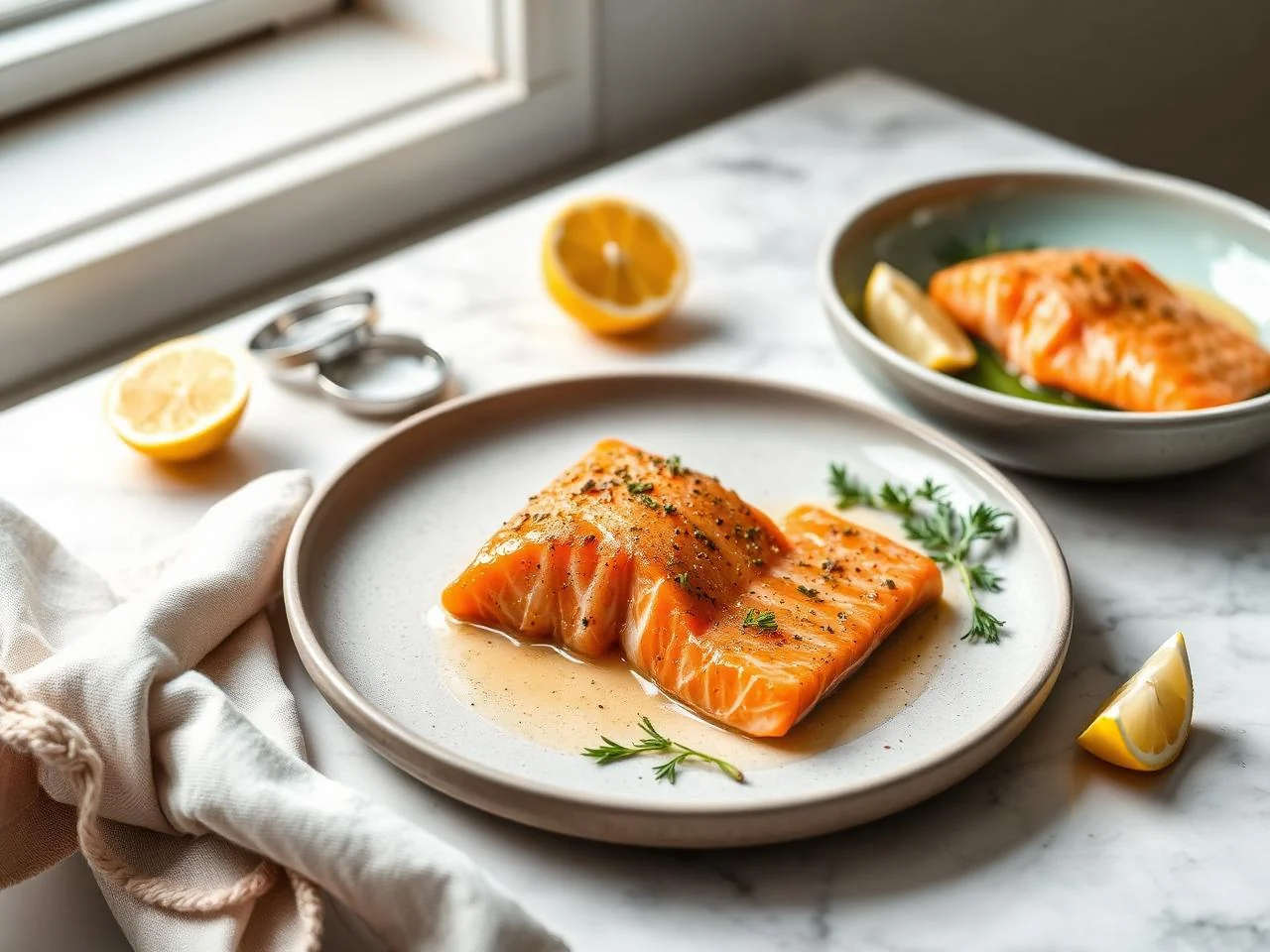
As a coastal home cook, I've always been passionate about demystifying seafood for nervous cooks. One of my favorite ways to prepare salmon is by poaching it, which not only ensures a moist and flavorful dish but also makes it incredibly easy to achieve. In this recipe, I'll guide you through the simple steps to create a mouthwatering poached salmon fillet that's sure to impress your family and friends.
Personally, I love poached salmon because it's a versatile dish that can be served in various settings, from a casual weeknight dinner to a special occasion. The best part is that it's surprisingly easy to make, requiring minimal ingredients and effort. With this recipe, you'll be able to enjoy a delicious and healthy meal that's packed with protein and omega-3 fatty acids.
So, what makes this recipe special? For starters, it's incredibly easy to follow, even for those who are new to cooking seafood. The poaching liquid is flavorful and aromatic, and the salmon fillets are cooked to perfection. Plus, the dish is ready in under 30 minutes, making it an ideal option for busy weeknights. Whether you're a seasoned cook or just starting out, this recipe is sure to become a staple in your kitchen.
In this article, I'll share my tips and tricks for making the perfect poached salmon fillets. From selecting the freshest ingredients to cooking the salmon to the right temperature, I'll cover it all. So, let's get started and dive into the world of poached salmon!
One of the things I love about this recipe is its flexibility. You can serve the poached salmon fillets with a variety of sides, from roasted vegetables to quinoa or brown rice. The dish is also perfect for meal prep, as it can be cooked ahead of time and refrigerated or frozen for later use. With its numerous health benefits and delicious flavor, poached salmon is an excellent addition to any meal plan.
Why You’ll Love This Recipe
- This recipe is easy to follow and requires minimal ingredients and effort.
- The poaching liquid is flavorful and aromatic, making the salmon fillets delicious and moist.
- The dish is ready in under 30 minutes, making it an ideal option for busy weeknights.
- The recipe is flexible and can be served with a variety of sides, from roasted vegetables to quinoa or brown rice.
- The dish is perfect for meal prep, as it can be cooked ahead of time and refrigerated or frozen for later use.
- Poached salmon is an excellent source of protein and omega-3 fatty acids, making it a healthy and nutritious option.
Why This Recipe Works
The key to making great poached salmon fillets is to use a flavorful poaching liquid and to cook the salmon to the right temperature. In this recipe, we'll be using a combination of white wine, lemon juice, and herbs to create a delicious and aromatic poaching liquid. The acidity in the lemon juice helps to break down the proteins in the salmon, making it tender and flaky.
Another important factor is the temperature of the poaching liquid. We'll be cooking the salmon at a low temperature, which helps to prevent it from becoming tough or overcooked. This method also ensures that the salmon retains its moisture and flavor, making it a truly delicious dish.
Finally, the resting time after cooking is crucial. By letting the salmon fillets rest for a few minutes, we allow the juices to redistribute, making the fish even more tender and flavorful. This step is often overlooked, but it's essential for achieving the perfect texture and taste.
Overall, this recipe works because it combines simple yet effective techniques to create a mouthwatering dish. By following these steps and using the right ingredients, you'll be able to make poached salmon fillets that are sure to impress your family and friends.
Ingredients You’ll Need
To make this recipe, you'll need a few simple ingredients, including fresh salmon fillets, white wine, lemon juice, and herbs. When selecting the salmon, look for fillets that are fresh and have a nice pink color. You can also use frozen salmon, but make sure to thaw it first.
For the poaching liquid, you'll need a combination of white wine, lemon juice, and herbs. You can use any type of white wine you like, but a dry wine works best. Fresh herbs such as parsley, dill, or thyme add a nice flavor and aroma to the dish.
- 4 salmon fillets (6 oz each)Look for fresh salmon fillets with a nice pink color. You can also use frozen salmon, but make sure to thaw it first.
- 1 cup white wineUse a dry white wine, such as Chardonnay or Sauvignon Blanc, for the best flavor.
- 1/2 cup lemon juiceFreshly squeezed lemon juice is best, but you can also use bottled lemon juice.
- 1/4 cup chopped fresh parsleyUse fresh parsley for the best flavor and aroma.
- 2 tbsp chopped fresh dillFresh dill adds a nice flavor and aroma to the dish.
- 1 tsp dried thymeDried thyme is a convenient alternative to fresh thyme and works well in this recipe.
- 1 tsp saltUse kosher salt or sea salt for the best flavor.
- 1/2 tsp black pepperFreshly ground black pepper is best, but you can also use pre-ground pepper.
- 2 tbsp unsalted butterUnsalted butter is best for this recipe, as it allows you to control the amount of salt in the dish.
- 2 lemons, cut into wedgesUse fresh lemons for the best flavor and aroma.
Equipment You’ll Need
How to Make Poached Salmon Fillets
- 1Rinse the salmon fillets under cold water and pat them dry with paper towels.
- 2In a large saucepan, combine the white wine, lemon juice, parsley, dill, thyme, salt, and pepper.
- 3Bring the poaching liquid to a simmer over medium heat and cook for 5 minutes.
- 4Reduce the heat to low and add the salmon fillets to the poaching liquid.
- 5Cook the salmon for 8-10 minutes, or until it reaches an internal temperature of 145 F (63 C). Use an instant-read thermometer to check the temperature in the thickest part of the fillet.
- 6Remove the salmon from the poaching liquid and place it on a plate.
- 7Add the unsalted butter to the poaching liquid and whisk until it's melted and the sauce is smooth.
- 8Spoon the sauce over the salmon fillets and serve with lemon wedges on the side.
- 9Let the salmon rest for 2-3 minutes before serving to allow the juices to redistribute.
- 10Serve the poached salmon fillets with your choice of sides, such as roasted vegetables or quinoa.
- 11Garnish with fresh parsley or dill, if desired.
Expert Tips
- Use a large saucepan with a lid to cook the salmon, as this will help to distribute the heat evenly.
- Make sure to pat the salmon fillets dry with paper towels before cooking to remove excess moisture.
- Don't overcrowd the saucepan with too many salmon fillets, as this can cause the fish to stick together.
- Use a whisk to mix the poaching liquid and sauce, as this will help to combine the ingredients smoothly.
- Don't overcook the salmon, as this can make it dry and tough.
- Let the salmon rest for a few minutes before serving to allow the juices to redistribute.
- Serve the poached salmon fillets with a variety of sides, such as roasted vegetables or quinoa, to add texture and flavor to the dish.
- Garnish with fresh herbs, such as parsley or dill, to add a pop of color and flavor to the dish.
Common Mistakes to Avoid
- Overcooking the salmon, which can make it dry and tough.
- Not patting the salmon fillets dry with paper towels before cooking, which can cause excess moisture to accumulate.
- Not using a large enough saucepan, which can cause the salmon to stick together.
- Not whisking the poaching liquid and sauce smoothly, which can cause the sauce to be lumpy.
- Not letting the salmon rest for a few minutes before serving, which can cause the juices to run out of the fish.
- Not serving the poached salmon fillets with a variety of sides, which can make the dish seem boring and unappetizing.
Variations and Substitutions
- Add some garlic or onion to the poaching liquid for extra flavor.
- Use different types of herbs, such as basil or rosemary, to change up the flavor of the dish.
- Add some lemon slices or wedges to the poaching liquid for extra citrus flavor.
- Use chicken or vegetable broth instead of white wine for a non-alcoholic version of the dish.
- Add some capers or chopped fresh parsley to the sauce for extra flavor and texture.
- Serve the poached salmon fillets with a side of quinoa or brown rice for a nutritious and filling meal.
- Garnish with some chopped fresh dill or parsley for a pop of color and flavor.
What to Serve With Poached Salmon Fillets
Serve the poached salmon fillets with a variety of sides, such as roasted vegetables or quinoa, to add texture and flavor to the dish. You can also serve it with a side of steamed asparagus or green beans for a healthy and delicious meal.
Some other options for serving the poached salmon fillets include serving it with a side of roasted potatoes or a salad with mixed greens and a citrus vinaigrette. You can also serve it with a side of grilled or sautéed vegetables, such as bell peppers or zucchini, for a flavorful and nutritious meal.
Make-Ahead, Storage, Freezing and Reheating
To store the poached salmon fillets, let them cool to room temperature and then refrigerate or freeze them. You can store them in an airtight container in the refrigerator for up to 3 days or freeze them for up to 2 months.
To reheat the poached salmon fillets, simply microwave them for 30-60 seconds or until they're heated through. You can also reheat them in the oven at 350°F (180°C) for 5-10 minutes or until they're heated through.
It's also a good idea to label and date the containers so you can easily keep track of how long they've been stored. You can also add a note with reheating instructions so you can easily reheat the salmon fillets when you're ready to eat them.
In addition to storing the poached salmon fillets, you can also store the poaching liquid and sauce in an airtight container in the refrigerator for up to 3 days or freeze them for up to 2 months. Simply reheat the sauce and serve it over the poached salmon fillets for a delicious and flavorful meal.
Frequently Asked Questions
What type of salmon is best for poaching?
Any type of salmon can be used for poaching, but wild-caught salmon is generally considered to be of higher quality and have a better flavor than farmed salmon.
How do I know when the salmon is cooked?
The salmon is cooked when it reaches an internal temperature of 145 F (63 C). You can use an instant-read thermometer to check the temperature in the thickest part of the fillet.
Can I use frozen salmon for poaching?
Yes, you can use frozen salmon for poaching, but make sure to thaw it first. Frozen salmon can be just as flavorful and delicious as fresh salmon, but it may have a slightly different texture.
How do I store the poached salmon fillets?
To store the poached salmon fillets, let them cool to room temperature and then refrigerate or freeze them. You can store them in an airtight container in the refrigerator for up to 3 days or freeze them for up to 2 months.
Can I reheat the poached salmon fillets?
Yes, you can reheat the poached salmon fillets. Simply microwave them for 30-60 seconds or until they're heated through. You can also reheat them in the oven at 350°F (180°C) for 5-10 minutes or until they're heated through.
What are some good sides to serve with poached salmon?
Some good sides to serve with poached salmon include roasted vegetables, quinoa, brown rice, steamed asparagus, and green beans. You can also serve it with a salad with mixed greens and a citrus vinaigrette.
Can I add flavorings to the poaching liquid?
Yes, you can add flavorings to the poaching liquid, such as garlic, onion, or lemon slices. You can also use different types of herbs, such as basil or rosemary, to change up the flavor of the dish.
How do I prevent the salmon from sticking to the pan?
To prevent the salmon from sticking to the pan, make sure to pat it dry with paper towels before cooking and use a non-stick pan or a pan with a small amount of oil or butter.
Ingredients
- 4 salmon fillets (6 oz each)
- 1 cup white wine
- 1/2 cup lemon juice
- 1/4 cup chopped fresh parsley
- 2 tbsp chopped fresh dill
- 1 tsp dried thyme
- 1 tsp salt
- 1/2 tsp black pepper
- 2 tbsp unsalted butter
- 2 lemons, cut into wedges
Instructions
- Rinse the salmon fillets under cold water and pat them dry with paper towels.
- In a large saucepan, combine the white wine, lemon juice, parsley, dill, thyme, salt, and pepper.
- Bring the poaching liquid to a simmer over medium heat and cook for 5 minutes.
- Reduce the heat to low and add the salmon fillets to the poaching liquid.
- Cook the salmon for 8-10 minutes, or until it reaches an internal temperature of 145 F (63 C). Use an instant-read thermometer to check the temperature in the thickest part of the fillet.
- Remove the salmon from the poaching liquid and place it on a plate.
- Add the unsalted butter to the poaching liquid and whisk until it's melted and the sauce is smooth.
- Spoon the sauce over the salmon fillets and serve with lemon wedges on the side.
- Let the salmon rest for 2-3 minutes before serving to allow the juices to redistribute.
- Serve the poached salmon fillets with your choice of sides, such as roasted vegetables or quinoa.
- Garnish with fresh parsley or dill, if desired.