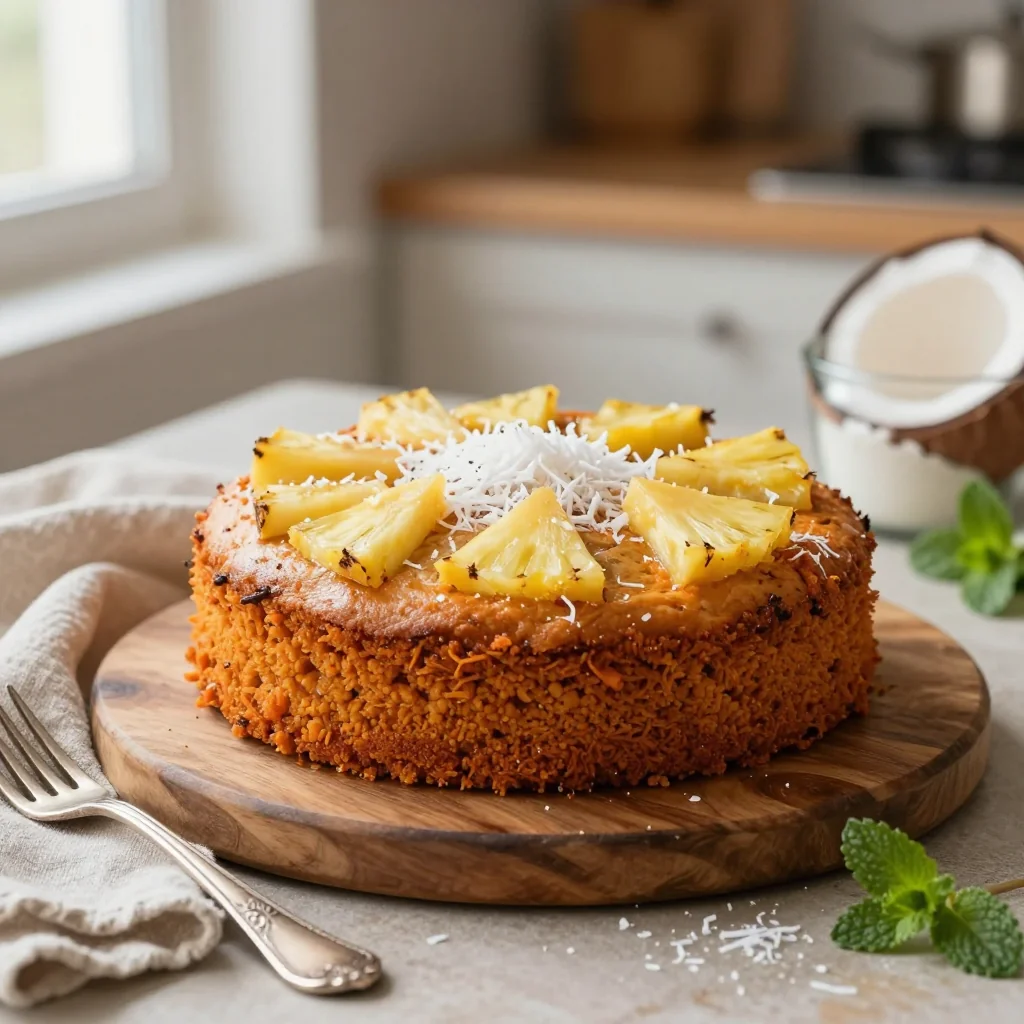
A tropical twist on a classic favorite—moist carrot cake infused with sweet pineapple and toasted coconut.
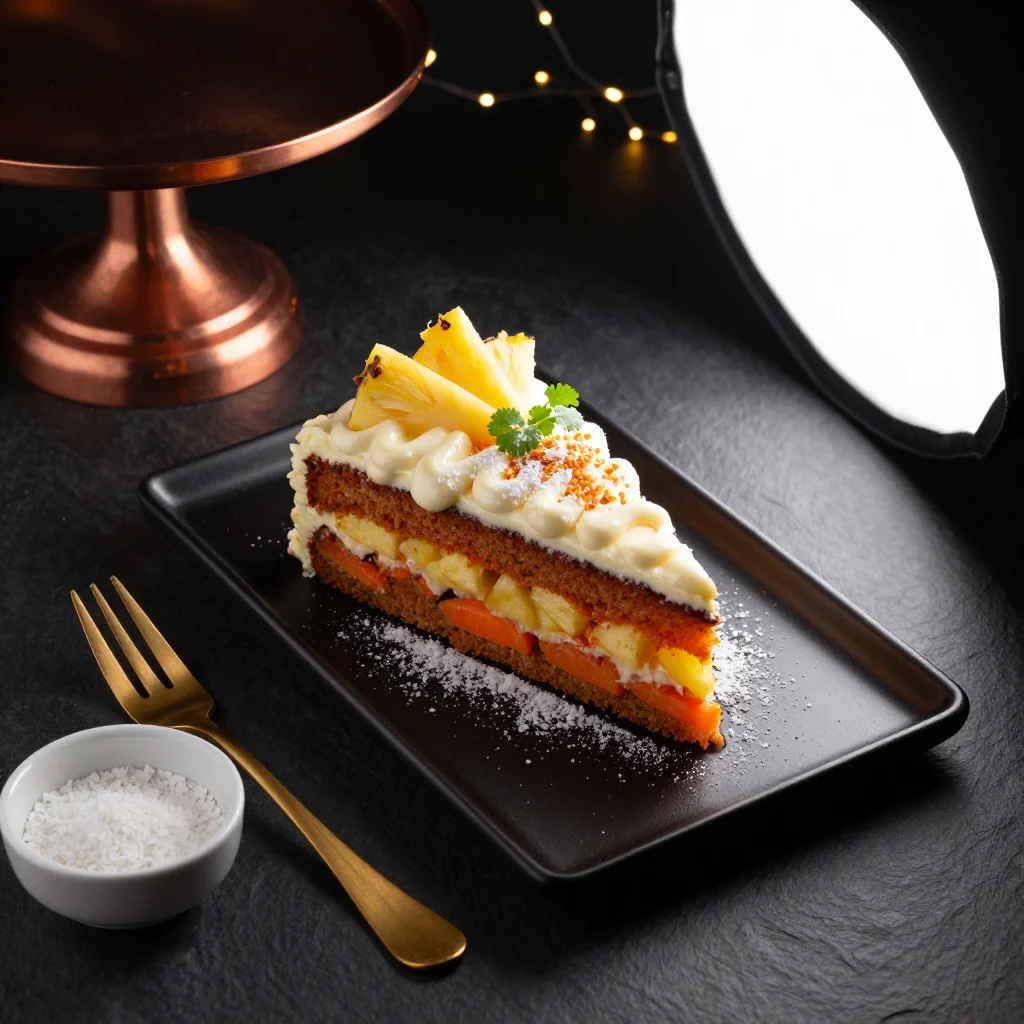
The first time I tasted a slice of carrot cake drenched in the bright, sunny flavor of pineapple, I was transported back to my childhood summers in the Caribbean, where the air was thick with the scent of tropical fruit and the sea. I remember my grandmother’s kitchen, a small, bustling space where the clatter of pots blended with the rhythmic hum of a fan, and the scent of freshly grated carrots mingled with toasted coconut. That memory sparked a lifelong love affair with comfort desserts that also whisper of adventure.
Carrot cake, originally a humble way to hide vegetables in a sweet treat, has evolved across continents. In the United States it became a birthday staple, while in Europe it found its place on tea tables. By adding pineapple and coconut, I’m paying homage to the tropical islands that inspired my palate, creating a bridge between the familiar and the exotic.
In this article you’ll discover the science behind a perfectly moist crumb, the secret to a glossy, not-too-sweet frosting, and the step‑by‑step method that guarantees a cake that rises evenly, stays tender, and dazzles with a burst of pineapple sweetness. You’ll also learn how to adjust the recipe for any number of guests without compromising texture.
I’m thrilled to share this recipe with you, and I hope you’ll feel as confident wielding a whisk as you do a paintbrush—creating a masterpiece that’s as pleasing to the eyes as it is to the palate.
🌟 Why This Recipe Will Win Your Heart
Carrot cake is already a crowd‑pleaser; add pineapple and coconut, and you get a multi‑dimensional dessert that balances spice, sweetness, and texture.
- ✨ Moisture Mastery: The combination of grated carrots, crushed pineapple, and oil creates a batter that stays moist for days, eliminating the dreaded dry crumb.
- ✨ Tropical Aroma: Pineapple releases volatile compounds during baking that fill your kitchen with a fragrant, island‑style perfume, making the cake irresistible even before it’s sliced.
- ✨ Textural Contrast: Toasted coconut adds a subtle crunch that contrasts beautifully with the tender crumb, while walnuts (optional) provide an extra layer of nuttiness.
- ✨ Balanced Sweetness: Using both granulated and brown sugar gives depth—caramel notes from the brown sugar balance the bright pineapple, preventing cloying sweetness.
- ✨ Versatile Frosting: A light cream‑cheese frosting with a hint of vanilla complements the cake without overpowering it, and the additional toasted coconut on top adds visual appeal.
- ✨ Easy Scaling: Thanks to the built‑in portion adjuster, you can serve 4, 8, or even 20 guests with the same flawless texture, making it perfect for intimate brunches or large celebrations.
🥗 Ingredients
📝 Complete Ingredient List
For the Cake Batter:
For the Coconut Cream Cheese Frosting:
For Garnish (Optional):
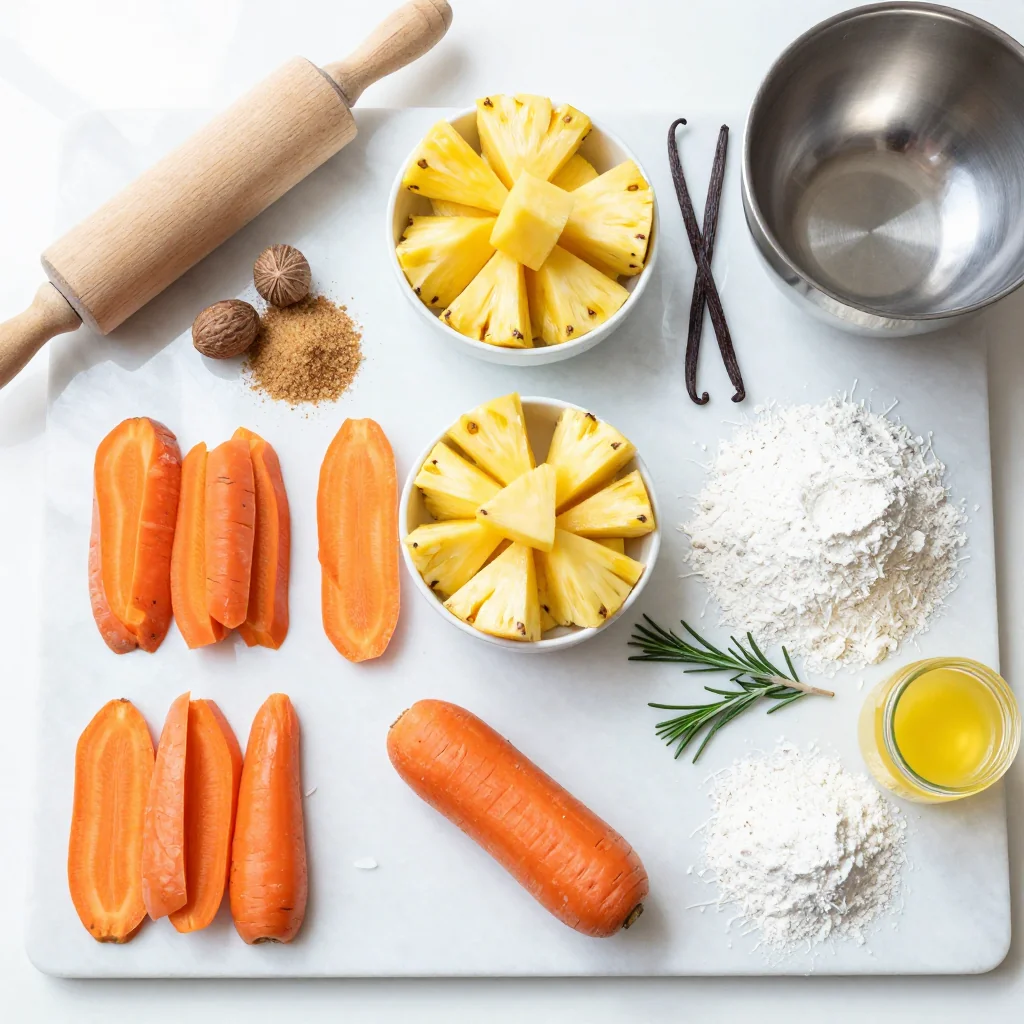
🔍 Focus on Key Ingredients
Carrots
Carrots provide natural moisture and a subtle sweetness that forms the backbone of the cake. Choose carrots that are firm and brightly colored; avoid any that feel rubbery or have green tops. Grating them finely ensures an even distribution of moisture throughout the batter, preventing pockets of dry crumb.
Pineapple
Fresh or well‑drained canned pineapple adds a tropical tang that cuts through the richness of the oil and sugar. The acidity balances the spice, while the fruit’s natural sugars caramelize slightly during baking, creating tiny pockets of juicy sweetness.
Toasted Coconut
Toasting coconut brings out a nutty, buttery flavor and adds a pleasant crunch. Lightly toast in a dry skillet over medium heat, stirring constantly, until golden brown. This step is essential; untoasted coconut can taste raw and watery.
🔄 Quick Substitutions
| If you don’t have… | Use instead… |
|---|---|
| All‑purpose flour | Whole‑wheat flour (use 90% of the amount) |
| Vegetable oil | Canola oil or melted coconut oil |
| Cream cheese | Greek yogurt (full‑fat) mixed with a touch of mascarpone |
👨🍳 Step‑by‑Step Instructions
Follow these detailed steps to create a cake that’s moist, flavorful, and beautifully presented.
📋 Phase 1: Preparation & Mise en Place
Gather, measure, and prep all ingredients before you start mixing.
Preheat Oven & Prepare Pan
Set your oven to 175 °C (350 °F). Grease a 23 cm (9‑inch) round cake pan with butter, then line the bottom with parchment paper. Lightly dust the greased sides with flour, tapping out any excess. This ensures the cake releases cleanly after baking.
Grate Carrots & Drain Pineapple
Peel the carrots and grate them using a medium‑grated box grater. Place the grated carrots in a large mixing bowl. Open the canned pineapple, drain thoroughly, and pat dry with paper towels to remove excess juice that could make the batter soggy.
Toast Coconut & Toast Walnuts (if using)
In a dry skillet over medium heat, toast the shredded coconut until it turns a light golden brown, stirring constantly (about 3‑4 minutes). Transfer to a plate to cool. If you’ve opted for walnuts, toast them in the same skillet until fragrant, about 2 minutes.
🔥 Phase 2: Mixing & Baking
Combine dry and wet components, then bake to perfection.
Mix Dry Ingredients
In a separate bowl, whisk together flour, baking powder, baking soda, salt, cinnamon, and nutmeg. Ensure the spices are evenly distributed to avoid pockets of concentrated flavor.
Blend Wet Ingredients
In a large electric mixer, beat the eggs, granulated sugar, and brown sugar on medium speed until the mixture becomes pale and slightly fluffy (about 2‑3 minutes). Slowly drizzle in the vegetable oil while the mixer runs, creating an emulsion that adds richness without curdling.
Combine Wet & Dry, Then Add Carrots & Pineapple
Gradually add the dry ingredient mixture to the wet batter, folding gently with a spatula until just incorporated. Fold in the grated carrots, drained pineapple, toasted coconut, and walnuts (if using). The batter should be thick but still pourable; avoid over‑mixing.
Transfer to Pan & Bake
Pour the batter into the prepared pan, smoothing the top with a spatula. Bake for 45‑50 minutes, or until a toothpick inserted into the centre emerges clean with a few moist crumbs. The cake will spring back slightly when pressed gently.
✨ Phase 3: Frosting, Finishing & Serving
Cool, frost, and garnish for a stunning final presentation.
Cool the Cake
Allow the cake to cool in the pan for 10 minutes, then run a thin knife around the edges, invert onto a wire rack, and let it cool completely (about 30 minutes). This prevents the frosting from melting.
Prepare the Coconut Cream Cheese Frosting
In a clean bowl, beat the softened cream cheese and butter together until smooth and creamy. Gradually add powdered sugar, one cup at a time, beating on low speed. Finish with vanilla extract and the remaining toasted coconut, mixing until just combined.
Frost & Garnish
Spread an even layer of frosting over the top and sides of the cooled cake using an offset spatula. Decorate with extra toasted coconut flakes, pineapple wedges, and a sprig of fresh mint for color contrast.
Slice with a hot, wet knife for clean cuts, and serve at room temperature for the best flavor.
💡 Expert Tips & Tricks
🛒 Choosing the Right Ingredients
Opt for organic carrots when possible; they tend to be sweeter and have a brighter color. For pineapple, select chunks that are firm yet yielding to gentle pressure—this indicates ripeness without being over‑ripe. When buying shredded coconut, choose the unsweetened variety and toast it yourself for maximum flavor.
🔪 Preparation Techniques
Grate carrots using a medium grater to achieve a texture that melts in the mouth yet provides enough structure. When measuring flour, spoon it into the measuring cup and level it with a straight edge; this prevents a dense cake caused by packed flour.
🌡️ Mastering the Baking Process
Always preheat the oven fully before inserting the cake. Use an oven thermometer to verify temperature, as many ovens run hot or cool. Rotate the pan halfway through baking to ensure even browning, especially if your oven has hot spots.
🍽️ Presentation & Service
For a polished look, chill the frosted cake for 15 minutes before slicing; this firms the frosting. Serve each slice with a dollop of whipped coconut cream and a dusting of powdered sugar for an elegant finish.
🏆 Pro‑Level Secrets
Professional bakers distinguish themselves through precision, technique, and an understanding of how each ingredient behaves under heat.
- 🎯 Ingredient Temperature Harmony: All wet ingredients (eggs, butter, cream cheese) should be at room temperature. This prevents the batter from curdling and ensures the frosting emulsifies smoothly, giving a silky texture.
- 🎯 The “Cream of the Crop” Sugar Ratio: Using a 1:1 ratio of granulated to brown sugar creates caramel notes while retaining moisture. The molasses in brown sugar also deepens the cake’s color.
- 🎯 Air Incorporation Method: When beating the eggs and sugars, start on low speed and gradually increase to medium‑high. This gradual increase traps air, contributing to a lighter crumb.
- 🎯 Controlled Cooling: Cool the cake on a wire rack rather than a solid surface. Air circulation prevents condensation from making the bottom soggy and keeps the frosting from sliding off.
- 🎯 Frosting Consistency Check: If the frosting feels too thick, add a teaspoon of heavy cream; if too soft, add a little more powdered sugar. The goal is a spreadable yet stable consistency.
- 🎯 Portion Scaling Accuracy: The built‑in portion adjuster recalculates every ingredient based on a simple ratio, preserving the delicate balance between wet and dry components, even when you double the recipe.
“A cake is not just a dessert; it’s a story told through texture, flavor, and aroma.” — Dominique Ansel
🔄 Variations & Adaptations
This recipe is a versatile canvas. Feel free to experiment with flavors, dietary needs, or presentation styles.
🥬 Vegetarian / Vegan Version
Replace the eggs with 3 flax eggs (3 tablespoons ground flaxseed mixed with 9 tablespoons water, set for 5 minutes). Substitute butter with coconut oil and use a plant‑based cream cheese alternative for the frosting. The result is a fully vegan cake that retains moisture and flavor.
- Flax eggs provide binding and a subtle nutty note.
- Vegan cream cheese ensures the frosting stays creamy without dairy.
🌶️ Flavor Variations
Play with additional spices or complementary ingredients to create new taste profiles.
Spicy Version:
Add ¼ teaspoon cayenne pepper to the dry spice mix and a drizzle of honey over the frosting for a sweet‑heat balance.
Mediterranean Version:
Incorporate finely chopped dried apricots and a sprinkle of orange zest into the batter; finish with a drizzle of honey‑infused olive oil.
Asian Fusion Version:
Mix 1 tablespoon toasted sesame oil into the batter, replace vanilla with a splash of coconut milk, and garnish with toasted sesame seeds and a thin slice of fresh mango.
⚠️ Dietary Adaptations
Gluten‑Free:
Swap all‑purpose flour for a 1‑to‑1 gluten‑free flour blend that contains xanthan gum. The cake’s structure remains intact.
Lactose‑Free:
Use lactose‑free butter and a dairy‑free cream cheese (such as almond‑based) for the frosting. Coconut milk can replace the milk component in the batter.
Low‑Calorie:
Reduce sugar by 25 % and replace half the oil with unsweetened applesauce. The texture stays moist while cutting calories.
👶 Family / Kids Version
Kids love a sweeter, less spiced cake. Omit the nutmeg, increase the pineapple to 1 cup, and swirl a thin layer of chocolate ganache on top of the frosting. Serve with a side of vanilla ice cream for a fun dessert bar.
📦 Storage & Reheating
🧊 Conservation
Refrigerator:
- Duration: 5 days
- Container: Airtight cake dome or zip‑lock container
- Tip: Place a sheet of parchment paper directly on the frosting to prevent it from absorbing odors.
Freezer:
- Duration: 2 months
- Method: Wrap the cake tightly in plastic wrap, then foil; store in a freezer‑safe bag.
- Defrosting: Transfer to the refrigerator overnight, then let sit at room temperature for 30 minutes before serving.
💡 For best texture, freeze the cake without frosting, then frost after thawing.
♨️ Reheating
🔥 Oven (Recommended):
- Preheat to 150 °C (300 °F).
- Cover the cake loosely with aluminum foil.
- Heat for 10‑12 minutes.
- Remove foil and heat an additional 3‑4 minutes to restore a slight crust.
⚡ Microwave (Quick):
- Place a slice on a microwave‑safe plate.
- Cover with a microwave‑safe lid.
- Heat on medium power for 30‑45 seconds, then check; repeat in 15‑second bursts if needed.
🍳 Stovetop:
Warm a slice in a non‑stick skillet over low heat, covered, for 2‑3 minutes. This method preserves a soft crumb and slightly crisp edges.
🍷 Perfect Pairings
🥗 Side Dishes
- Fresh Tropical Fruit Salad: A mix of mango, papaya, and kiwi adds a refreshing contrast to the rich cake.
- Light Citrus Arugula Salad: Arugula tossed with orange segments, toasted almonds, and a honey‑lime vinaigrette balances sweetness.
- Caramelized Banana Slices: Warm bananas with a drizzle of caramel enhance the tropical theme.
🍷 Wine & Beverage Pairings
- Late Harvest Riesling: Its honeyed notes echo the pineapple while its acidity cuts through the richness.
- Spiced Rum Old Fashioned: The warm spices complement the cinnamon and nutmeg in the cake.
- Non‑Alcoholic Option: Sparkling coconut water with a splash of pineapple juice provides a light, refreshing match.
🍰 Completing the Meal
Start with a light citrus soup or a chilled gazpacho, move to the carrot cake as the centerpiece dessert, and finish with a scoop of vanilla bean ice cream or a dollop of whipped coconut cream for extra indulgence.
❓ Frequently Asked Questions
Q: Can I use fresh pineapple instead of canned?
A: Absolutely! Fresh pineapple adds a brighter flavor, but be sure to drain it well and pat dry. You may need to increase the amount slightly (about 1 ¼ cups) to account for moisture loss during draining.
Q: How do I prevent the cake from sinking in the middle?
A: Ensure all ingredients are at room temperature, avoid over‑mixing, and bake at the correct temperature. Using a metal springform pan can also provide even heat distribution. If you’re at a high altitude, increase the oven temperature by 15 °F and add an extra ½ teaspoon of baking powder.
Q: Is it okay to substitute oil with melted butter?
A: Yes, melted butter will give a richer flavor but may make the crumb slightly denser. If you choose butter, keep the quantity the same (240 ml) and consider adding a tablespoon of milk to maintain moisture.
Q: My frosting turned grainy—what went wrong?
A: Graininess usually stems from powdered sugar not fully dissolved. Beat the cream cheese and butter until smooth before adding sugar gradually. Scrape the sides of the bowl frequently and consider sifting the powdered sugar beforehand.
Q: Can I freeze the frosting separately?
A: Yes. Store the frosting in an airtight container in the freezer for up to 2 months. Thaw in the refrigerator overnight and re‑whip with a handheld mixer before using.
Q: How far in advance can I assemble the cake?
A: You can frost the cake up to 24 hours ahead and keep it refrigerated. Bring it to room temperature for 30 minutes before serving to ensure the frosting softens slightly.
🎉 Let’s Get Baking!
This carrot cake with pineapple and coconut is more than a dessert; it’s a celebration of texture, flavor, and tropical sunshine captured in a single slice. The moist crumb, the bright fruit, and the crunchy coconut combine to create a symphony that will impress guests and satisfy cravings alike. Whether you’re baking for a birthday, a holiday gathering, or a simple weekend treat, this recipe delivers consistent, crowd‑pleasing results.
Don’t hesitate to experiment with the variations, adjust the portions, and make the cake truly your own. Share your photos, tell us about your tweaks, and let the community taste your creativity. Happy baking!
Have you tried this recipe?
Leave a comment and rating below! Share your photos on Instagram with #TropicalCarrotCake for a chance to be featured.
Carrot Cake with Pineapple and Coconut
A moist, spice‑infused carrot cake brightened with pineapple and crowned with toasted coconut frosting.
📝 Ingredients
Cake Batter
Coconut Cream Cheese Frosting
👨🍳 Instructions
- Preheat the oven to 175 °C (350 °F) and prepare a 23 cm round pan.
- Grate carrots, drain pineapple, and toast coconut and walnuts.
- Whisk together dry ingredients in a bowl.
- Beat eggs with sugars, then slowly add oil while mixing.
- Fold dry mix into wet, then incorporate carrots, pineapple, coconut, and nuts.
- Pour batter into pan and bake 45‑50 min, checking with a toothpick.
- Cool cake completely before frosting.
- Beat cream cheese, butter, powdered sugar, vanilla, and toasted coconut for frosting.
- Frost the cake, garnish with pineapple wedges and extra coconut.
- Slice, serve, and enjoy with your favorite pairing.
🥗 Nutrition (per serving)
*Values are estimates based on standard ingredient data.