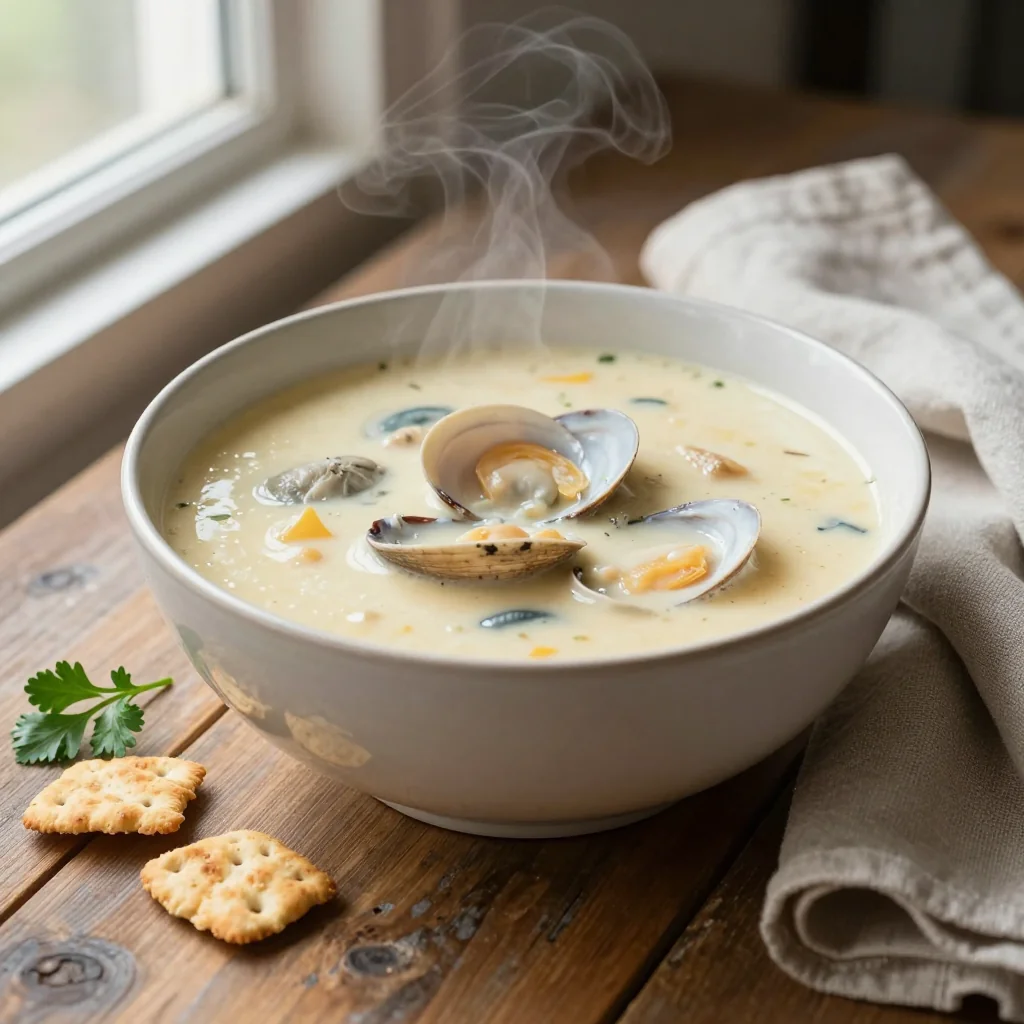
A velvety, briny bowl of comfort that captures the salty breeze of the Atlantic coast.
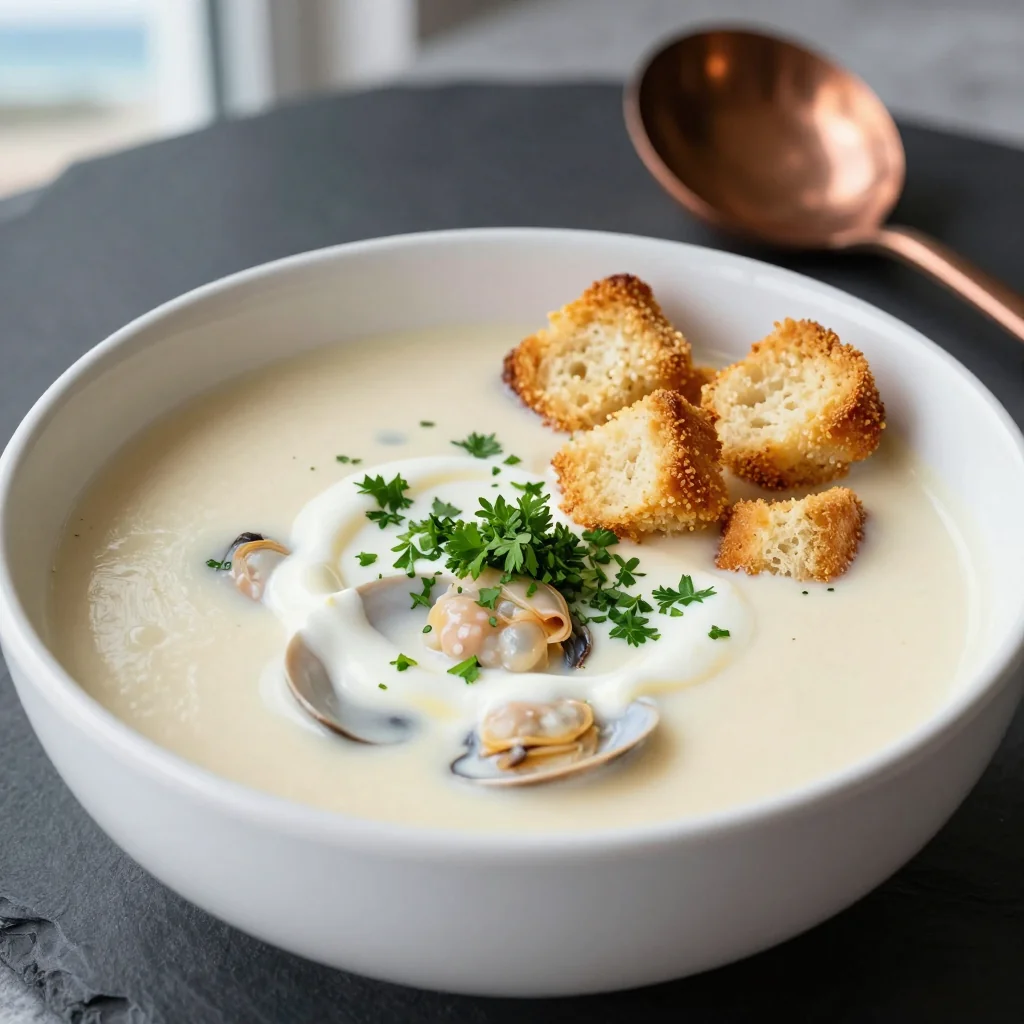
I still remember the first time I tasted a bowl of clam chowder on a chilly autumn afternoon in a tiny fishing village on the coast of Maine. The steam rose like a gentle fog, and the aroma of fresh clams, butter, and thyme wrapped around me like a warm blanket. It was more than a meal; it was a memory of salty sea breezes, laughter from the dockside tavern, and the comforting hum of a wood‑burning stove.
New England clam chowder has been a staple of coastal kitchens for centuries, originating from the early settlers who mixed native shellfish with the dairy‑rich traditions of English cooking. Over time, the recipe evolved into the creamy, hearty soup we love today, celebrated in lobster shacks and family gatherings alike.
In this article, I will walk you through every nuance of creating a perfectly balanced chowder— from selecting the freshest clams to mastering the silky roux that gives the soup its luxurious texture. You’ll discover why each step matters and how a few simple tricks can elevate a humble bowl into a restaurant‑quality experience.
Grab your apron, preheat your stove, and let’s bring a taste of New England’s coast to your kitchen. I’m excited to share this beloved recipe with you, and I promise the result will be a bowl of pure comfort that you’ll want to make again and again.
🌟 Why This Recipe Will Win Your Heart
Clam chowder is more than just a soup; it’s a celebration of the sea, the farm, and the art of comfort cooking.
- ✨ Authentic New England Flavor: By using locally sourced littleneck clams and a classic butter‑flour roux, the soup captures the true taste of the Atlantic coastline.
- ✨ Creamy Yet Light Texture: The balance of whole milk and heavy cream creates a velvety mouthfeel without feeling overly heavy.
- ✨ Simple Ingredient List: With just a handful of pantry staples, you can create a gourmet‑level dish without a trip to specialty stores.
- ✨ Versatile Serving Options: Whether you serve it in a rustic bowl with crusty bread or as a hearty main course, the chowder adapts beautifully.
- ✨ Nutrient‑Rich Seafood Benefits: Clams provide a natural source of iron, vitamin B12, and omega‑3 fatty acids, making the dish both comforting and nutritious.
- ✨ Crowd‑Pleaser Every Time: Its comforting aroma and rich flavor profile make it a hit at family gatherings, potlucks, and casual brunches alike.
🥗 Ingredients
📝 Complete Ingredient List
For the Soup Base:
For the Clams:
For Garnish:
🔍 Focus on Key Ingredients
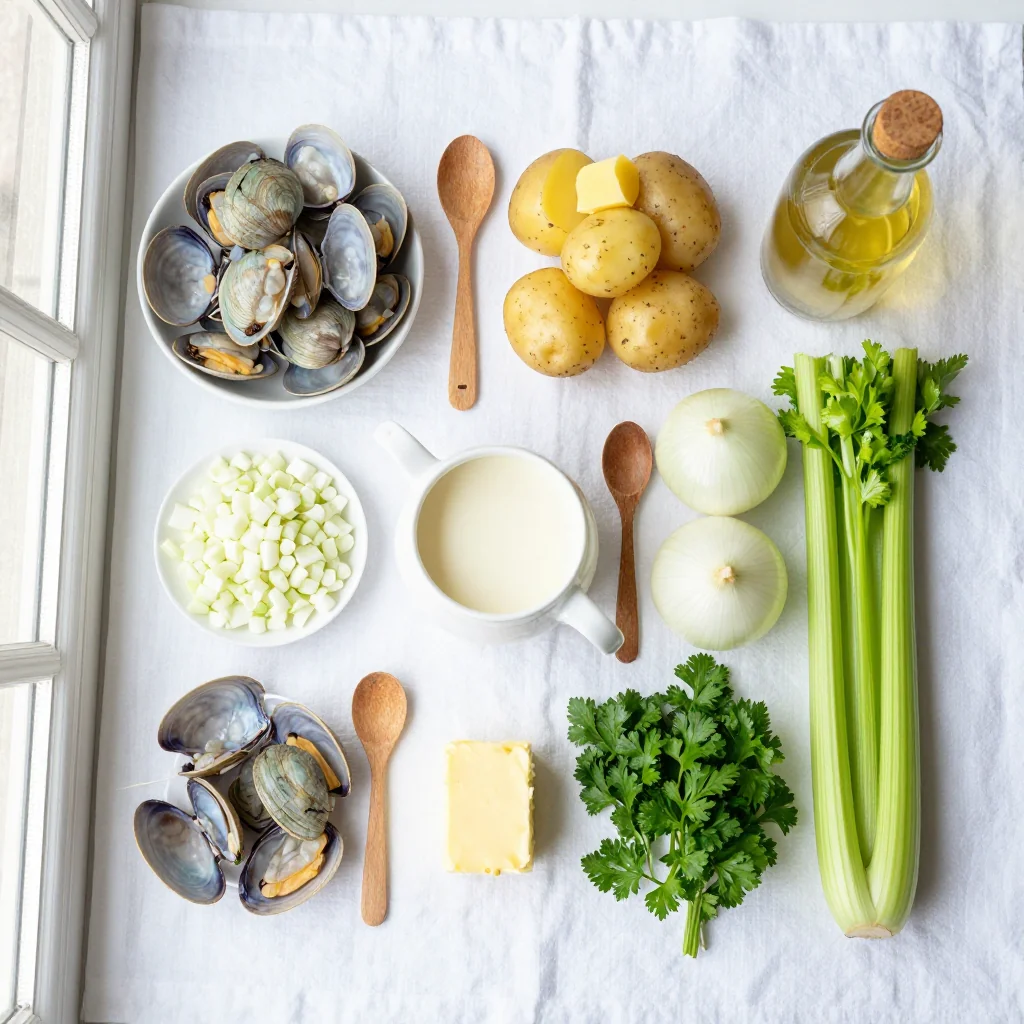
Littleneck Clams
Littleneck clams are prized for their sweet, briny flavor and tender texture. When selecting them, look for shells that are tightly closed; any that remain open may be dead and should be discarded. Rinse them under cold water and scrub the shells to remove sand. Their natural juices become the heart of the broth, providing the unmistakable oceanic depth that defines a true New England chowder.
Potatoes
Starchy potatoes, such as Yukon Gold or Russet, are essential for creating the soup’s hearty body. They absorb the flavors of the broth while releasing starch, which helps thicken the chowder without the need for excess flour. Cutting them into uniform ½‑inch cubes ensures even cooking and a pleasant bite.
Butter and Flour (Roux)
The roux is the foundation of the chowder’s silkiness. By gently melting butter and whisking in flour over low heat, you create a blond paste that will coat the vegetables and thicken the liquid without forming lumps. Patience is key—cooking the roux just long enough to lose the raw flour taste but not so long that it darkens.
🔄 Quick Substitutions
| If you don’t have... | Use instead... |
|---|---|
| Fresh clams | Canned clams (drained) + extra clam juice |
| Heavy cream | Half‑and‑half or whole milk with a splash of melted butter |
| Bacon | Smoked turkey bacon or omit for a lighter version |
👨🍳 Step‑by‑Step Instructions
Follow these detailed steps to create a chowder that feels both rustic and refined. Take your time, and remember that flavor builds gradually.
📋 Phase 1: Preparation & Mise en Place
Getting everything ready before you start cooking ensures a smooth, stress‑free process.
Prepare the Clams
Place the cleaned clams in a large pot with 2 cups of water, cover, and steam over medium heat for about 6‑8 minutes, or until all shells have opened. Using a slotted spoon, transfer the clams to a bowl, reserving the steaming liquid. Discard any clams that remain closed. Remove the meat from the shells, chop roughly, and set aside. Strain the reserved liquid through a fine‑mesh sieve to remove sand; this will become part of your broth.
Dice Bacon and Vegetables
While the clams steam, dice the bacon into small cubes. In a separate bowl, combine the chopped onion, celery, and potatoes. Having these components ready will allow you to add them quickly to the pot without overcooking.
🔥 Phase 2: Cooking & Assembly
This is where the flavors meld and the chowder thickens to its signature creamy consistency.
Cook Bacon and Make the Roux
In a heavy‑bottomed Dutch oven, cook the bacon over medium heat until crisp, about 5 minutes. Use a slotted spoon to remove the bacon and set aside, leaving the rendered fat. Add the butter to the same pot; once melted, sprinkle the flour over the butter, whisking constantly for 2‑3 minutes until the mixture turns a light golden color. This roux will thicken the chowder without imparting a raw flour taste.
Sauté Aromatics
Add the diced onion and celery to the roux, stirring for about 4 minutes until they become translucent and fragrant. This gentle cooking releases their natural sweetness, which balances the brininess of the clams.
Incorporate Liquids and Potatoes
Gradually whisk in the reserved clam juice, whole milk, and heavy cream, ensuring the mixture stays smooth. Add the cubed potatoes, dried thyme, and bay leaf. Bring the soup to a gentle simmer, then reduce the heat to low. Cover and let it cook for 12‑15 minutes, or until the potatoes are tender when pierced with a fork.
✨ Phase 3: Finishing & Plating
The final touches bring everything together for a perfect bowl.
Add Clams and Bacon
Stir in the chopped clam meat and the crisped bacon pieces. Warm through for 2‑3 minutes, allowing the clams to release any remaining juices into the broth. Taste and adjust seasoning with salt and freshly ground black pepper as needed.
Garnish and Serve
Ladle the chowder into warm bowls. Sprinkle each serving with fresh parsley and an extra pinch of cracked black pepper. For an authentic touch, serve with a slice of buttery New England-style soda bread or a crisp oyster cracker.
Enjoy Immediately
Creamy clam chowder is best enjoyed hot, straight from the pot. Pair it with a chilled glass of crisp white wine, and you’ll have a coastal feast that feels both homey and elegant.
💡 Expert Tips & Tricks
🛒 Choosing the Right Ingredients
Fresh clams are the soul of this dish. Look for clams that are tightly closed; a quick tap should cause them to snap shut. If any remain open, give them a gentle tap—if they don’t close, discard them. For potatoes, choose waxy varieties like Yukon Gold for a buttery texture. Finally, select a high‑quality butter and cream; the richer the dairy, the silkier the chowder.
🔪 Preparation Techniques
Keep all your ingredients pre‑measured and within arm’s reach before you start cooking. This “mise en place” approach prevents overcooking the delicate clams and ensures the roux stays lump‑free. When dicing onions and celery, aim for uniform pieces so they soften evenly.
🌡️ Mastering the Cooking Process
The key to a smooth chowder is gentle heat. After adding the dairy, keep the soup at a low simmer; a rolling boil can cause the cream to curdle. Use a whisk when incorporating the milk and cream to maintain a velvety texture. If the chowder looks too thin, let it simmer uncovered for a few extra minutes—the potatoes will release more starch.
🍽️ Presentation & Service
Serve the chowder in shallow, wide bowls to showcase the chunky potatoes and clams. A drizzle of extra cream in a decorative swirl adds visual appeal. Fresh parsley not only adds color but also a bright herbal note that cuts through the richness.
🏆 Pro Tips
Elevate your chowder from home‑cooked comfort to restaurant‑level excellence with these professional insights.
- 🎯 Control the Roux Temperature: Keep the roux on medium‑low heat and whisk constantly. Over‑heating can cause the flour to brown, altering the flavor profile and color of the chowder.
- 🎯 Use a Double Boiler for Cream: Adding cream over a gentle steam bath prevents it from scorching and ensures a smoother integration into the broth.
- 🎯 Finish with a Splash of Sherry: A teaspoon of dry sherry added at the end brightens the dish, enhancing the sea‑briny notes without overwhelming the palate.
- 🎯 Salt at the End: Because clam juice is naturally salty, wait until the final stage to adjust salt, preventing an overly salty final product.
- 🎯 Chill the Soup Before Reheating: If you’re making the chowder ahead of time, cool it rapidly in an ice bath. Reheat gently over low heat, adding a splash of milk if needed to restore creaminess.
- 🎯 Use a Handheld Immersion Blender: For a slightly smoother texture, blend half of the soup directly in the pot, leaving some chunks for texture contrast.
"A great clam chowder is the perfect balance of sea, earth, and comfort—like a warm hug from the ocean." — Chef Thomas Keller
🔄 Variations & Adaptations
The beauty of chowder lies in its flexibility. Below are several creative twists that let you tailor the dish to different dietary needs or flavor preferences while preserving its comforting core.
🥬 Vegetarian/Vegan Version
Replace the clams with a combination of seaweed (such as kombu or wakame) and smoked tofu to mimic the briny depth. Use plant‑based butter, oat milk, and coconut cream for richness. The result is a creamy, ocean‑inspired soup that satisfies vegans without sacrificing flavor.
- Swap 500 g clams for 300 g smoked tofu, diced, and 2 tbsp rehydrated kombu broth.
- Replace dairy with 2 cups oat milk and 1 cup coconut cream.
🌶️ Flavor Variations
Play with global spices to give the chowder an unexpected twist while retaining its creamy base.
Spicy Cajun Version:
Add 1 tsp Cajun seasoning and a dash of hot sauce during the simmering stage. Finish with sliced green onions for a subtle kick.
Mediterranean Version:
Incorporate ½ cup diced roasted red peppers, a pinch of smoked paprika, and garnish with fresh basil instead of parsley.
Asian Fusion Version:
Stir in 1 tbsp miso paste and a splash of soy sauce, then finish with a drizzle of sesame oil and garnish with sliced scallions and toasted nori strips.
⚠️ Dietary Adaptations
Gluten‑Free:
Use a gluten‑free flour blend for the roux; the rest of the ingredients are naturally gluten‑free.
Lactose‑Free:
Substitute butter with lactose‑free margarine and use lactose‑free milk and cream alternatives such as almond or soy cream.
Low‑Calorie:
Reduce the heavy cream to ½ cup and replace half of the milk with low‑fat milk. Increase the proportion of vegetables like cauliflower to maintain volume while cutting calories.
👶 Family/Kids Version
Kids often prefer milder flavors. Omit the bacon and reduce the thyme, then blend a portion of the soup for a smoother texture. Serve with fun-shaped crackers or a side of cheese‑filled mini quesadillas for a kid‑friendly meal.
📦 Storage & Reheating
🧊 Conservation
Refrigerator:
- Duration: 3 days
- Recommended container: airtight glass jar
- Tip: Place a thin layer of cream on top to create a seal and prevent a skin from forming.
Freezer:
- Duration: 2 months
- Method: Cool completely, then transfer to freezer‑safe containers, leaving 1 cm headspace.
- Defrost: Thaw overnight in the refrigerator before reheating.
💡 For best texture, reheat only the amount you plan to serve; large batches may separate.
♨️ Reheating
🔥 Oven (Recommended):
- Preheat to 175 °C (350 °F).
- Cover the dish with foil to retain moisture.
- Heat for 15‑20 minutes, stirring halfway.
- Remove foil, stir, and continue heating 5 minutes until bubbling.
⚡ Microwave (Quick):
- Place a portion in a microwave‑safe bowl, cover loosely.
- Heat on medium power for 2 minutes, stir.
- Continue in 30‑second intervals until hot.
🍳 Stovetop:
Gently reheat over low heat, adding a splash of milk or clam juice if the soup looks thick. Stir constantly to prevent scorching.
🍷 Perfect Pairings
🥗 Side Dishes
- Warm Cornbread: The sweet, crumbly texture balances the savory chowder beautifully.
- Oyster Crackers: Light and crispy, they add a pleasant crunch.
- Simple Arugula Salad: Tossed with lemon vinaigrette, it provides a peppery contrast.
🍷 Wine & Beverage Pairings
- Chardonnay (unoaked): Its bright acidity cuts through the richness.
- Riesling (dry): Offers a subtle sweetness that complements the brine.
- Non‑alcoholic: Sparkling apple cider with a hint of ginger provides a refreshing lift.
🍰 To Complete the Meal
Begin with a light citrus salad, follow the chowder with the main, and finish with a classic New England blueberry crumble. The tart berries echo the sea’s freshness while providing a sweet, comforting finale.
❓ Frequently Asked Questions
Q: Can I use frozen clams instead of fresh?
Yes, frozen clams work well if you’re unable to find fresh ones. Thaw them completely, then rinse under cold water. Keep in mind that frozen clams may release more liquid, so you might need to reduce the amount of added clam juice to avoid a watery broth.
Q: How do I prevent the chowder from becoming grainy?
Graininess usually occurs when the dairy curdles. Maintain a low simmer after adding milk and cream, never a rolling boil. Stir frequently, and if the soup thickens too quickly, lower the heat and add a splash of extra milk or clam juice to loosen it.
Q: What if I don’t have a Dutch oven?
A heavy‑bottomed saucepan works just as well. The key is to distribute heat evenly to avoid scorching the roux and to maintain a gentle simmer during the cooking phase.
Q: Can I add other seafood like shrimp or fish?
Absolutely! Add peeled shrimp or bite‑size pieces of white fish (such as cod) during the final 5 minutes of cooking. They will cook quickly and add extra layers of flavor without overwhelming the clam taste.
Q: How do I adjust the recipe for a larger crowd?
Use the portion‑adjuster on the recipe card to scale the ingredients. The built‑in JavaScript will recalculate quantities for up to 20 servings, ensuring the flavor balance remains consistent.
Q: Is it possible to make this chowder ahead of time?
Yes. Prepare the soup up to step 6, then cool rapidly and store in the refrigerator. Reheat gently before serving, adding a splash of milk if the texture has thickened too much. For best results, add the fresh clams and bacon just before serving.
🎉 To Your Stove!
This Creamy Clam Chowder captures the heart of New England’s coastal heritage while offering the flexibility to suit modern kitchens. From the first aromatic simmer to the final garnish of parsley, every step builds a bowl of comfort that feels both timeless and indulgent. Whether you’re feeding a family on a chilly evening or impressing guests at a brunch, this recipe delivers depth, richness, and a touch of sea‑kissed nostalgia.
I hope you enjoy the process as much as the result. Share your photos, tell me how you customized the recipe, and don’t hesitate to leave a comment or rating below. Your feedback helps the community grow and inspires new culinary adventures.
Have you tried this recipe?
Leave a comment and rating below! Share your photos on Instagram with #NewEnglandChowder for a chance to be featured.
Creamy Clam Chowder New England Style
A velvety, briny bowl of New England comfort that brings the sea to your table.
📝 Ingredients
Soup Base
Clams
Garnish
👨🍳 Instructions
- Steam clams: Place clams in a pot with water, cover, steam 6‑8 min. Remove, reserve liquid, chop meat.
- Cook bacon & make roux: Crisp bacon, set aside. Melt butter, whisk in flour, cook 2‑3 min.
- Sauté aromatics: Add onion & celery, sauté 4 min until translucent.
- Add liquids & potatoes: Whisk in clam juice, milk, cream; add potatoes, thyme, bay leaf. Simmer 12‑15 min.
- Finish with clams & bacon: Stir in clam meat and bacon, heat 2‑3 min, season.
- Garnish & serve: Ladle into bowls, sprinkle parsley & pepper, serve hot.
🥗 Nutritional Information (per serving)
*Values are estimates based on standard ingredients.
📚 You Might Also Like
Classic Lobster Bisque
Mediterranean Fish Soup
Creamy Shrimp Soup




💬 Comments & Reviews
Leave a Comment
No comments yet. Be the first to share your thoughts!