I was standing in my tiny kitchen, the kind of place where the countertop doubles as a lunch‑box and the fridge groans louder than my teenage brother on a Saturday morning. I had just burned a batch of store‑bought veggie sushi rolls—charred seaweed, soggy rice, and a bitter taste that made me swear off sushi forever. Then my roommate dared me to create something that would make even the most die‑hard sushi snob say, “Whoa, what is that?!” I accepted the challenge, grabbed a handful of pantry staples, and set out on a culinary adventure that would end with a bowl so vibrant it could practically glow in the dark.
The first thing that hit me was the aroma: the sweet‑tang of rice vinegar flirting with the earthy whisper of toasted sesame oil, a subtle heat from sriracha peppering the air like a secret. I could hear the faint sizzle of tofu cubes as they hit the hot pan, a sound that reminded me of rain on a tin roof—steady, reassuring, promising deliciousness. My eyes were drawn to the rainbow of colors laying out on the prep station—emerald edamame, sunset‑orange carrots, jade cucumber, buttery avocado—each waiting to jump into the bowl like a performer on opening night. My hands tingled with excitement, the kind of anticipation you get when a new series drops and you binge‑watch all night.
Why does this version stand out? Most plant‑based sushi bowls rely on bland rice and generic sauces that taste like watered‑down soy. I threw that rule out the window and built a flavor fortress: a dynamite “sriracha mayo” that coats every bite like a silky cape, a rice seasoning that balances sweet, salty, and acidic notes with the precision of a chemist, and a crunch factor that shatters like thin ice under a spring footfall. The secret ingredient? A splash of toasted sesame oil added at the very end, turning the whole thing into a buttery, nutty dream. If you’ve ever struggled with soggy veggies or flavorless rice, you’re not alone—and I’ve got the fix.
Picture yourself pulling this bowl together at the end of a hectic day, the whole kitchen smelling like a high‑end Japanese bistro while the clock ticks down to dinner. I dare you to taste this and not go back for seconds; that’s a bold claim, but I’m confident because I’ve already eaten half the batch before anyone else got a chance. Okay, ready for the game‑changer? Let me walk you through every single step — by the end, you’ll wonder how you ever made it any other way.
What Makes This Version Stand Out
- Explosion of Flavor: The sriracha mayo isn’t just spicy; it’s a creamy, umami‑rich coat that hugs each grain of rice like a lover.
- Textural Symphony: Crunchy edamame, crisp cucumber, and buttery avocado create a mouthfeel that dances between soft and snap.
- Simplicity Meets Sophistication: Five pantry staples and a handful of fresh produce deliver a restaurant‑level experience without the hassle.
- Unique Ingredient Pairing: Toasted sesame oil added at the end turns ordinary rice into a nutty, aromatic masterpiece.
- Crowd‑Pleaser Factor: Even the most skeptical meat‑eaters rave after the first bite, shouting “More, please!”
- Ingredient Quality: Using short‑grain sushi rice and premium tofu ensures the bowl stays cohesive and never turns mushy.
- One‑Pan Cooking Method: Most of the magic happens in a single skillet, cutting down cleanup time dramatically.
- Make‑Ahead Potential: Prep the components ahead of time, assemble just before serving, and you’ve got a stress‑free dinner.
Inside the Ingredient List
The Flavor Base
Sushi rice is the canvas, and the rice vinegar‑sugar‑salt blend is the paint. Two cups of short‑grain sushi rice absorb the tangy mixture, creating a subtle sweetness that balances the heat later on. If you skip the sugar, the rice will feel flat, like a song missing its chorus. A quick tip: add the vinegar mixture while the rice is still warm; the grains will soak it up like a sponge, locking in flavor. For a gluten‑free twist, swap regular soy sauce for tamari without compromising depth.
The Texture Crew
Edamame brings protein and that satisfying pop you crave, while julienned carrots add a hint of earthiness and a bright orange flash. Cucumber slices keep the bowl cool and crisp, and avocado lends a buttery richness that rounds out the heat. If you’re allergic to soy, swap edamame for roasted chickpeas; they’ll still give you that crunchy bite. When selecting avocado, go for one that yields slightly to pressure—too firm and it won’t melt into the sauce, too soft and it will turn mushy.
The Unexpected Star
Firm tofu is the unsung hero that absorbs the sriracha mayo like a sponge, turning each cube into a flavor bomb. Pressing the tofu for at least 20 minutes removes excess water, allowing it to crisp up nicely in the pan. If tofu isn’t your thing, tempeh works just as well, offering a nuttier profile. The sriracha mayo itself is a simple emulsion of mayo, sriracha, and a dash of lime juice; it coats the bowl with a velvety heat that lingers just long enough to keep you reaching for more.
The Final Flourish
A drizzle of toasted sesame oil, a sprinkle of sesame seeds, and a few strips of nori bring the bowl full circle, adding aroma, crunch, and that signature sea‑weed umami. Green onions and pickled ginger act as bright, acidic accents that cut through the richness, preventing the dish from feeling heavy. If you’re looking for a pop of color, toss in some radish slices or pomegranate arils; they’ll add visual drama and a subtle peppery bite. Remember, the key is balance—each component should shine without stealing the spotlight.
Everything's prepped? Good. Let's get into the real action...
The Method — Step by Step
Rinse the sushi rice under cold water until the water runs clear, then combine it with 2½ cups of water in a saucepan. Bring to a boil, then reduce to a low simmer, cover, and cook for 18 minutes. When the timer dings, remove from heat and let it sit, covered, for another 10 minutes. This rest period lets the grains firm up, so they don’t turn mushy when you add the seasoning.
The moment the steam escapes, you’ll smell a faint nutty aroma—a good sign that the rice is ready for the next step.
While the rice cooks, whisk together 3 tbsp rice vinegar, 2 tbsp sugar, and 1 tsp salt in a small bowl. Stir until the sugar dissolves completely; you’ll notice the mixture turning glossy, like a mini‑syrup. Once the rice has rested, gently fold the seasoning into the warm rice using a wooden spatula, fanning it simultaneously to let it cool to body temperature. This technique gives the rice a fluffy texture and a glossy finish.
Kitchen Hack: Transfer the seasoned rice to a large wooden bowl (traditionally a “hangiri”) and use a slicing motion rather than stirring; this prevents the grains from breaking.Press the tofu block between paper towels and a heavy skillet for at least 20 minutes to squeeze out excess moisture. Cut the tofu into bite‑size cubes, then toss them in 1 tbsp soy sauce and 1 tbsp sesame oil. Heat a non‑stick skillet over medium‑high heat, add a drizzle of oil, and sear the tofu for 3‑4 minutes per side until golden brown and slightly crispy. You’ll hear a gentle sizzle, and the edges will start pulling away—signs of a perfect crust.
Prepare the sriracha mayo by whisking together 2 tbsp mayonnaise, 2 tbsp sriracha, and a squeeze of fresh lime juice. The sauce should become a vivid orange‑red, glossy enough to coat the back of a spoon without dripping. Taste and adjust the heat level—if you like it milder, add a dash more mayo; if you crave fire, splash in another spoonful of sriracha.
Steam the edamame for 5 minutes until they turn a bright emerald and become tender. Drain and set aside. While the edamame cooks, julienne the carrot, slice the cucumber into thin half‑moons, and dice the avocado. Keep the avocado whole until assembly to prevent oxidation; a quick squeeze of lemon juice will keep it green.
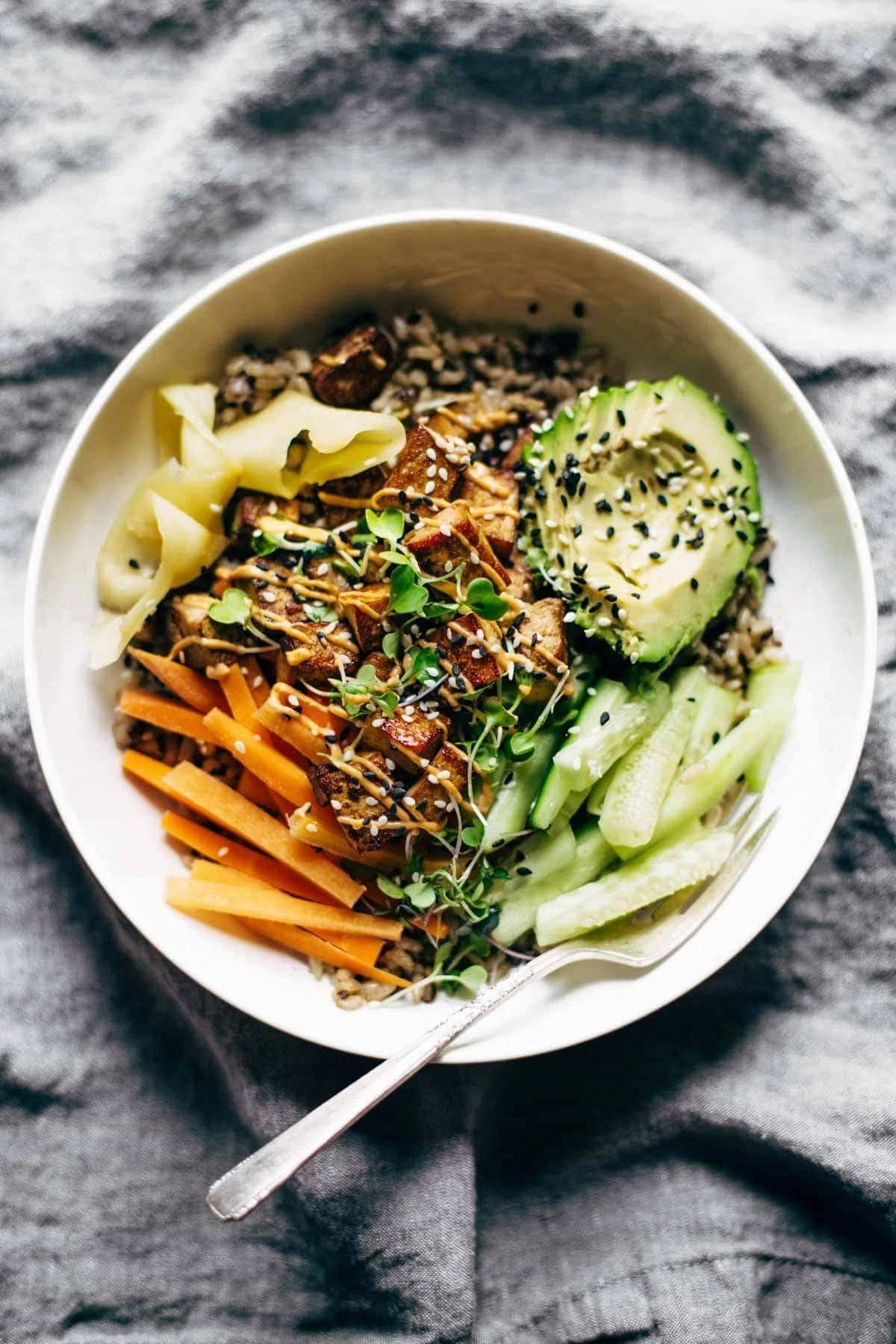
Now it’s time to assemble. Start with a generous bed of seasoned rice in each bowl. Arrange the tofu cubes, edamame, carrot ribbons, cucumber slices, and avocado quarters in sections, like a colorful mosaic. Drizzle the entire bowl with the sriracha mayo, letting it cascade over the ingredients like a glossy waterfall.
Watch Out: If you add the avocado too early, it will brown and lose its buttery texture; keep it fresh until the final garnish.Finish each bowl with a light drizzle of toasted sesame oil, a sprinkle of sesame seeds, and a few strips of nori. Add a pinch of sliced green onions and a small mound of pickled ginger on the side for that bright, acidic pop that cuts through the richness.
Give the bowl a final gentle toss right before eating so that the sauce clings to every component. The rice should feel coated, the tofu glossy, and the veggies still crisp. That moment of mixing is pure magic—watch the colors swirl together like a painter’s palette.
Serve immediately, or if you’re prepping ahead, keep the sauce separate and combine just before you sit down. This preserves the crunch of the cucumber and avocado while still delivering that punchy, creamy heat.
That’s it — you did it. But hold on, I’ve got a few more tricks that’ll take this to another level. Stay with me here — this is worth it.
Insider Tricks for Flawless Results
The Temperature Rule Nobody Follows
Never cook sushi rice over a high flame; the grains will burst and become uneven. Keep the heat low and steady, letting the rice steam gently. I once tried a “fast‑cook” method and ended up with a mushy mess that clumped together like wet play‑dough. The low‑heat approach yields rice that stays separate, each grain distinct, ready to soak up the vinegar seasoning without turning gummy.
Why Your Nose Knows Best
When searing tofu, trust the scent. A faint nutty aroma signals that the crust has formed, while a burnt odor warns you to lower the heat. I once let the tofu sit too long and ended up with a bitter, charred flavor that overpowered the entire bowl. Keep a close nose on the pan, and you’ll know exactly when to flip.
The 5‑Minute Rest That Changes Everything
After seasoning the rice, let it rest for five minutes uncovered. This brief pause allows the vinegar to fully absorb, preventing the rice from becoming overly wet. I used to skip this step, and the bowl turned soggy. The rest period is a tiny investment that pays off with a firmer, more cohesive texture.
The Secret Sauce Swirl
When mixing the sriracha mayo, start with the mayo and slowly whisk in the sriracha. This prevents the sauce from separating and ensures a smooth, glossy finish. A friend once dumped the sriracha straight in, and the sauce split into oily and watery layers—definitely not the look you want on a polished bowl.
The Final Drizzle Technique
Instead of pouring the sesame oil directly, use a small spoon to drizzle it in a thin stream over the assembled bowl. This creates a delicate sheen and distributes the flavor evenly without drowning the ingredients. The result is a subtle, lingering nuttiness that elevates every bite.
Creative Twists and Variations
This recipe is a playground. Here are some of my favorite ways to switch things up:
Spicy Mango Madness
Swap the cucumber for diced ripe mango and add a splash of lime juice to the sriracha mayo. The sweet‑tart mango balances the heat, creating a tropical punch that’s perfect for summer evenings.
Umami Mushroom Medley
Replace tofu with a blend of shiitake and oyster mushrooms sautéed in soy sauce and a touch of miso paste. The mushrooms bring a deep, earthy umami that pairs beautifully with the sesame oil.
Crunchy Peanut Crunch
Add a handful of toasted peanuts and a drizzle of peanut‑sriracha sauce for a Thai‑inspired twist. The nutty crunch adds another layer of texture, and the peanut flavor softens the heat just enough to make it addictive.
Rainbow Veggie Blast
Incorporate pickled red cabbage, shredded purple kale, and sliced radish for a color‑packed bowl that looks like a work of art. The tangy pickled cabbage adds a zing that cuts through the richness, making each bite exciting.
Protein Power Boost
Add a handful of roasted chickpeas or a scoop of edamame hummus for extra protein. This variation makes the bowl more filling without compromising the light, fresh feel.
Storing and Bringing It Back to Life
Fridge Storage
Store the rice, tofu, and veggies in separate airtight containers for up to 3 days. Keep the sriracha mayo in a small jar with a tight lid. When you’re ready to eat, assemble the bowl fresh to preserve crunch.
Freezer Friendly
The tofu cubes and seasoned rice freeze well for up to 2 months. Portion them into freezer‑safe bags, label, and defrost in the refrigerator overnight. Avoid freezing avocado; instead, add it fresh at serving time.
Best Reheating Method
When reheating the rice, sprinkle a tiny splash of water over it and microwave for 60‑90 seconds, covered with a damp paper towel. This creates steam that revives the fluffy texture without drying it out. For tofu, a quick pan‑sear will restore its crisp edge.