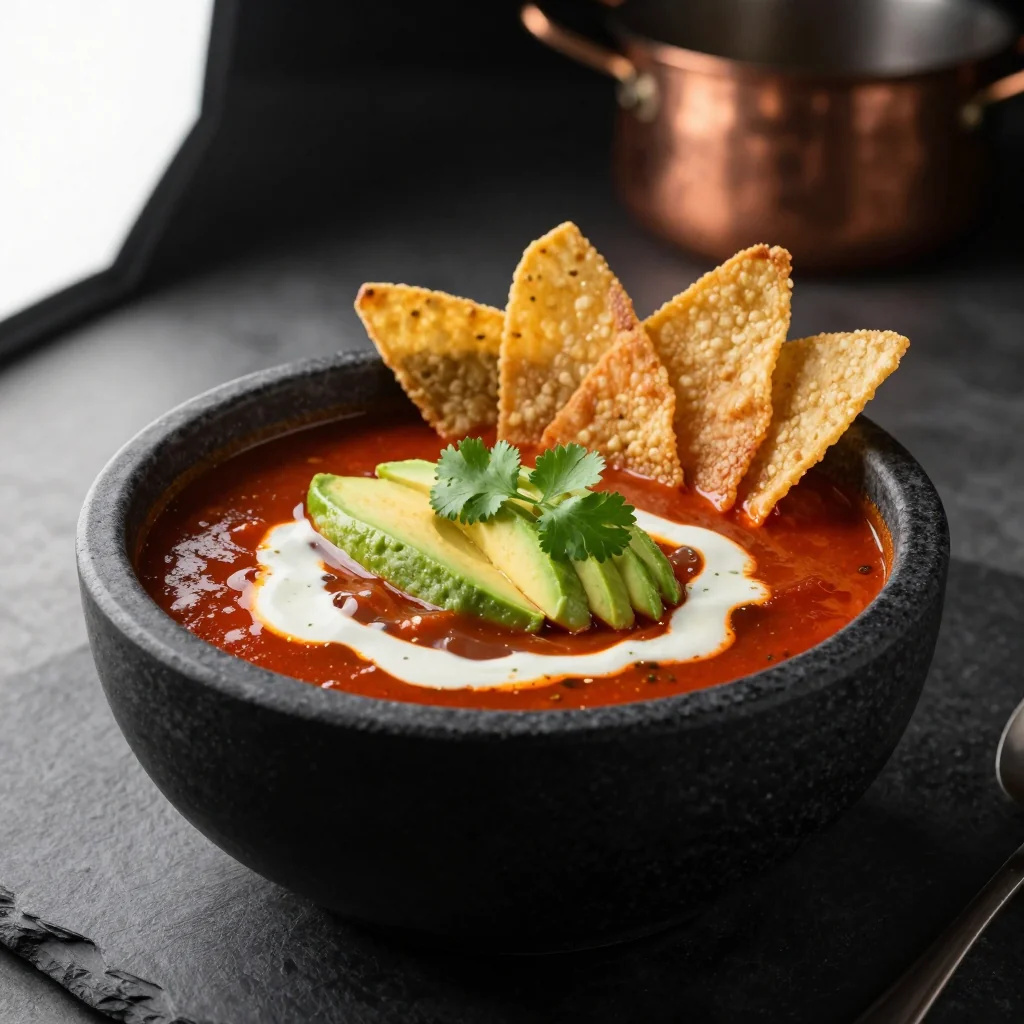
I was halfway through a midnight taco night, the kitchen a chaotic mess of salsa and cheese, when my phone buzzed with an unexpected craving: a steaming bowl of spicy beef noodle soup. I stared at the screen, eyes wide, because that was the moment I realized the world needed a better version of this dish. The idea was simple—take the comforting familiarity of a noodle soup and amplify it with bold, layered flavors that dance on the tongue. I set my timer, grabbed the ingredients, and started a culinary experiment that would become the ultimate recipe for spicy beef noodle soup.
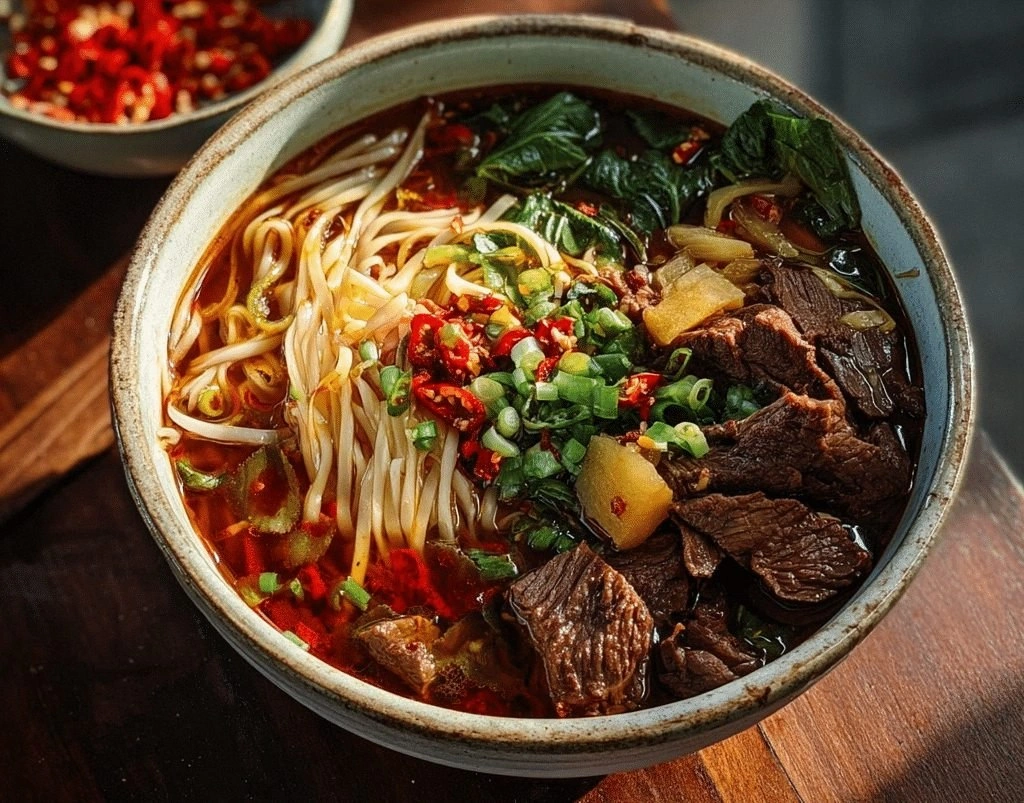
The first thing that struck me was the aroma—rich, smoky, and peppery—like a campfire in a glass bowl. The sizzling beef released a caramelized fragrance that made my mouth water even before the first spoonful hit my palate. The sound of garlic and ginger hitting hot oil was a satisfying hiss, a cue that the base was forming. The visual of the broth turning a deep amber, the noodles glistening like silk, and the bright green bok choy popping against the dark liquid made the dish look almost too good to eat. The texture, on the other hand, was a harmonious blend of tender beef, crisp vegetables, and al dente noodles, all wrapped in a silky broth that clung to every bite.
What makes this version stand out is the meticulous layering of flavors and the use of ingredients that elevate the dish from ordinary to extraordinary. I dared to add a splash of lime juice to cut through the richness, and I tossed in fresh cilantro and scallions right at the end for a burst of freshness that keeps the soup from feeling heavy. I also introduced a subtle sweetness with a teaspoon of sugar, which balances the heat from the chili paste and the saltiness of soy sauce. The result is a bowl that feels both comforting and adventurous, a dish that will make you question why you ever settled for store‑bought noodle soup. I dare you to taste this and not go back for seconds, because once you have experienced the layers, the first bowl is never enough. This is hands down the best version you'll ever make at home.
If you've ever struggled with a bland broth or overcooked noodles, you're not alone—and I've got the fix. Picture yourself pulling this out of the pot, the kitchen smelling incredible, the steam curling like a fragrant cloud. The secret? It all starts with the right heat, the right timing, and the right balance of salt, heat, and acidity. Let me walk you through every single step—by the end, you'll wonder how you ever made it any other way.
What Makes This Version Stand Out
- Bold Flavor: The combination of soy sauce, fish sauce, and chili paste creates a umami-packed broth that’s both savory and spicy. Each ingredient is measured to ensure the flavors are balanced, not overwhelmed.
- Freshness: Adding lime wedges and cilantro at the end preserves their bright, zesty qualities. This prevents the dish from becoming dull and keeps the palate refreshed.
- Texture: The beef is seared to lock in juices, while the noodles are cooked al dente and rinsed to avoid stickiness. The result is a satisfying bite in every spoonful.
- Quick Prep: With a prep time of just 15 minutes, you can whip up this comforting bowl in a flash, making it ideal for weeknight dinners.
- Versatility: The recipe is easily adaptable—swap in tofu for a vegetarian version or add mushrooms for extra depth. It’s a playground for culinary creativity.
- Make‑ahead Potential: The soup can be stored in the fridge for up to two days and reheated without losing flavor, making it a perfect batch‑cooking option.
- Heat Control: The recipe’s use of chili paste and optional hot sauce allows you to dial up or dial down the heat to suit your taste.
Inside the Ingredient List
The Flavor Base
The heart of the soup is its savory broth, which starts with a robust beef stock that carries the richness of the meat. Adding a splash of fish sauce deepens the umami profile, while soy sauce brings a balanced saltiness that doesn’t overpower. The chili paste injects heat and a subtle fruity note that lingers on the tongue. A teaspoon of sugar is optional but recommended; it rounds out the acidity from the lime and the bitterness from the chili. If you prefer a more aromatic base, a pinch of star anise or a bay leaf can add a subtle fragrance that elevates the entire dish.
The Texture Crew
The beef is the star of the show, sliced thin to allow for quick searing and maximum flavor absorption. Fresh carrots add a sweet crunch that contrasts beautifully with the tender noodles. Bok choy offers a mild, slightly sweet taste and a satisfying snap when it’s just cooked enough to wilt. Egg noodles provide the comforting chew that makes this soup a hug in a bowl. Rinsing the cooked noodles with a little oil prevents them from sticking together, keeping each strand distinct.
The Unexpected Star
Lime wedges are the unsung hero that cuts through the richness and brightens the entire dish. When squeezed into the broth, the lime juice adds a citrusy brightness that lifts the flavors. Fresh cilantro and scallions are added at the very end, preserving their bright, herbal notes. Toasted sesame seeds sprinkle a nutty crunch that adds texture and a subtle depth. Optional peanuts bring an earthy, creamy component that pairs well with the heat.
The Final Flourish
A splash of sesame oil at the beginning of the cooking process infuses the broth with a nutty aroma that grounds the dish. The addition of optional chili flakes or a dash of hot sauce can push the heat level to your preference, making the soup a customizable experience. The final garnish of lime zest, toasted sesame seeds, and a drizzle of lime juice gives the soup a vibrant, almost celebratory appearance. Every component, from the beef to the broth to the fresh herbs, works in harmony to create a bowl that feels both comforting and exciting. This final flourish turns an ordinary noodle soup into a memorable meal that will keep you coming back for more.
Everything’s prepped? Good. Let’s get into the real action and start cooking.
The Method — Step by Step
- In a large pot, heat sesame oil over medium‑high heat until shimmering. Add the minced garlic and grated ginger, letting them sizzle for about 30 seconds until fragrant. The aroma should instantly lift your spirits, a prelude to the flavors to come. Keep a close eye on the mixture; you want a golden hue, not a burnt one. This is the moment of truth where the base starts to form.
- Add the sliced beef to the pot, searing it in batches if necessary to avoid overcrowding. Stir until the beef is browned on all sides, which locks in moisture and creates a caramelized crust. The sizzling sound is a cue that the beef is ready. Flip the pieces occasionally to ensure even browning. The beef should look glossy and slightly charred, indicating peak flavor.
- Pour in the beef broth, water, soy sauce, fish sauce, and chili paste. Stir until the chili paste dissolves completely, ensuring a uniform heat throughout the broth. Bring the mixture to a gentle boil, then reduce to a simmer. The broth should bubble slowly, releasing steam that carries the aroma into the kitchen. This step is where the flavors begin to meld.
- Add the carrot slices and let the mixture simmer for 5 minutes. The carrots should soften just enough to maintain a slight crunch, adding a sweet contrast to the savory broth. Stir occasionally to prevent sticking. The broth’s color should deepen slightly, signaling that the flavors are developing. This step ensures the vegetables stay bright and fresh.
- Toss in the bok choy, mushrooms, and bean sprouts. Simmer for another 3 minutes until the greens wilt and the mushrooms release their umami. The soup should look glossy and inviting, with the vegetables adding both color and texture. If you’re adding mushrooms, a quick sauté beforehand will intensify their flavor. This step is where the broth really starts to feel alive.
- While the broth simmers, cook the egg noodles in a separate pot according to package instructions. Drain and rinse with cold water to stop the cooking process. Toss the noodles with a splash of sesame oil to keep them from sticking. The noodles should be firm yet tender, offering a satisfying chew. This preparation ensures the noodles remain distinct when added to the soup.
- Stir in the cooked noodles, lime wedges, and a splash of lime juice. If the soup feels too thick, add a little reserved noodle water to reach your desired consistency. The lime adds a bright, citrusy note that lifts the entire dish. Taste and adjust seasoning with black pepper, sugar, and salt to taste. The broth should now be a harmonious blend of savory, spicy, and tangy flavors.
- Serve hot, garnished with cilantro, scallions, toasted sesame seeds, and optional peanuts. Offer extra lime wedges on the side for those who like an extra burst of citrus. The finished bowl should steam hot, with aromas dancing around the kitchen. Each spoonful delivers a layered experience of heat, umami, and brightness. This is the moment you’ll savor the culmination of your culinary effort.
That's it—you did it! But hold on, I've got a few more tricks that'll take this to another level. These insider tips will help you avoid common pitfalls and elevate the soup to a new echelon of flavor.
Insider Tricks for Flawless Results
The Temperature Rule Nobody Follows
Many cooks think a higher simmer is better, but a gentle low heat actually allows the flavors to meld without evaporating too quickly. Keep the broth at a steady, low simmer once all the ingredients are added. This slow cooking method ensures the beef stays tender and the broth stays rich. If you’re using a gas stove, adjust the flame to maintain a subtle, rolling boil. The result is a soup that tastes like it simmered for hours, but only took 30 minutes.
Why Your Nose Knows Best
Your olfactory senses are the first indicator of when the broth is ready. A faint, nutty scent from the sesame oil and a sharp, citrusy note from the lime tell you the soup is balanced. If you notice a lingering raw garlic smell, let it cook a bit longer. The aroma should be inviting, not overpowering. Trust your nose; it’s the best judge of flavor.
The 5‑Minute Rest That Changes Everything
After cooking, let the soup rest for 5 minutes before serving. This brief pause allows the flavors to settle and the noodles to absorb the broth fully. The rest also gives the beef a chance to re‑hydrate slightly, making it more tender. When you reheat the soup, a short rest again helps prevent the broth from becoming too thick. This simple step is often overlooked but makes a noticeable difference.
Balancing the Heat
Heat can be a fickle friend. Start with a moderate amount of chili paste, then taste before adding more. Remember that the heat will intensify slightly as the soup simmers. If you’re cooking for kids or heat‑averse diners, keep the chili paste to a minimum and add hot sauce at the end. This approach gives you control over the final spiciness.
Freshness Over Time
Use fresh ginger and garlic to maximize aroma and flavor. Fresh ingredients provide a brighter, cleaner taste compared to pre‑minced or powdered versions. When storing the soup, keep it in an airtight container to preserve freshness. Reheat gently on low heat, adding a splash of water if needed.
Creative Twists and Variations
This recipe is a playground. Here are some of my favorite ways to switch things up:
Thai Twist
Swap the chili paste for Thai red curry paste and add a splash of coconut milk. The result is a creamy, fragrant soup with a mellow heat. Garnish with fresh basil and lime zest for an extra layer of aroma. This version pairs wonderfully with jasmine rice for a complete meal.
Asian Fusion
Use ramen noodles instead of egg noodles and add a beaten egg as a swirl through the broth. The egg creates silky ribbons that enhance the mouthfeel. Finish with a sprinkle of crispy fried onions for crunch. This fusion dish feels like a comforting bowl of ramen with a spicy kick.
Veggie‑Rich
Omit the beef entirely and replace it with tofu or tempeh. Increase the vegetable portion—add sliced bell peppers, zucchini, and spinach. Use vegetable broth for a lighter base. This variation is perfect for a vegetarian or vegan crowd.
Breakfast Boost
Add a poached or fried egg on top of each bowl. The runny yolk adds richness and a velvety texture. Sprinkle with chives for a fresh finish. This breakfast version turns the soup into a hearty, protein‑packed start to your day.
Low‑Carb
Replace the egg noodles with shirataki noodles or spiralized zucchini. Keep the broth and seasoning the same to maintain flavor. This low‑carb version is ideal for keto or low‑calorie diets without sacrificing taste.
Spicy Seafood
Add shrimp or scallops in the last few minutes of cooking. The seafood should be just cooked through, keeping the texture tender. The broth’s existing heat will complement the briny flavor of the seafood. This twist adds a luxurious touch to the classic soup.
With these variations, you can tailor the soup to any occasion, dietary preference, or flavor craving. The key is to keep the core broth intact while letting your imagination run wild with toppings and substitutions.
Storing and Bringing It Back to Life
Fridge Storage
Cool the soup to room temperature before refrigerating. Store in an airtight container for up to two days. The broth will thicken slightly; simply reheat gently on the stove, adding a splash of water if needed. This method preserves flavor and texture without compromising safety.
Freezer Friendly
Divide the soup into portions and freeze in freezer‑safe containers. Label each with the date. When ready to eat, thaw overnight in the fridge and reheat on the stove or in a microwave. Add a pinch of fresh herbs or a squeeze of lime to refresh the dish.
Best Reheating Method
Reheat the soup on low heat, stirring frequently to prevent scorching. If the soup has thickened, add a small amount of water or broth to achieve the desired consistency. The goal is to bring the soup back to a gentle simmer without overcooking the noodles or beef. Finish with a final sprinkle of fresh herbs for a bright finish.