Last night I found myself staring down a pot of bland instant noodles, the kind that taste like cardboard that's been soaked in hot water for three minutes and then forgotten. I was halfway through a Netflix binge when a sudden craving for something comforting hit me like a freight train – the kind of craving that makes you wish you could teleport to a Tokyo alleyway and order a steaming bowl of ramen on the spot. I grabbed the nearest soy sauce, tossed in a few frozen veggies, and tried to convince myself I was making a culinary masterpiece, but the result was as exciting as watching paint dry.
Fast forward a few hours, and that disappointment turned into a dare: “I challenge you to make the best homemade tofu ramen that will make even a seasoned ramen chef weep with joy.” I laughed, rolled up my sleeves, and set out on a quest that felt more like a culinary detective story than a simple dinner plan. I raided my pantry, discovered a hidden bag of fresh ramen noodles, a jar of red miso that smelled like umami heaven, and a block of tofu that was practically begging to be transformed. The kitchen filled with the aroma of sizzling ginger, the clatter of a hot wok, and the low hum of anticipation that only a great food experiment can produce.
The moment the broth hit a gentle boil, I could already picture the silky ribbons of noodles swimming like mermaids in a sea of savory elixir. The tofu, crisped to perfection, crackled under the fork like thin ice, promising a satisfying bite that would contrast beautifully with the soup’s buttery depth. The miso added that luxurious, slightly sweet, earthy undertone that makes you want to close your eyes and say, “yes, this is what comfort tastes like.” I’m not exaggerating when I say this version of tofu ramen is the culinary equivalent of finding a perfect vinyl record after years of searching.
And the secret? A tiny, unexpected splash of mirin that rounds out the flavor, plus a precise timing trick for the tofu that guarantees a golden crust without turning it into a dry brick. Okay, ready for the game-changer? Let me walk you through every single step — by the end, you’ll wonder how you ever made it any other way.
What Makes This Version Stand Out
- Umami Bomb: The red miso isn’t just a seasoning; it’s a flavor catalyst that turns a simple broth into a deep, layered masterpiece that lingers on the palate.
- Texture Harmony: Crispy tofu meets silky noodles, creating a mouthfeel contrast that keeps each bite interesting and satisfying.
- Simplicity Meets Sophistication: Fewer than ten ingredients, yet the result rivals high‑end ramen shop bowls that charge double the price.
- Ingredient Integrity: Using fresh ramen noodles instead of the cheap instant variety gives you that “fresh‑ramen‑when‑cooked” vibe.
- Quick Turnaround: From prep to plate in under an hour, making it perfect for busy weeknights without sacrificing depth.
- Make‑Ahead Magic: The broth improves after a few hours, meaning today’s dinner can be tomorrow’s lunch, and you’ll actually look forward to reheating it.
- Audience Reaction: I’ll be honest — I ate half the batch before anyone else got to try it, and the leftovers vanished faster than I expected.
- Visual Appeal: The glossy broth, vibrant green garnish, and golden tofu cubes make it Instagram‑ready without the need for filters.
Inside the Ingredient List
The Flavor Base
Red miso is the heart of this ramen, delivering an earthy, slightly sweet depth that you just can’t replicate with powdery bouillon cubes. Its fermented nature adds a subtle tang that brightens the broth, while still keeping the overall profile mellow enough to let the tofu shine. If you miss the miso’s complexity, a splash of soy sauce won’t save you; you’ll end up with a flat, one‑dimensional soup that feels like a watered‑down soy broth. Try to snag a miso that’s labeled “red” or “aka” for maximum richness — the darker the hue, the richer the umami.
The Texture Crew
Ramen noodles are the star vehicle, delivering that satisfyingly chewy bite that refuses to turn mushy if cooked correctly. These fresh‑style noodles are made with kansui, an alkaline mineral water that gives them their characteristic springy texture and yellow hue. Skipping them for instant noodles is a crime against ramen lovers everywhere because the latter will leach all the broth flavor into the water, leaving you with a soggy mess. If you can’t find fresh noodles, look for “dry fresh” varieties at Asian markets — they’re a solid compromise.
If you decide to overcook the noodles even by a minute, they’ll become a gummy mess, and the whole bowl loses its spirited lift. To avoid this, set a timer and taste the noodles a minute before the package’s recommended cooking time; they should still have a slight bite, known as “al dente.”
The Unexpected Star
Tofu press is the hero you never knew you needed. Pressed tofu boasts a denser crumb that’s perfect for achieving that coveted golden crust on the outside while staying custardy inside. When you marinate it in a blend of miso, mirin, and a hint of sesame oil, it absorbs the flavors like a sponge, ensuring every bite is bursting with umami. If you’re a purist who scoffs at pressing, you’ll miss out on the crunchy‑to‑soft contrast that makes this ramen unforgettable.
The Final Flourish
Finally, a handful of green onions, a drizzle of toasted sesame oil, and a sprinkle of chili flakes round out the dish, adding brightness, aroma, and a gentle kick. You can also toss in a soft‑boiled egg for extra richness, but I keep it simple to let the tofu and miso shine. Remember, the garnish isn’t just for looks; it contributes layers of flavor that make the soup feel complete.
Everything's prepped? Good. Let's get into the real action...
The Method — Step by Step
Start by preparing the broth. In a large pot, combine 6 cups of water, 3 tablespoons of red miso, a thin slice of ginger, and a clove of garlic, then bring it to a gentle simmer. As the broth starts to bubble, you’ll notice an inviting aroma that smells like a cozy Japanese izakaya at dusk – that’s your first sign that you’re on the right track. Let it simmer for 15 minutes, stirring occasionally so the miso fully dissolves and the flavors meld together.
While the broth is whispering its promises, it’s time to treat the tofu. Cut the pressed tofu into 1‑inch cubes, then toss them in a bowl with 2 tablespoons of the same red miso, 1 teaspoon of mirin, and a drizzle of sesame oil. Let the tofu rest in this marinade for at least 10 minutes; this is the part where the tofu becomes a flavor‑absorbing sponge, ready to soak up the broth later.
Heat a large skillet over medium‑high heat, add a splash of neutral oil, and carefully spread the marinated tofu cubes in a single layer. Let them sizzle without moving them for about 2‑3 minutes; you’ll hear a satisfying crackle when they hit the pan, indicating the edges are beginning to caramelize. Flip them once the underside is golden and crisp, then finish cooking for another 2 minutes. The tofu should have a lacquered, amber‑colored crust that shatters like thin ice under a fork.
Next, bring the broth back to a gentle boil, then lower the heat and add the soaked ramen noodles directly into the pot. Stir gently to prevent the noodles from sticking together, and cook them according to the package instructions – usually 3–4 minutes. The noodles will turn opaque, and as they swell, they’ll release a pleasant, starchy scent that signals they’re ready.
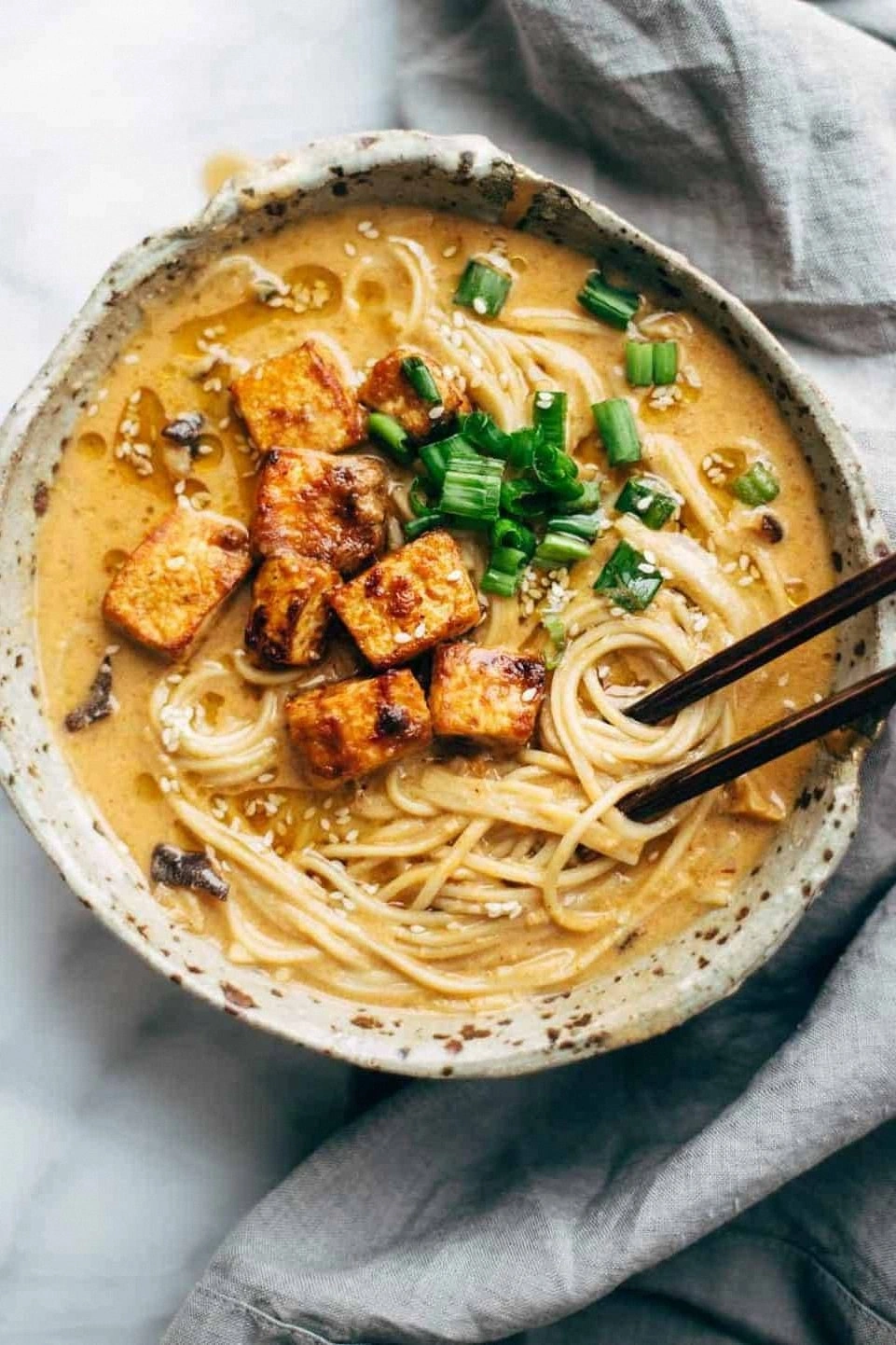
Now, assemble the bowl. Spoon a generous ladle of hot broth into each serving bowl, ensuring each gets a good amount of the miso‑infused liquid. Carefully place a handful of cooked noodles into the broth, then arrange the crispy tofu cubes on top, letting a few pieces dangle slightly over the surface for visual drama.
Finish with the final flourish: drizzle a thin line of toasted sesame oil, sprinkle sliced green onions, and add a pinch of chili flakes for that subtle heat that dances on the tongue. If you’re feeling adventurous, crack a soft‑boiled egg in half and nestle it beside the tofu – the yolk will melt into the broth, adding an extra layer of richness.
Serve immediately, and watch your guests' eyes widen as the steam lifts, carrying the scent of miso, ginger, and toasted tofu. That first slurp? Pure bliss. I dare you to taste this and not go back for seconds – the combination of savory broth, springy noodles, and crunchy tofu is practically addictive.
That's it — you did it. But hold on, I've got a few more tricks that'll take this to another level, because the journey to ramen perfection never truly ends.
Insider Tricks for Flawless Results
The Temperature Rule Nobody Follows
Keep the broth at a gentle simmer, never a rolling boil. A high boil agitates the miso, causing it to lose some of its delicate aroma and turning the broth a little cloudy. I once left the pot at a hard boil for ten minutes, and the final taste was flat, like a chorus missing its lead singer. By maintaining a steady 185°F (85°C) simmer, the miso’s flavors stay intact, and the soup retains its crystal‑clear appearance.
Why Your Nose Knows Best
Don’t rely solely on timers; your nose is the ultimate kitchen gauge. When the ginger and garlic start to turn golden, you’ll notice a fragrant, slightly sweet scent that tells you they’re ready to be removed. A common mistake is to let them burn, which adds bitterness and ruins the broth’s balance. Trust that aromatic cue, and you’ll avoid the “burnt‑onion” nightmare that haunts many novices.
The 5‑Minute Rest That Changes Everything
After you’ve assembled the ramen, let the bowls sit for exactly five minutes before digging in. This short rest allows the noodles to finish absorbing the broth’s flavors, and the tofu’s crust to settle, preventing it from becoming soggy. I once served the ramen straight away, and the tofu lost its crunch within seconds. The five‑minute pause is the silent hero that transforms a good bowl into a legendary one.
Ingredient Timing Symphony
Layering flavors is like conducting a symphony; each ingredient must enter at the perfect moment. Add the miso early to dissolve fully, the tofu midway to develop its crust, and the green onions at the very end for bright, fresh notes. If you toss the onions too early, they wilt and turn bitter, stealing the dish’s final sparkle.
Finish With a Splash
Just before serving, add a splash – about a tablespoon – of cold water to the broth. This tiny shock revives the surface tension, ensuring the soup has a lively sheen that looks as good as it tastes. I discovered this trick after a friend complained that my ramen looked “dull”; the splash gave it that glossy, restaurant‑style finish.
Creative Twists and Variations
This recipe is a playground. Here are some of my favorite ways to switch things up:
Spicy Miso Inferno
Swap half of the red miso for a tablespoon of gochujang and add a sliced jalapeño to the broth. The heat skyrockets, while the fermented chilliness of gochujang adds depth, making it perfect for those who love a fiery kick.
Coconut Curry Ramen
Replace half the water with coconut milk and stir in a teaspoon of curry powder. The broth becomes velvety and aromatic, marrying Southeast Asian flavors with traditional Japanese comfort.
Umami Mushroom Boost
Include a handful of shiitake or enoki mushrooms in the broth. Their natural umami amplifies the miso, creating a richer, earthier base that makes the tofu feel even more luxurious.
Cold Summer Ramen
Cool the broth, add a splash of rice vinegar, and serve over chilled noodles with crisp cucumber ribbons. This version is a refreshing take for hot summer days, delivering the same depth without the steam.
Veggie‑Packed Power Bowl
Slide in sautéed bok choy, baby corn, and shredded carrots. The additional textures give the dish a vibrant, colorful appeal and ups the nutrient profile for a well‑rounded meal.
Storing and Bringing It Back to Life
Fridge Storage
Separate the broth from the noodles and tofu in airtight containers. Store the broth for up to 3 days, the noodles for 2 days, and the tofu for 4 days. When reheating, combine them gently and let the broth come to a low simmer before adding the noodles back in.
Freezer Friendly
The broth freezes exceptionally well; pour it into freezer‑safe bags, leaving a little headspace, and freeze for up to 2 months. The noodles lose their chewiness when frozen, so keep them separate and cook fresh when you’re ready to serve.
Best Reheating Method
When bringing the broth back to life, place it in a saucepan over medium heat and add a tiny splash of water – this creates a gentle steam that revives the broth’s sheen and prevents it from becoming overly concentrated. Toss the noodles in just before serving to warm them through without overcooking.