I still remember the day I swore off stuffed vegetables forever. There I stood, staring at a sad, mushy bell pepper that had collapsed into a watery puddle of rice and ground turkey, wondering where it all went wrong. My dinner guests were politely picking at their plates, making those non-committal "mmm" sounds that every home cook dreads. That disaster sent me on a three-month quest to crack the code of perfectly stuffed vegetables, and let me tell you, the breakthrough came in the most unexpected form: a gorgeous, golden butternut squash that changed everything.
Picture this: it's a crisp autumn evening, and I'm wandering through the farmers market, still haunted by my stuffed-pepper failure. The butternut squashes are stacked like edible sculptures, their smooth tan skin practically glowing in the late afternoon sun. Something about their boat-shaped form whispers promises of culinary redemption. Three hours later, I'm standing in my kitchen, scooping out seeds and thinking about how these natural bowls are about to become vessels for the most incredible spinach and cheese filling you've ever tasted. The aroma of roasting squash mingles with garlic and bubbling cheese, and I know I'm onto something special.
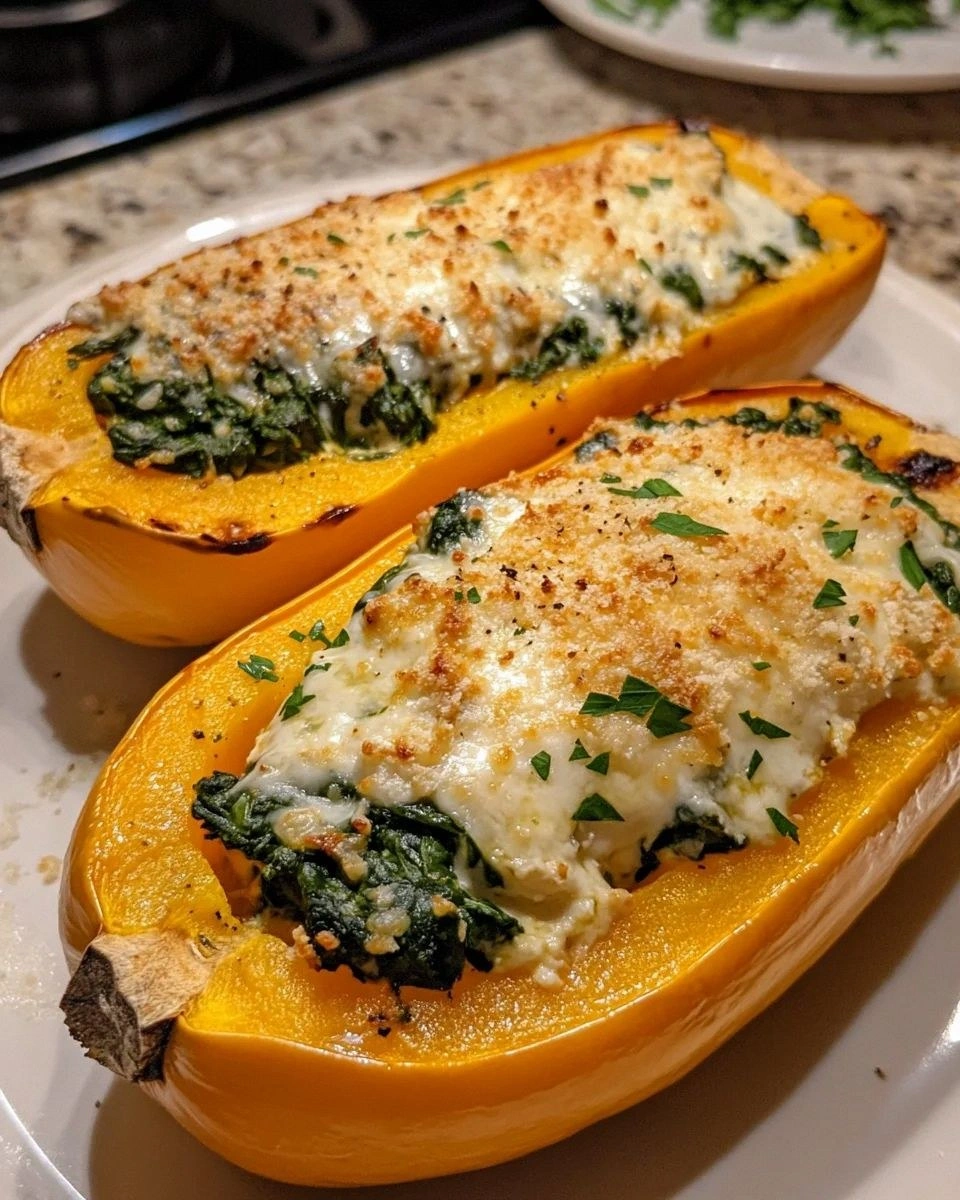
What makes this recipe my absolute obsession is how it transforms humble ingredients into something that tastes like it came from a fancy bistro. The squash becomes tender and caramelized, developing those gorgeous golden edges that shatter like thin ice under your fork. Meanwhile, the filling—oh, that filling—is a cloud of creamy ricotta, stretchy mozzarella, and nutty Parmesan, all wrapped around vibrant spinach that stays brilliantly green. Each bite delivers a perfect harmony of sweet squash, savory cheese, and earthy greens that will make you close your eyes and sigh with satisfaction.
But here's the real kicker: this dish looks like you spent hours fussing over it, when really, most of the work happens while you're sipping wine and pretending to be a sophisticated adult. The squash roasts hands-off in the oven, the filling comes together in one bowl, and the assembly takes about as much skill as spreading butter on toast. Trust me, if you've ever struggled with stuffed vegetables that turn out bland, watery, or just plain disappointing, this recipe is about to become your new best friend. Let me walk you through every single step — by the end, you'll wonder how you ever made it any other way.
What Makes This Version Stand Out
- The Texture Game-Changer: Most stuffed squash recipes turn into mushy disasters because they skip the crucial pre-roasting step. We roast the squash until it's perfectly tender but still holds its shape, then stuff it and give it a final bake that creates a crispy cheese crown on top. The contrast between the creamy interior and those caramelized edges will make you weak in the knees.
- Three-Cheese Alchemy: While other recipes might settle for one cheese, we're building layers of dairy perfection. Ricotta provides cloud-like creaminess, mozzarella brings that Instagram-worthy cheese pull, and Parmesan adds a salty, nutty depth that makes the spinach sing. It's like a carefully orchestrated symphony where every cheese plays its part perfectly.
- Spinach That Stays Vibrant: Ever notice how spinach in stuffed vegetables turns into sad, army-green mush? Our method wilts the spinach separately with garlic, locking in that bright color and fresh flavor. The result is pops of verdant green that look and taste alive, not like something that's been sitting in a cafeteria steamer.
- The Seasoning Secret: A whisper of nutmeg might sound odd, but it's the ingredient that makes people ask, "What is that amazing flavor?" It bridges the sweetness of the squash and the richness of the cheese, creating a warmth that makes this taste like comfort food elevated to art.
- Make-Ahead Magic: This recipe actually gets better if you assemble it ahead of time. The flavors meld and deepen, making it perfect for dinner parties or those Sundays when you want to prep for the week ahead. Just pop it in the oven when you're ready to eat, and you'll look like a culinary genius.
- Zero Waste Wonder: We use the whole squash—no trimming off the ends or creating weird scraps. The seeds get roasted for a crunchy garnish, and the scooped-out flesh gets mixed right into the filling. It's satisfying, sustainable, and saves you money.
Alright, let's break down exactly what goes into this masterpiece...
Inside the Ingredient List
The Flavor Base: Butternut Squash
These golden beauties are the foundation of our dish, and picking the right ones makes all the difference. Look for squashes that are about 6-8 inches long with a bulbous bottom and narrow neck—this shape gives you the perfect natural bowl for stuffing. The skin should be free from soft spots or cracks, and when you knock on it, it should sound hollow. Size matters here; too small and you won't have room for enough filling, too large and they become unwieldy to serve. Pro tip: if you can only find monster squashes, just make extra filling and bake it alongside in a separate dish for those who want more of the good stuff.
The Texture Crew: Cheese Trio
We're building a three-cheese dream team that brings different superpowers to the party. Ricotta is your creamy base—it lightens the filling and prevents it from becoming dense like a brick. Don't go for the cheapest container here; good ricotta should taste like fresh milk, not like sour cream that's been sitting in the back of your fridge. Mozzarella provides that satisfying cheese pull and creates a golden cap on top, while Parmesan sneaks in with umami depth that makes the whole thing taste more complex than it actually is. If you can't find ricotta, cottage cheese whizzed in the food processor works in a pinch, though you'll lose some of that cloud-like texture.
The Unexpected Star: Fresh Spinach
Fresh spinach is non-negotiable here—frozen spinach turns into a watery, stringy mess that'll make your filling weep like a disappointed parent. Two cups might look like a mountain when you're chopping, but it wilts down to a surprisingly small amount, creating concentrated green flavor bombs throughout the cheese. The key is to wilt it just until it collapses, no more. You want it to keep that vibrant color and fresh taste, not turn into the sad spinach you remember from childhood. Baby spinach works too, though mature spinach has a slightly earthier flavor that holds up better to the rich cheeses.
The Final Flourish: Aromatics and Seasonings
Garlic provides the aromatic backbone, but we're using it strategically—sautéed briefly to mellow its bite before it joins the party. The optional nutmeg is your secret weapon; it bridges the gap between sweet squash and savory cheese, creating a warmth that makes people ask for your recipe. Don't skip the salt and pepper—they're not just afterthoughts here. The squash needs seasoning to bring out its natural sweetness, and the cheese mixture needs enough salt to keep it from tasting flat. Fresh parsley at the end isn't just for color; its bright, slightly peppery notes cut through all that richness and make the whole dish sing.
Everything's prepped? Good. Let's get into the real action...
The Method — Step by Step
- Preheat your oven to 425°F, and don't you dare go any lower. This high heat is crucial for caramelization—that magical process where the natural sugars in the squash transform into complex, toasty flavors. While it's heating, grab your butternut squashes and channel your inner surgeon. Cut them in half lengthwise, using a sharp knife and steady pressure. Scoop out the seeds with a spoon, but don't toss them—we're going to roast those later for a crunchy garnish that'll make you look like a total pro.
- Score the flesh of each squash half in a crosshatch pattern, cutting about three-quarters of the way through but not piercing the skin. This isn't just for looks; those cuts allow heat to penetrate evenly and create more surface area for caramelization. Brush the cut surfaces with olive oil, getting into every nook and cranny. Season generously with salt and pepper—be bold here, as the squash can handle more seasoning than you think. Arrange them cut-side down on a baking sheet lined with parchment paper; this position lets the edges where the flesh meets the pan get gloriously golden.
- Slide the tray into your screaming-hot oven and set a timer for 25 minutes. This is when the magic happens: the squash flesh steams and softens while the bottom surface develops those gorgeous caramelized spots. Your kitchen will start smelling like autumn and comfort and all things good in this world. Resist the urge to flip them early; leaving them undisturbed is what creates that beautiful browning. While they roast, you can prep the filling, but stay nearby to enjoy the incredible aromas wafting from your oven.
- While the squash transforms in the oven, heat a large skillet over medium heat and add a tablespoon of olive oil. When it shimmers like liquid gold, toss in your minced garlic and let it dance for about 30 seconds. You want it fragrant but not browned—burnt garlic will turn bitter and ruin everything. Dump in your chopped spinach all at once; it'll look like way too much, but trust the process. Using tongs, turn and toss the spinach as it wilts, coating every leaf with garlicky oil. When it's just collapsed and still vibrant green, remove it from heat immediately.
- In a large bowl, combine your three cheeses like you're conducting a symphony of dairy. Add the ricotta, mozzarella, and Parmesan, then crack in some fresh black pepper and that whisper of nutmeg if you're using it. Stir gently with a spatula, folding rather than beating—you want to keep the ricotta fluffy, not turn it into wallpaper paste. The mixture should be thick but spoonable, like a really good cheesecake batter. If it seems too stiff, add a splash of milk; if too loose, a bit more Parmesan will tighten it up.
- Add your cooled spinach to the cheese mixture and fold it in with a light hand. You want distinct pieces of spinach running through, not a homogenous green blob. Taste and adjust the seasoning—remember that the cheeses are salty, so you might not need much additional salt. The filling should taste slightly over-seasoned when you sample it; once it's stuffed inside the squash, the flavors will mellow. If you've accidentally over-salted, a squeeze of lemon juice will brighten everything up and balance the seasoning.
- Check your squash—the edges should be caramelized and the flesh easily pierced with a fork, but not falling apart. If they're ready, remove them from the oven and flip them over carefully with a spatula. They'll be steaming hot, so watch your fingers. Use a fork to score the flesh again, fluffing it up and creating little nooks for the filling to nestle into. This step is crucial—mashing the flesh slightly helps the filling adhere and creates a unified bite rather than squash and filling that slide apart.
- Pile the cheese mixture into each squash half, mounding it up proudly. Don't be shy here—this isn't the time for modest portions. Sprinkle extra mozzarella on top for that gorgeous golden crust. Back into the oven they go, this time under the broiler for 3-5 minutes. Stay right there and watch them—cheese under a broiler goes from perfect to burnt in the blink of an eye. When the tops are blistered and golden with a few charred spots, they're ready. Let them rest for 5 minutes before serving; this allows the filling to set slightly and prevents molten cheese burns.
- While the squashes rest, toss those reserved seeds with a drizzle of oil, salt, and maybe some smoked paprika if you're feeling fancy. Spread them on a small tray and pop them in the still-warm oven for 8-10 minutes until they're crispy and golden. These little gems add a delightful crunch that takes the whole dish from great to unforgettable. Garnish each serving with chopped parsley and a scattering of these toasted seeds. Serve immediately while the cheese is still molten and the squash is steaming hot—this is not a dish that improves with waiting.
That's it—you did it. But hold on, I've got a few more tricks that'll take this to another level...
Insider Tricks for Flawless Results
The Temperature Rule Nobody Follows
Here's the thing that separates amateur hour from restaurant-quality results: temperature management. Your cheeses need to be at room temperature before mixing, otherwise the ricotta stays lumpy and the whole filling feels heavy and cold. Take them out of the fridge 30 minutes before you start cooking—not negotiable. When you mix cold cheese, it seizes up and creates a dense filling that tastes like something from a vending machine. Room temperature ingredients blend into a silky, cloud-like mixture that melts evenly and creates those Instagram-worthy cheese pulls. I learned this the hard way after serving what my family now calls "the concrete squash incident."
Why Your Nose Knows Best
Forget timers—your nose is the most sophisticated kitchen tool you own. When the squash is perfectly roasted, your kitchen will smell like caramel and autumn and everything cozy. If you smell something sharp or acrid, you've gone too far and the edges are burning. The same goes for the garlic: when it hits the pan, count to 30 and when it smells like you've walked into an Italian grandmother's kitchen, it's ready for the spinach. This sensory awareness separates cooks who follow recipes from those who own them. Trust me, once you start cooking with your senses instead of just your eyes on the clock, everything you make will improve dramatically.
The 5-Minute Rest That Changes Everything
I know you're tempted to dig in immediately—trust me, I've burnt my mouth more times than I care to admit on molten cheese. But here's why waiting those five minutes transforms your dish: the filling sets slightly, allowing the flavors to meld and the cheese to achieve that perfect consistency between liquid and solid. The squash finishes cooking from residual heat, becoming even more tender without falling apart. Plus, those few minutes give you time to toast the seeds, chop the parsley, and pour yourself a well-deserved glass of wine. Your patience will be rewarded with a dish that holds together beautifully instead of collapsing into a cheesy landslide on your plate.
The Salt Strategy
Most home cooks under-salt at every stage, then wonder why their food tastes bland. Season the squash before roasting, season the spinach while wilting, and taste the filling before stuffing. Each ingredient needs its own seasoning to taste like the best version of itself. The squash needs salt to bring out its natural sweetness, the spinach needs it to taste bright and green, and the cheese mixture needs it to prevent that flat, one-dimensional flavor. If you're using Diamond Crystal kosher salt, you can be generous—it's flakier and less dense than table salt. If you're using regular table salt, scale back by about half. And remember: you can always add more salt, but you can't take it away.
The Make-Ahead Master Plan
This dish is a dinner party superhero because you can prep everything up to the final broiling step, then just pop it in when guests arrive. Roast the squash, make the filling, stuff them, and refrigerate for up to 24 hours. Bring to room temperature for 30 minutes before the final heating, then broil as directed. The flavors actually improve as they meld together in the fridge. For weeknight meals, you can roast the squash on Sunday, make a double batch of filling, and have stuffed squash ready in 10 minutes all week. Just reheat in a 400°F oven for 12-15 minutes until heated through and the cheese is melty again.
Creative Twists and Variations
This recipe is a playground. Here are some of my favorite ways to switch things up:
The Mediterranean Makeover
Swap the ricotta for goat cheese, add sun-dried tomatoes and Kalamata olives to the filling, and finish with fresh oregano instead of parsley. The tangy goat cheese pairs beautifully with sweet squash, while the tomatoes add little umami bombs throughout. Use the oil from the sun-dried tomatoes to sauté the garlic for an extra layer of flavor. Top with toasted pine nuts instead of squash seeds for that Mediterranean vibe that'll transport you straight to a Greek island.
The Protein Powerhouse
Add a cup of cooked, crumbled Italian sausage to the filling for a heartier version that satisfies even the most devoted carnivores. The fennel in the sausage plays beautifully with the nutmeg, creating a sophisticated flavor profile that tastes like you planned it this way. Brown the sausage first, then use the rendered fat to sauté your garlic and wilt the spinach—no flavor left behind. This version is substantial enough to be a main dish for even the hungriest eaters.
The Vegan Victory
Replace the cheeses with a mixture of cashew cream (soaked cashews blended with lemon juice and water) and nutritional yeast for that cheesy flavor. Add some white beans for protein and creaminess, and use a sprinkle of vegan mozzarella on top. The key is adding a bit of miso paste to the cashew cream—it provides that umami depth that Parmesan usually delivers. You'll be shocked how satisfying and "cheesy" this version tastes, even without a trace of dairy.
The Spice Route Adventure
Add a teaspoon of garam masala and some fresh ginger to the spinach, swap the nutmeg for cardamom, and finish with cilantro instead of parsley. The warm spices create an Indian-inspired version that's absolutely incredible. Add some golden raisins to the filling for little sweet pops that complement the spice blend. This version pairs beautifully with a cooling raita on the side.
The Breakfast of Champions
Crack an egg into each stuffed squash half during the final broiling, creating individual baked egg boats that'll revolutionize your brunch game. The egg whites set while the yolks stay runny, creating a sauce that mingles with the cheese filling. Add some crispy bacon bits and chives, and you've got a breakfast that's worthy of a special occasion. Just reduce the filling amount slightly to make room for the egg.
The Holiday Showstopper
Add dried cranberries and toasted pecans to the filling, use sage instead of parsley, and drizzle with a balsamic reduction. The cranberries provide tart bursts that cut through the richness, while the pecans add crunch and that holiday flavor profile. This version looks and tastes like it belongs on a Thanksgiving table, but it's easy enough for a weeknight. The balsamic reduction adds a sophisticated touch that'll have everyone asking for the recipe.
Storing and Bringing It Back to Life
Fridge Storage
Cooked stuffed squash keeps beautifully in the refrigerator for up to 4 days, making it perfect for meal prep. Let them cool completely, then store in an airtight container with a piece of parchment paper between layers if you're stacking them. The key is to refrigerate them uncovered for the first hour—this prevents condensation that would make the tops soggy. After they're chilled, cover them up. When you're ready to eat, they reheat like a dream in a 375°F oven for about 15 minutes, or until heated through and the cheese is melty again. Add a tiny splash of water to the container before reheating—it steams and keeps everything moist.
Freezer Friendly
These freeze like champions for up to 3 months, making them perfect for those nights when you need comfort food but don't want to cook. Freeze them after stuffing but before the final broiling step—this gives you the best texture when reheated. Wrap each half individually in plastic wrap, then foil, and label with the date. Thaw overnight in the refrigerator, then bring to room temperature before reheating. From frozen, they'll take about 45 minutes at 375°F, covered for the first 30 minutes, then uncovered to brown the top. The texture won't be quite as perfect as fresh, but it'll still be delicious and way better than takeout.
Best Reheating Method
Microwave reheating works in a pinch, but you'll lose that gorgeous texture contrast that makes this dish special. If you must use the microwave, do it in 30-second bursts at 70% power, and finish under the broiler to re-crisp the top. For meal prep, I actually prefer to under-bake them slightly, knowing they'll get reheated later. This way, they don't overcook during the reheating process. Add a sprinkle of fresh cheese on top before the final heating to refresh the dish and make it taste like you just made it.