I was standing in my kitchen, staring at a half‑finished stir‑fry that smelled like a sad, soggy version of a take‑out box, when my roommate dared me to make something that would make the whole apartment question why they ever ordered Chinese food in the first place. I took the challenge, grabbed the only chicken I had left, and decided to dive head‑first into the world of Thai peanut sauce. The moment the peanut butter hit the hot pan, it hissed like a tiny fireworks show, and the kitchen instantly filled with a scent that was half sweet, half smoky, and entirely unforgettable. I swear, that aroma was so intoxicating it could have convinced a monk to break his vows and dance on the countertops.
Fast forward a few minutes, and I was whisking coconut milk, soy sauce, and honey into a glossy, amber‑colored pool that clung to the chicken like a silk scarf on a breezy night. The bell peppers crackled as they hit the pan, releasing a pop that sounded like tiny fireworks in a summer sky. My taste buds were already doing a happy dance, and the cilantro was waiting in the wings, ready to add that fresh, herbaceous punch at the very last second. The whole experience was a full‑on sensory overload – the sizzle, the scent, the color, the texture – everything was in perfect harmony, and I knew I had stumbled onto something extraordinary.
Most Thai‑inspired chicken recipes I've tried either drown the meat in a watery sauce or drown the sauce in a mountain of oil. This version, however, balances the richness of peanut butter with the lightness of coconut milk, creating a sauce that coats every bite like velvet, yet never feels heavy. The secret? A tiny dash of garlic powder that adds depth without overwhelming, and a precise amount of ginger that gives a zing without the heat turning the dish into a tongue‑burning nightmare. I dare you to taste this and not go back for seconds – it’s that good.
I’ll be honest — I ate half the batch before anyone else got a chance to try it, and that was the only crime I committed that night. The truth is, this is hands down the best version you’ll ever make at home, and it’s simple enough that even a kitchen novice can nail it. Picture yourself pulling this out of the pan, the whole kitchen smelling incredible, the sauce glistening like polished jade, and the first bite delivering a perfect blend of sweet, salty, nutty, and bright. Let me walk you through every single step — by the end, you’ll wonder how you ever made it any other way.
What Makes This Version Stand Out
- Flavor Explosion: The combination of creamy peanut butter and coconut milk creates a sauce that’s both rich and airy, delivering layers of flavor that unfold with each bite.
- Texture Harmony: Tender chicken pieces meet crisp bell peppers, while the sauce clings like a silk scarf, giving you a satisfying mouthfeel from start to finish.
- Simplicity: Only ten core ingredients are needed, and most of them are pantry staples, meaning you won’t need a trip to the specialty store.
- Unique Twist: A pinch of garlic powder and fresh ginger give depth without the bitterness that many peanut sauces suffer from.
- Crowd‑Pleaser: Even the pickiest eaters love it; the sauce is mildly sweet, never too spicy, and the cilantro adds a fresh finish that feels sophisticated.
- Ingredient Quality: Using real, unsweetened peanut butter (not the sugary kind) makes all the difference in flavor authenticity.
- Cooking Method: A quick sear locks in juices, while a gentle simmer melds the sauce, preventing sogginess.
- Make‑Ahead Potential: The sauce can be prepared ahead of time and stored, letting you just toss it with freshly cooked chicken for a lightning‑fast dinner.
Inside the Ingredient List
The Flavor Base
The backbone of this dish is the peanut butter, which provides a deep, nutty richness that’s impossible to replicate with any other ingredient. Using a natural, unsweetened variety ensures that the sauce stays balanced and doesn’t become cloyingly sweet. If you accidentally grab a sugary, low‑fat version, the sauce will taste like a dessert, not a dinner. As a swap, you can use almond butter for a slightly different nutty profile, but expect a thinner consistency.
Coconut milk adds a silky, tropical creaminess that tempers the intensity of the peanuts. Full‑fat coconut milk is ideal because it emulsifies beautifully, creating that glossy sheen. Light coconut milk will work, but you’ll lose some of the luxurious mouthfeel. When shopping, give the can a good shake to mix the cream and water before measuring.
The Texture Crew
Chicken thighs are my secret weapon here – they stay juicy and tender even after a quick sear. If you prefer breasts, make sure not to overcook them; they can dry out in just a minute or two. For a leaner option, use skinless chicken breast, but add an extra splash of coconut milk to keep the dish moist.
Mixed bell peppers bring crunch, color, and a subtle sweetness that offsets the savory sauce. Slice them thinly so they cook quickly yet retain a pleasant bite. If you’re out of bell peppers, try julienned carrots or snap peas for a similar crunch.
The Unexpected Star
Garlic powder may seem boring, but it distributes flavor evenly without the risk of burning raw garlic. It adds a savory depth that lets the peanuts shine. If you’re a garlic lover, feel free to add a clove of fresh minced garlic – just add it early so it mellows.
Fresh ginger, minced finely, injects a bright, slightly spicy zing that lifts the whole dish. It’s the spark that prevents the sauce from feeling flat. If ginger isn’t your thing, a pinch of ground ginger can substitute, but you’ll miss the fresh aroma.
The Final Flourish
Cilantro is the finishing herb that adds a fresh, citrusy note, brightening the rich sauce. If you’re not a cilantro fan, substitute with Thai basil or a squeeze of lime juice for a similar lift. The “to taste” portion of cooked rice or quinoa isn’t just a side – it’s the vehicle that soaks up every drop of sauce, turning each bite into a perfect harmony of flavors.
When you’re ready to serve, fluff the rice or quinoa with a fork, then spoon the chicken and sauce over it, letting the grains absorb the luscious liquid. This final step is where the magic truly happens – the grains become a buttery, peanut‑infused cloud that makes the dish unforgettable.
Everything's prepped? Good. Let's get into the real action...
The Method — Step by Step
Start by patting the chicken dry with paper towels; moisture is the enemy of a good sear. Cut the chicken into bite‑size pieces, about one‑and‑a‑half inches, and season lightly with salt and pepper. Heat a large skillet over medium‑high heat, add a tablespoon of oil, and wait until the surface shimmers – that’s your cue that the pan is hot enough. Toss the chicken in a single layer; you should hear a satisfying sizzle that signals a perfect sear. Let it cook undisturbed for 2‑3 minutes until the edges turn golden and start pulling away from the pan.
Kitchen Hack: If the chicken sticks, de‑glaze the pan with a splash of water; the steam will release the bits and keep them from burning.While the chicken sears, whisk together the peanut butter, coconut milk, soy sauce, honey, garlic powder, and minced ginger in a medium bowl. The mixture should be smooth and glossy; if you see lumps, keep whisking until they disappear. This is the moment of truth – the sauce must be perfectly emulsified, otherwise you’ll end up with a grainy mess. Taste it now; it should be slightly sweet, a touch salty, and have a gentle heat from the ginger.
Once the chicken is golden on one side, flip it over and add the sliced bell peppers to the pan. The peppers will soften quickly, releasing a sweet aroma that mingles with the nutty scent of the sauce. Stir everything together, letting the peppers get a light char – that char is what gives the dish its depth.
Watch Out: Overcrowding the pan will steam the peppers instead of sautéing them, resulting in a soggy texture.Reduce the heat to medium‑low and pour the prepared sauce over the chicken and peppers. As the sauce meets the hot pan, it will instantly thicken, coating each piece like a glossy veil. Stir gently, making sure every morsel is enveloped. Let the mixture simmer for 5‑7 minutes, allowing the flavors to meld. You’ll notice the sauce pulling away from the sides of the pan – that’s the perfect sign that it’s thick enough to cling without pooling.
Now comes the crucial step: taste and adjust. Add a splash more soy sauce if you need salt, or a drizzle of honey if you crave extra sweetness. This is where your palate becomes the final chef. If the sauce feels too thick, add a tablespoon of water or extra coconut milk; if it’s too thin, let it reduce a couple more minutes. Remember, the sauce should coat the back of a spoon and glide off slowly.
Kitchen Hack: Keep a small ladle handy; adding sauce in increments prevents over‑seasoning.Turn off the heat and fold in the fresh cilantro leaves. The residual heat will wilt the cilantro just enough to release its bright flavor without cooking away its freshness. This final flourish is the moment the dish transforms from “good” to “wow”. Let the chicken rest for a minute; this allows the juices to redistribute, ensuring every bite stays juicy.
While the chicken rests, fluff your cooked rice or quinoa. If you like a bit of extra flavor, toss the grains with a drizzle of lime juice and a pinch of salt. This subtle acidity will cut through the richness of the sauce, creating a balanced bite.
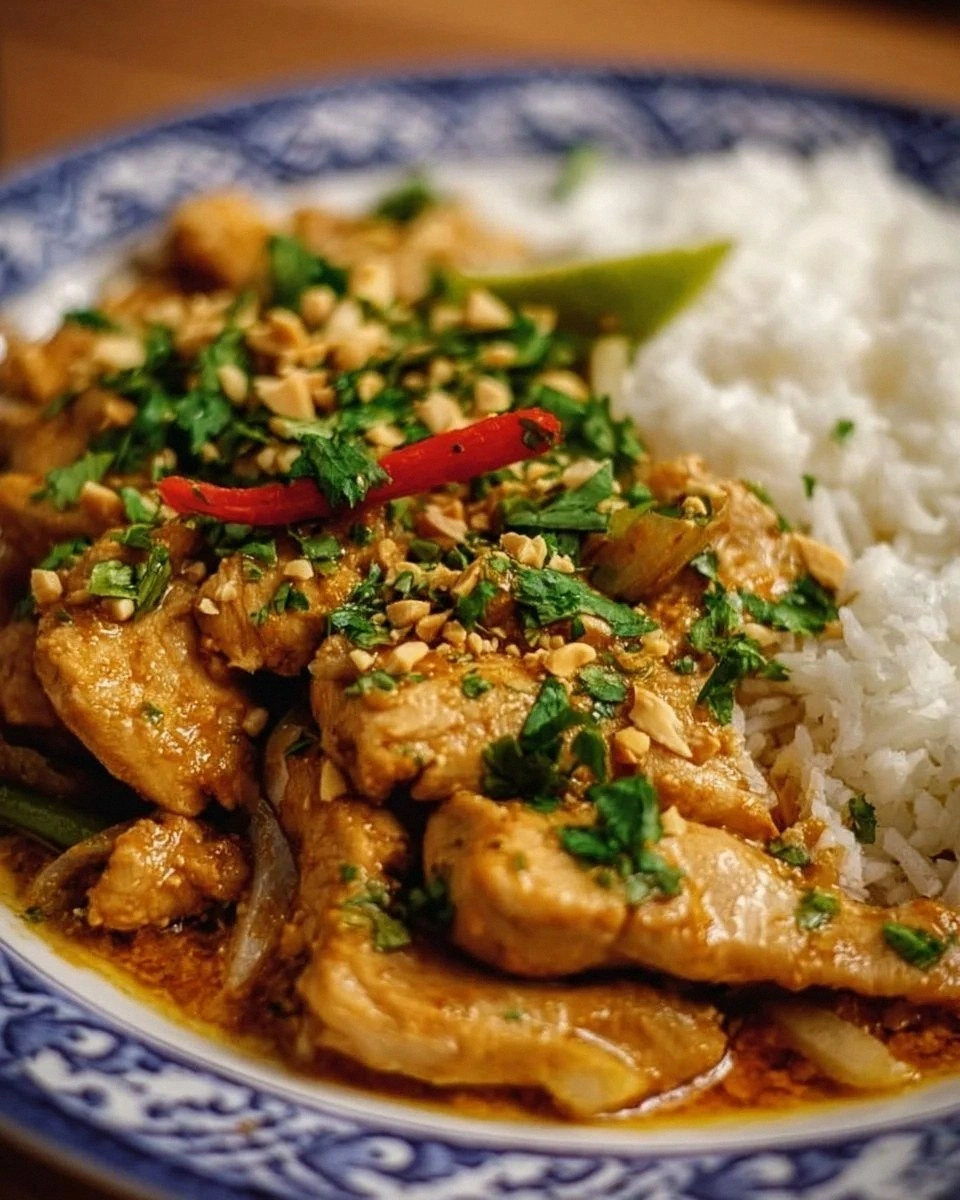
Plate the dish by spoon‑ing a generous mound of rice or quinoa onto each plate, then ladle the chicken, peppers, and sauce over the top. Garnish with an extra sprinkle of cilantro and, if you’re feeling adventurous, a handful of crushed peanuts for added crunch. The final presentation should look vibrant, with the orange‑gold sauce glistening against the green cilantro and the colorful bell peppers.
Take a moment to admire your creation. The steam rising from the plate, the aroma mingling with the faint scent of lime, and the glossy sauce – it’s all a reward for the effort you put in. Dive in, and let the flavors dance on your tongue. That first bite? Pure magic. That’s it — you did it. But hold on, I’ve got a few more tricks that’ll take this to another level...
Insider Tricks for Flawless Results
The Temperature Rule Nobody Follows
Never start the sauce on high heat; a gentle simmer is key. High heat can cause the peanut butter to seize, resulting in a gritty texture. Keep the heat low, and stir constantly. I once tried a “speed‑up” method on high, and the sauce turned grainy – a disaster that taught me the value of patience.
Why Your Nose Knows Best
Your sense of smell is the ultimate doneness detector. When the sauce starts to emit a fragrant, nutty aroma and you can smell a hint of toasted coconut, you’re close. If it still smells raw, keep simmering. Trust your nose more than the clock.
The 5‑Minute Rest That Changes Everything
After you’ve turned off the heat, let the chicken sit for exactly five minutes. This short rest allows the fibers to relax, keeping the meat juicy. Skipping this step is a common mistake – the chicken ends up dry, and the sauce can separate.
Cilantro Timing Trick
Add cilantro at the very end of cooking, right after you turn off the heat. Adding it too early wilts the leaves and dulls their flavor. The fresh burst you get from a last‑minute sprinkle is what makes the dish sing.
Peanut Butter Consistency Check
If your peanut butter is too thick, warm it gently in a microwave for 10 seconds before mixing. This makes it easier to blend with the coconut milk and prevents clumps. A friend once used refrigerated peanut butter straight from the jar, and the sauce turned into a lumpy nightmare.
Rice Rescue Technique
If your rice or quinoa looks a bit dry after the sauce is poured, sprinkle a teaspoon of water over each serving and cover with a lid for a minute. The steam will re‑hydrate the grains, making them fluffy and perfectly saucy.
Creative Twists and Variations
This recipe is a playground. Here are some of my favorite ways to switch things up:
Spicy Sriracha Kick
Stir in a tablespoon of Sriracha into the sauce for a gentle heat that doesn’t overpower the peanut flavor. Perfect for those who love a little fire without the burn.
Coconut Lime Fusion
Add the zest and juice of one lime to the sauce, and finish with toasted coconut flakes. The citrus brightens the dish and the toasted flakes add a delightful crunch.
Veggie‑Loaded Version
Swap the bell peppers for a medley of snap peas, carrots, and baby corn. This adds extra texture and makes the dish even more colorful, ideal for a family‑friendly dinner.
Nut‑Free Alternative
Use sunflower seed butter instead of peanut butter for those with nut allergies. The flavor is slightly earthier, but the creamy texture remains.
Thai Basil Infusion
Replace cilantro with a handful of fresh Thai basil leaves. The basil adds a peppery, anise‑like note that pairs beautifully with the peanut sauce.
Breakfast Remix
Serve the chicken and sauce over a bowl of quinoa and top with a fried egg. The runny yolk becomes an extra layer of silkiness, turning dinner into a brunch masterpiece.
Storing and Bringing It Back to Life
Fridge Storage
Allow the dish to cool to room temperature, then transfer to an airtight container. It will keep for up to three days. Reheat gently on the stovetop over low heat, adding a splash of water or coconut milk to restore the sauce’s silky texture.
Freezer Friendly
Separate the sauce from the chicken before freezing. Store the sauce in a freezer‑safe bag and the cooked chicken in another container. Both freeze well for up to two months. To use, thaw overnight in the fridge, then reheat the sauce and toss the chicken back in for a quick meal.
Best Reheating Method
When reheating, use a skillet rather than a microwave. Add a tiny splash of water (about a tablespoon) and stir constantly; the steam revives the sauce, and the chicken stays juicy. Microwaving often dries the chicken and makes the sauce separate.