I was standing in my kitchen on a rainy Tuesday, staring at a pan that looked like a battlefield after a failed attempt at a classic chicken stew. The onions were burnt, the chicken was dry, and my confidence was hovering somewhere between “maybe next time” and “I’m never cooking again.” Then my roommate dared me, with a mischievous grin, to make something that would make even the most skeptical meat‑lover say, “Okay, you’ve officially won the dinner wars.” I accepted the challenge, grabbed the only thing that felt right in the moment—a couple of bone‑in chicken thighs, a splash of white wine, and a handful of mushrooms—and set out to prove that a simple pantry raid could become a masterpiece.
The moment the olive oil hit the hot skillet, a sizzle erupted that sounded like applause in a silent theater. The aroma of garlic and onion rose like a warm blanket, wrapping the kitchen in a scent that made my stomach do a little jig. I could hear the faint crackle of the chicken skin as it began to brown, a promise that the texture was about to reach that perfect, crackly‑edge‑that‑shatters‑like‑thin‑ice moment. My hands were slick with oil, the heat tingling on my forearms, and the whole scene felt like a culinary version of a thriller—intense, focused, and impossibly rewarding.
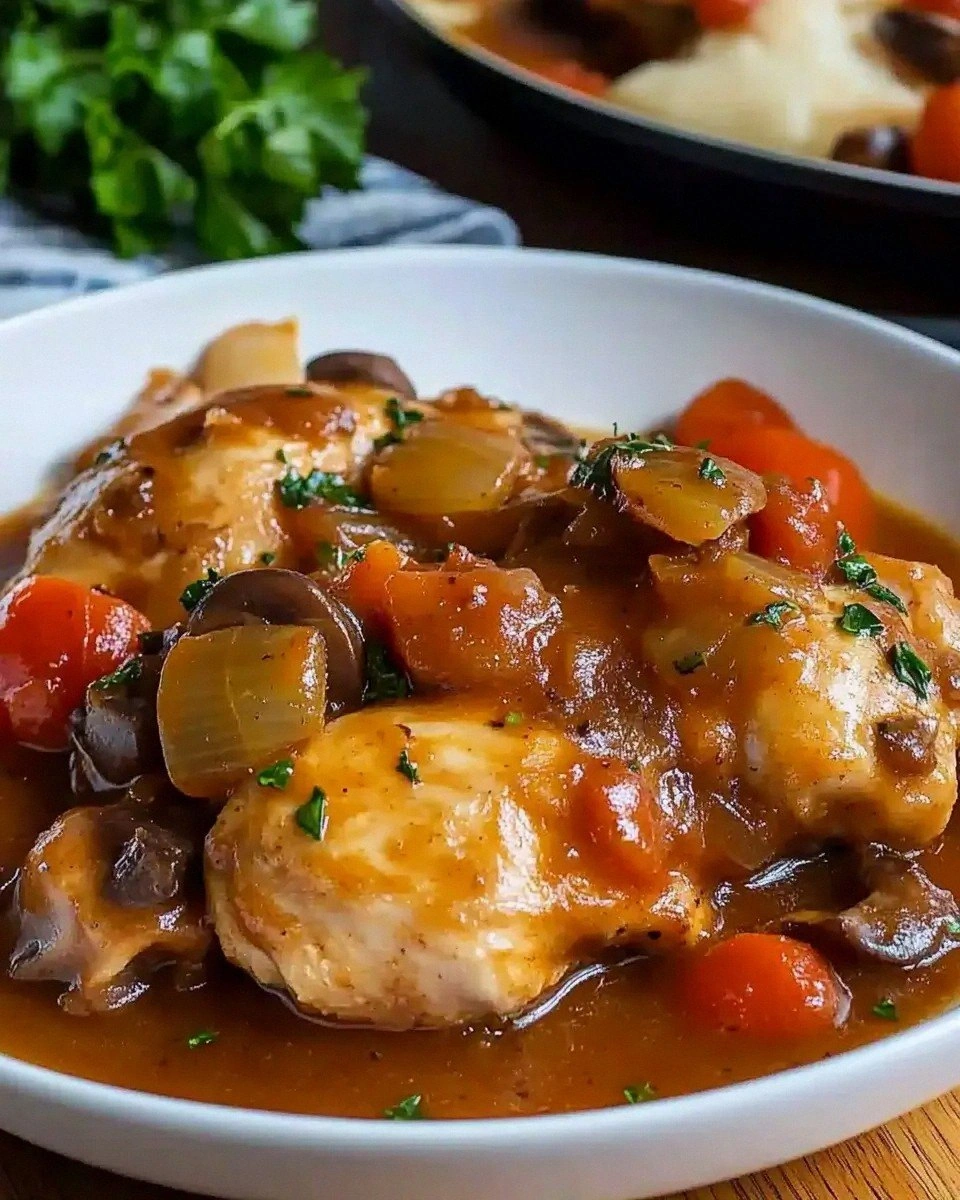
What set this version apart from every other “hunter’s chicken” I’d ever tried was the daring addition of a dry white wine reduction that turned the sauce into a glossy, velvety cloak—think of it as a tuxedo for your taste buds. Most recipes either drown the chicken in a watery broth or overload it with cream; this one respects the bird, letting the natural juices mingle with the earthiness of mushrooms and the herbal whisper of thyme. The result? A sauce that clings to each bite like a lover that never lets go, delivering layers of flavor that evolve from the first chew to the last.
And just when you think you’ve heard it all, I’ll slip in a technique that most home cooks overlook: deglazing the pan with wine before the broth joins the party. This step is the secret handshake that transforms ordinary pan‑fond into a deep, umami‑rich foundation. I dare you to taste this and not go back for seconds. Let me walk you through every single step — by the end, you’ll wonder how you ever made it any other way.
What Makes This Version Stand Out
- Flavor Explosion: The combination of wine, mushroom, and thyme creates a depth that feels like a forest after rain—earthy, fresh, and unforgettable.
- Texture Triumph: Bone‑in chicken stays juicy inside while the skin crisps to a golden‑brown crunch that shatters like thin ice under a fork.
- Simplicity Meets Sophistication: Only eleven ingredients, yet the dish tastes like it spent hours in a five‑star kitchen.
- Unique Ingredient Play: The dry white wine isn’t just for deglazing; it adds a subtle acidity that balances the richness of the broth.
- Crowd‑Pleaser: Even the picky eaters at the table admit they’ve never tasted chicken this good; it becomes the talk of the night.
- Ingredient Quality: Using bone‑in pieces ensures flavor from the marrow, while fresh parsley adds a bright finish that lifts the whole dish.
- Cooking Method Magic: The sear‑then‑simmer technique locks in juices and creates a sauce that coats the meat like velvet.
- Make‑Ahead Friendly: This dish actually improves after a few hours in the fridge, giving the flavors time to marry.
Inside the Ingredient List
The Flavor Base
The onion and garlic are the dynamic duo that lay the foundation for every great savory dish. When you sauté them until they turn translucent and just start to caramelize, they release sugars that add a subtle sweetness, balancing the acidity of the wine later on. Skipping these would be like trying to build a house without a foundation—everything else would crumble. If you’re out of fresh onion, a half cup of finely diced shallots works just as well, offering a milder, more delicate flavor.
The Texture Crew
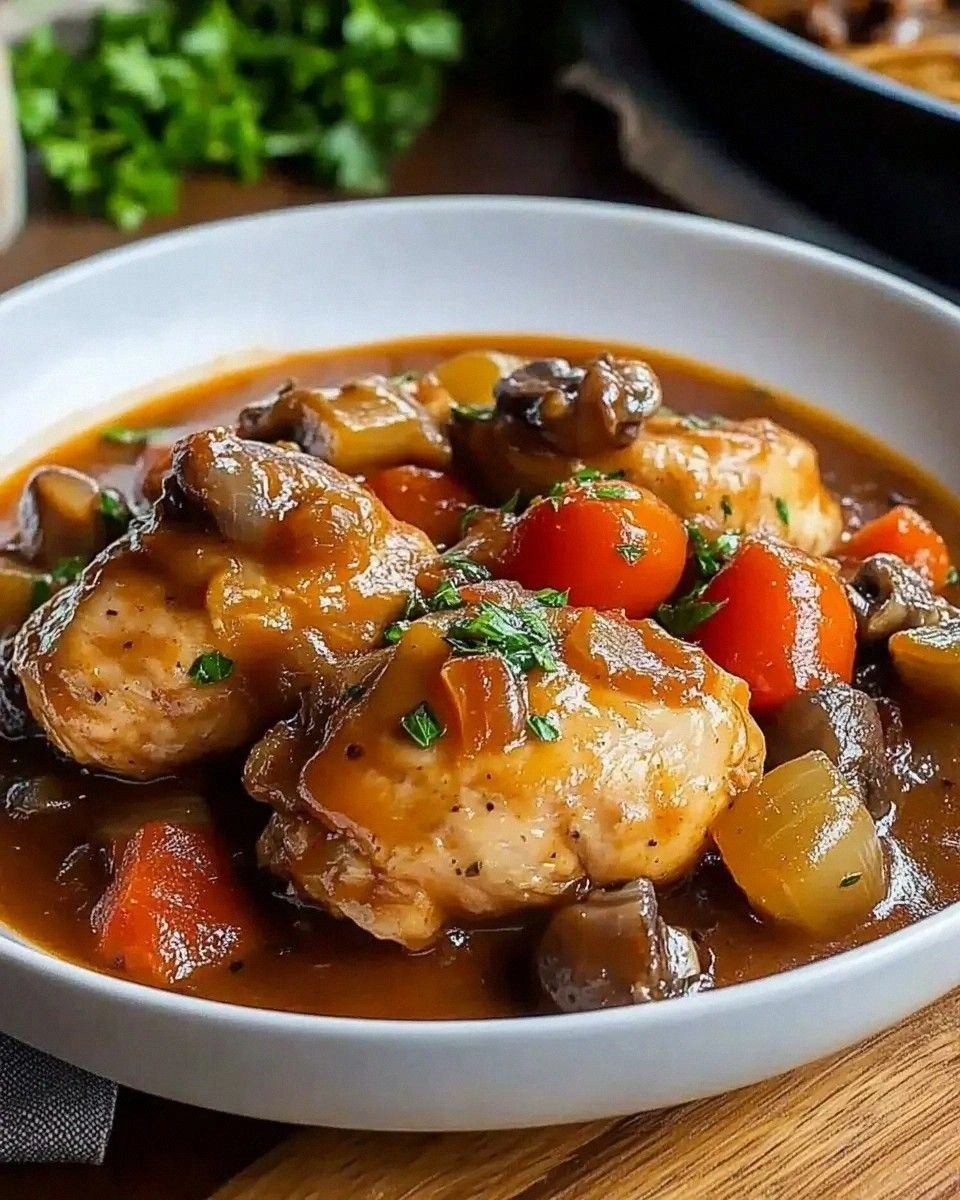
Mushrooms bring that earthy, umami punch that makes the sauce feel robust and hearty. Their ability to soak up the wine and broth means each bite is drenched in flavor, not just floating on a watery surface. If you’re not a fan of button mushrooms, try cremini or even a mix of shiitake for an even deeper taste. The bone‑in chicken itself is the star; the bones release collagen, turning the sauce into a silky, slightly gelatinous glaze that clings to every morsel.
The Unexpected Star
Dry white wine is the surprise guest that steals the show. It deglazes the pan, lifting all those caramelized bits (fond) and dissolving them into a glossy, aromatic liquid. The alcohol evaporates quickly, leaving behind a nuanced acidity that brightens the broth and prevents the dish from feeling heavy. If you don’t drink, a splash of white grape juice mixed with a teaspoon of vinegar mimics the same bright note.
The Final Flourish
Fresh parsley isn’t just a garnish; it adds a burst of herbaceous freshness that cuts through the richness at the very last moment. A tablespoon of chopped parsley tossed in just before serving lifts the entire plate, making the sauce look vibrant and inviting. Dried thyme, on the other hand, provides a subtle, woody background note that lingers on the palate. If you’re out of thyme, a pinch of rosemary works, but use less—it can dominate the flavor profile.
Everything’s prepped? Good. Let’s get into the real action…
The Method — Step by Step
Heat two tablespoons of olive oil in a large, heavy‑bottomed skillet over medium‑high heat until it shimmers. Pat the chicken pieces dry with paper towels, then season them generously with one teaspoon of salt and half a teaspoon of black pepper. Place the chicken skin‑side down; you’ll hear a sizzle that sounds like applause. Let it sear undisturbed for about 5‑6 minutes, or until the skin turns a deep golden brown and releases easily from the pan. This is the moment of truth—if the skin sticks, you’ve turned the heat down too low.
Kitchen Hack: Use a splatter guard while searing. It keeps the oil from jumping onto the counter while still allowing steam to escape, preserving that crisp skin.Flip the chicken and brown the other side for another 4 minutes. Once both sides have that caramelized crust, transfer the pieces to a plate and set aside. Don’t clean the pan; the browned bits are about to become the heart of your sauce.
Reduce the heat to medium and add the diced onion to the pan. Cook, stirring occasionally, until the onion becomes translucent and begins to turn a light amber—about 3 minutes. Toss in the minced garlic and let it perfume the oil for 30 seconds; you’ll know it’s ready when the kitchen fills with a sweet, aromatic scent that makes you pause and inhale deeply.
Add the sliced mushrooms, spreading them out so they have contact with the pan surface. Let them sit without stirring for 2 minutes, then stir. This technique, called “dry‑sauté,” allows the mushrooms to release their moisture and then re‑absorb it, concentrating their flavor. When the mushrooms have turned a deep brown and any liquid has evaporated, you’ll see the pan start to look glossy.
Now comes the game‑changer: pour in a half‑cup of dry white wine, scraping the bottom of the pan with a wooden spoon to lift every caramelized fragment. The wine will hiss and reduce quickly, and the alcohol will evaporate, leaving behind a fragrant, slightly tangy base. Let the wine reduce by half, which should take about 3‑4 minutes. This step is pure magic; the sauce will develop a silk‑like texture that coats the chicken like a second skin.
Watch Out: If you add the broth before the wine has reduced, you’ll end up with a watery sauce that never thickens. Patience here is key.Stir in one tablespoon of tomato paste, letting it caramelize for a minute. This deepens the color and adds a subtle sweetness that balances the acidity of the wine. Sprinkle the dried thyme over the mixture, then pour in one cup of chicken broth, stirring constantly to blend everything into a cohesive sauce.
Return the seared chicken pieces to the skillet, nestling them into the sauce so the skin stays exposed. Reduce the heat to low, cover the pan, and let the chicken simmer gently for 20‑25 minutes. The meat will become tender, and the sauce will thicken as the collagen from the bones melts into it. Occasionally tilt the pan and spoon a little sauce over the top; this basting keeps the skin moist while preserving its crispness.
Kitchen Hack: Finish the dish with a splash of cold butter whisked in at the very end. It gives the sauce a glossy sheen and a luxurious mouthfeel.When the chicken is cooked through (internal temperature should read 165°F/74°C), remove the skillet from the heat. Sprinkle the freshly chopped parsley over the top, giving the dish a burst of color and freshness. Let the chicken rest for five minutes before serving; this rest period allows the juices to redistribute, ensuring every bite is juicy.
Plate the chicken on a warm serving dish, spoon the luscious sauce over each piece, and watch your guests’ eyes widen. Picture yourself pulling this out of the oven, the whole kitchen smelling incredible, and hearing the collective “wow” as the first fork dives in. That’s the payoff for all the careful steps you just followed. That sizzle when it hits the pan? Absolute perfection.
That's it — you did it. But hold on, I've got a few more tricks that'll take this to another level…
Insider Tricks for Flawless Results
The Temperature Rule Nobody Follows
Most home cooks crank the heat up to “cook faster,” but the secret to tender chicken lies in a gentle, steady simmer. Keeping the broth at a low bubble ensures the meat stays juicy and the sauce reduces without scorching. I once tried a high‑heat boil and ended up with a rubbery texture—trust me, that’s a nightmare you don’t want to repeat.
Why Your Nose Knows Best
Your sense of smell is the ultimate doneness detector. When the sauce starts to smell nutty and the wine’s sharp edge softens, you know the reduction is spot on. If you’re unsure, lift the lid and inhale; if the aroma feels “finished,” the sauce is ready to coat the chicken beautifully.
The 5‑Minute Rest That Changes Everything
After the chicken finishes cooking, resist the urge to dive in immediately. Letting it rest for five minutes lets the fibers relax and the juices settle. A friend tried skipping this step once—let’s just say the meat was dry enough to make a sandcastle.
Butter Finish for Silkiness
A final swirl of cold butter at the end of cooking transforms the sauce from good to restaurant‑grade. The butter emulsifies, giving the sauce a glossy, velvety finish that clings to the chicken like a lover that never lets go. This is the top tip that saved my dinner parties.
Seasoning Layers, Not One Shot
Season at multiple stages—first on the raw chicken, then again after the sauce is built. This layered approach builds depth and ensures every bite is perfectly seasoned. If you only salt at the end, the flavor will sit on the surface and never fully penetrate the meat.
Pan Choice Matters
A heavy‑bottomed skillet or Dutch oven distributes heat evenly, preventing hot spots that can scorch delicate sauce components. I tried a thin aluminum pan once; the sauce stuck and burned, ruining the whole dish. Invest in a good pan, and your sauce will thank you.
Creative Twists and Variations
This recipe is a playground. Here are some of my favorite ways to switch things up:
Mushroom Medley Madness
Swap the plain button mushrooms for a mix of cremini, shiitake, and oyster mushrooms. The varied textures and deeper umami will make the sauce feel even richer, and the visual contrast adds a rustic charm that impresses guests.
Herbaceous Heaven
Add a tablespoon of fresh rosemary and a pinch of sage alongside the thyme. These herbs bring a piney, slightly citrusy note that pairs beautifully with the wine, turning the dish into a forest‑inspired feast.
Spicy Hunter’s Chicken
Stir in a half‑teaspoon of smoked paprika and a dash of cayenne pepper when you add the tomato paste. The gentle heat elevates the flavor without overwhelming the delicate balance, perfect for those who like a little kick.
Creamy Finish
After the chicken has simmered, lower the heat and whisk in a quarter‑cup of heavy cream. The sauce becomes luxuriously creamy, reminiscent of a French velouté, and the dish takes on a comforting, indulgent vibe.
Citrus Bright
Add the zest of one lemon and a splash of lemon juice right before serving. The citrus lifts the richness, giving the dish a bright, summery finish that’s perfect for warm evenings.
Storing and Bringing It Back to Life
Fridge Storage
Let the chicken cool to room temperature, then transfer it and the sauce to an airtight container. It will keep fresh for up to three days. When reheating, add a tablespoon of water or broth and gently warm over low heat, stirring occasionally to revive the sauce’s silkiness.
Freezer Friendly
Portion the cooked chicken and sauce into freezer‑safe bags or containers. Freeze for up to three months. To reheat, thaw overnight in the fridge, then warm gently on the stove, adding a splash of water to prevent drying out.
Best Reheating Method
The stovetop is king. Place the chicken and sauce in a skillet over medium‑low heat, cover, and stir every few minutes. The added moisture (a tiny splash of water) creates steam that brings the sauce back to its original glossy glory without overcooking the meat.