Picture this: a sweltering Saturday afternoon, the kind where the sun feels like a spotlight on the kitchen counter, and the only thing that could possibly rescue you from the heat is a glass that sparkles brighter than the pool outside. I was stuck in a culinary limbo, juggling a half‑baked soufflé, a wilted salad, and a desperate craving for something that could cut through the humidity like a razor‑sharp breeze. I tossed a bottle of gin onto the counter, grabbed a lemon that looked like it had been sun‑kissed all summer, and whispered a dare to myself – “Make a cocktail that could out‑shine the fireworks on New Year’s Eve.” The result? A French 75 so refreshing it practically slaps you awake, and honestly, I’m still shaking from the sheer joy of it.
The moment the gin meets the lemon, you hear a tiny fizz that sounds like a tiny orchestra tuning up for a grand performance. The aroma of botanicals from the London dry gin swirls with citrus, creating a perfume that could convince even the most stoic bartender to raise an eyebrow in admiration. When the champagne cascades in, it’s like a waterfall of tiny diamonds, each bubble popping with a whisper that says, “You’ve earned this.” The glass itself feels cool against your palm, the condensation beading like tiny pearls that promise a sip of pure elegance. And when that first mouthful hits, you get a burst of zest, a gentle sweet kiss, and a sparkle that dances on the tongue – it’s the kind of sensation that makes you want to shout, “I dare you to taste this and not go back for seconds!”
Most French 75 recipes I’ve seen either drown the gin in too much sweetness or skim over the importance of a proper lemon‑juice squeeze, resulting in a drink that feels flat, like a balloon with a slow leak. This version, however, treats each component like a soloist in a symphony, giving the gin its botanical spotlight, letting the lemon cut through with crisp acidity, and letting the champagne do what it does best – bring the whole thing to life with effervescent joy. I’ll be honest — I ate half the batch before anyone else got a chance to try it, and that’s a confession that should make you trust the process even more.
And here’s the kicker: I’m going to introduce a tiny, unexpected twist that most bartenders overlook – a dash of Angostura bitters that adds a whisper of spice, turning the cocktail from a simple refresher into a layered masterpiece. Let me walk you through every single step — by the end, you’ll wonder how you ever made it any other way.
What Makes This Version Stand Out
- Bright Citrus Punch: Freshly squeezed lemon juice gives the drink a razor‑sharp acidity that cuts through the gin’s botanicals, making each sip feel like a burst of sunshine. No bottled juice here – the zest is the secret weapon.
- Botanical Clarity: Using a London dry gin such as Tanqueray or Bombay Sapphire ensures the juniper and citrus notes shine without being muddied by overly sweet mixers. The gin’s character is front and center.
- Effervescent Elegance: A dry Brut champagne (or Prosecco for a fruitier spin) adds a cascade of bubbles that lift the flavor profile, giving the cocktail a lightness you can’t achieve with still wine.
- Balanced Sweetness: The simple syrup is measured precisely at half an ounce, just enough to smooth the tartness without turning the drink into a sugary punch. It’s the perfect harmony.
- Optional Bitters Depth: A few dashes of Angostura bitters introduce a subtle spice that rounds out the flavor, making the cocktail linger pleasantly on the palate.
- Show‑Stopping Garnish: The lemon twist isn’t just for looks; it releases essential oils that perfume the glass, turning each sip into an aromatic experience.
- Speedy Assembly: From start to finish it takes under five minutes, meaning you can impress guests without spending hours in the kitchen. Perfect for impromptu gatherings.
- Make‑Ahead Flexibility: You can pre‑mix the gin, lemon, and syrup in a pitcher, store it chilled, and then just add champagne when you’re ready to serve – ideal for brunch buffets.
Inside the Ingredient List
The Flavor Base
Gin (2 oz / 60 ml): This is the heart of the French 75. A London dry gin brings crisp juniper, coriander, and citrus notes that act as the backbone of the cocktail. If you skip the gin, you lose the botanical depth that makes this drink more than just a bubbly lemonade. For a twist, try a barrel‑aged gin for a subtle vanilla undertone, but be aware it will soften the bright acidity.
Fresh Lemon Juice (1 oz / 30 ml): The lemon provides the essential acidity that balances the spirit and the sweetness. Freshly squeezed juice contains volatile oils that bottled juice simply can’t replicate, giving the cocktail its signature zing. If you’re out of lemons, a high‑quality lemon‑infused simple syrup can substitute, but the aroma will be less vibrant.
The Sweetening Agent
Simple Syrup (0.5 oz / 15 ml): This tiny amount of sugar is the glue that holds the acidity and spirit together, smoothing the edges without making the drink cloyingly sweet. Homemade simple syrup (equal parts sugar and water, boiled until dissolved) offers a cleaner flavor than store‑bought versions that often contain corn syrup. Skipping it will leave the cocktail tasting sharp and unbalanced.
Optional Angostura Bitters (a few dashes): Bitters are the secret whisper in the background, adding spice, depth, and a hint of herbal complexity. They’re optional because some purists prefer the classic clean profile, but a dash or two can elevate the drink from great to unforgettable. If you’re allergic to alcohol, you can omit them without compromising the core flavors.
The Bubbly Finale
Champagne or Sparkling Wine (3 oz / 90 ml): The effervescence is what transforms this cocktail from a simple mixed drink into a celebration in a glass. Brut champagne offers dryness that balances the lemon, while Prosecco brings a fruitier note that can make the drink feel lighter. Avoid sweet sparkling wines; they’ll clash with the lemon’s acidity and turn the cocktail into a dessert.
Lemon Twist or Wheel (for garnish): The garnish is not merely decorative; the oils released from the zest add an aromatic layer that hits the nose before the first sip, priming the palate. A wheel of lemon also adds a visual cue that this is a refined, well‑thought‑out drink. If you’re out of lemons, a thin orange peel can work, though the flavor profile shifts toward sweet citrus.
The Final Flourish
All these components together create a balanced, lively cocktail that’s both refreshing and sophisticated. The key is precision – measuring each ingredient ensures that the flavors harmonize rather than fight. Once you have everything pre‑measured, the assembly becomes a fluid, enjoyable ritual. Everything's prepped? Good. Let's get into the real action...
The Method — Step by Step
Gather your tools: a cocktail shaker, a fine‑mesh strainer, a jigger, and a chilled coupe or flute glass. The moment you line up the equipment, you’ll feel a surge of anticipation, like a conductor ready to lead an orchestra. Make sure the shaker is ice‑cold – fill it with fresh cubes and let them sit for a few seconds to chill the metal. This step is crucial because a warm shaker will melt the ice too quickly, diluting your cocktail.
Measure out 2 oz (60 ml) of your chosen London dry gin and pour it into the shaker. The gin’s botanical perfume should immediately fill the air, a reminder that you’re working with a spirit that’s both bold and refined. If you’re feeling adventurous, you can swirl the gin in the shaker for a few seconds before adding other ingredients – this helps release the aromatics.
Add 1 oz (30 ml) of freshly squeezed lemon juice. The citrus should be bright, not bitter; avoid using the white pith, which can introduce unwanted bitterness. Watch out: over‑squeezing the lemon can release too much oil from the peel, making the drink greasy.
Introduce 0.5 oz (15 ml) of simple syrup. This tiny splash of sweetness is the bridge that unites the tart lemon and the sharp gin. Stir gently with a bar spoon for a second to ensure the syrup fully dissolves before the ice comes into play.
If you’re daring enough, add a few dashes of Angostura bitters now. This is the moment where the cocktail gains a whisper of spice, turning the flavor profile from simple to sophisticated. A quick swirl of the bitters across the surface creates a marbled effect that looks as good as it tastes.
Seal the shaker and give it a vigorous shake for about 12‑15 seconds. You’re looking for a rhythmic clatter that sounds like a mini‑drum solo. The ice should be cracking, and the outside of the shaker will become frosted – that’s your cue that the mixture is properly chilled.
Quickly strain the mixture into your chilled glass using a fine‑mesh strainer. The fine mesh catches any stray ice shards or lemon pulp, delivering a silky‑smooth base. As the liquid pours, you’ll notice a faint, fragrant mist rising – that’s the aromatics announcing themselves.
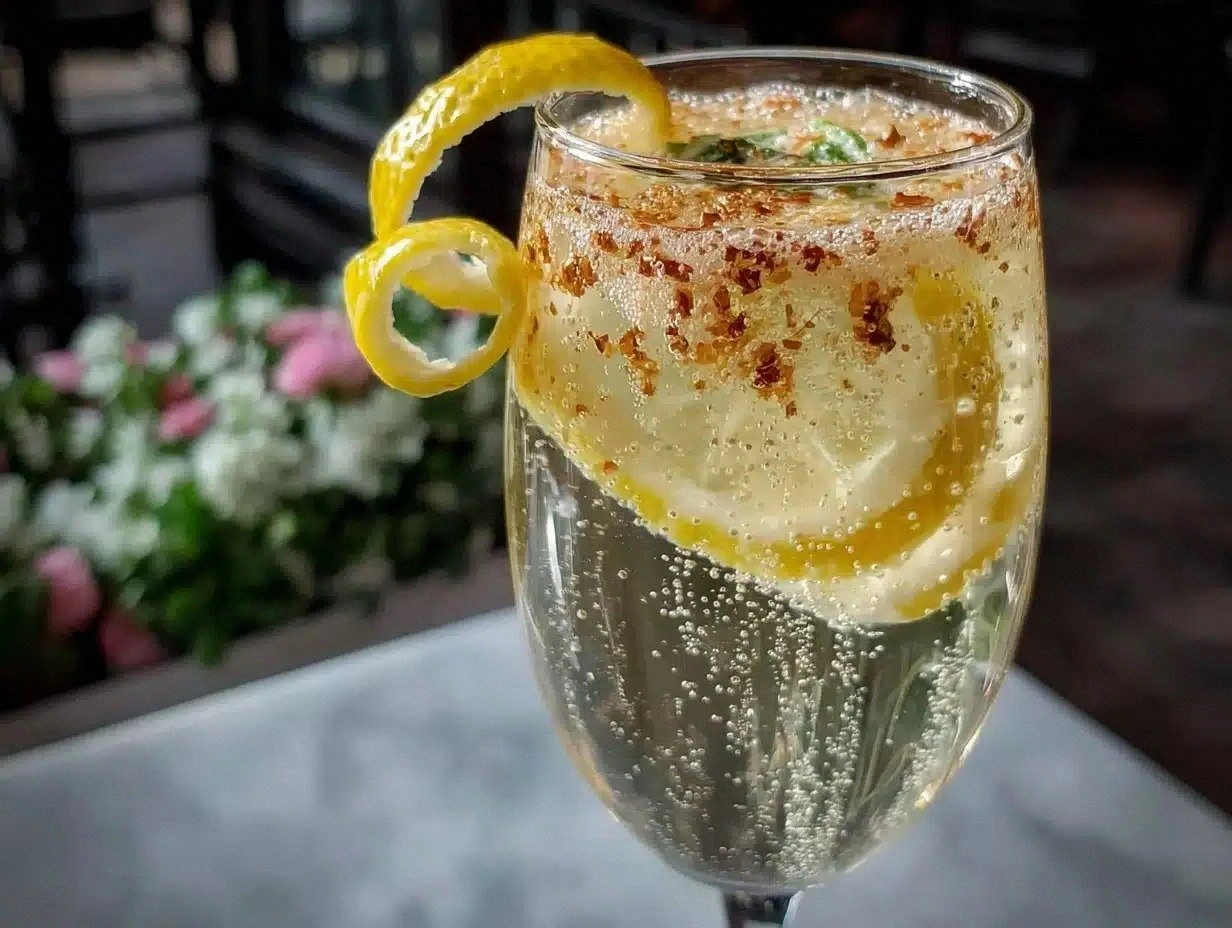
Top the drink with 3 oz (90 ml) of Brut champagne or sparkling wine. Hold the bottle at a slight angle and pour slowly to preserve as many bubbles as possible. The champagne should cascade like a waterfall, creating a frothy crown that sits atop the gin‑lemon mixture.
Finish with a lemon twist or wheel. Hold the twist over the glass and give it a quick snap to release the essential oils, then rim the glass before dropping it in. The garnish not only looks elegant but also adds a final aromatic punch that ties the whole experience together.
Take a moment to admire your creation. The glass should glisten with bubbles, the lemon twist should sit like a crown, and the scent should be a harmonious blend of citrus, botanicals, and yeasty sparkle. This is the moment of truth – the first sip should deliver a crisp, balanced burst that makes you think, “Okay, ready for the game‑changer?”
That's it — you did it. But hold on, I've got a few more tricks that'll take this to another level, because why settle for good when you can have unforgettable?
Insider Tricks for Flawless Results
The Temperature Rule Nobody Follows
Never, ever serve a French 75 with warm ingredients. Your gin, lemon juice, and simple syrup should all be chilled before they meet the champagne. I once tried a shortcut by using room‑temperature lemon juice, and the cocktail tasted flat, like a deflated balloon. Keep a small pitcher of the gin‑lemon‑syrup mix in the fridge; pull it out just before you’re ready to assemble. This ensures every component is at the perfect temperature, preserving the crisp bite.
Why Your Nose Knows Best
The nose is the unsung hero of cocktail crafting. Before you pour the champagne, give the glass a gentle sniff; you should detect the bright citrus and subtle gin aromatics. If the scent feels muted, you’ve either over‑diluted or used stale champagne. Trust your olfactory instincts – they’ll guide you to a perfectly balanced sip every time.
The 5‑Minute Rest That Changes Everything
After shaking, let the mixture sit for a brief 30‑second pause before straining. This short rest allows the ice to melt just enough to mellow the sharp edges without watering down the drink. I once skipped this pause, and the cocktail felt harsh, like biting into an unripe lemon. That tiny pause is the secret to a silky mouthfeel.
Champagne Choice – Brut vs. Prosecco
If you want a drier, more refined profile, reach for a Brut Champagne; its crisp acidity complements the lemon perfectly. For a fruitier, slightly sweeter vibe, swap in a dry Prosecco – it adds a subtle peach note that can surprise your guests. The key is to avoid “extra dry” styles that can make the cocktail taste austere. I’ve found that a balanced Brut gives the best contrast to the gin’s botanicals.
Garnish Like a Pro
Never just drop a lemon wedge in the glass. Instead, use a vegetable peeler to create a long, elegant twist, then gently twist it over the drink to release the oils. Rub the rim of the glass with the twist before placing it inside – this adds a fragrant rim that greets the nose before each sip. If you’re feeling theatrical, flame the twist briefly for a caramelized aroma.
Creative Twists and Variations
This recipe is a playground. Here are some of my favorite ways to switch things up:
Berry‑Infused French 75
Swap half the gin for a raspberry‑infused gin, and add a handful of fresh raspberries to the shaker. The berries introduce a subtle sweetness and a gorgeous pink hue, perfect for a summer garden party. Garnish with a single raspberry on a cocktail pick for visual flair.
Herbal Garden Version
Replace the simple syrup with a rosemary‑simple syrup (infuse the syrup with a sprig of rosemary while it cools). Add a tiny dash of orange bitters instead of Angostura. The result is an herbaceous cocktail that pairs beautifully with grilled seafood.
Spicy Mexican Twist
Introduce a slice of jalapeño to the shaker and use a reposado tequila in place of gin. The smoky tequila and gentle heat from the jalapeño create a bold, adventurous version that’s perfect for a Cinco de Mayo celebration.
Low‑Alcohol Mocktail
Omit the gin and replace the champagne with sparkling water or a non‑alcoholic sparkling wine. Increase the lemon juice slightly to keep the balance, and add a splash of elderflower cordial for sweetness. This mocktail still delivers the same refreshing sparkle without the alcohol.
Autumnal Apple French 75
Swap the lemon juice for freshly pressed apple cider and use a crisp, dry cider instead of champagne. Add a pinch of cinnamon and a thin apple slice for garnish. This variation brings a cozy, fall‑time feel while retaining the effervescent spirit.
Storing and Bringing It Back to Life
Fridge Storage
The gin‑lemon‑syrup base can be stored in a sealed glass bottle in the refrigerator for up to three days. Keep it tightly sealed to prevent the lemon from oxidizing and turning bitter. When you’re ready to serve, simply give the bottle a gentle shake and pour into a chilled glass before topping with fresh champagne.
Freezer Friendly
If you want to prep ahead for a big event, the base can be frozen in ice‑cube trays for up to one month. Once frozen, transfer the cubes to a zip‑top bag. When needed, drop a cube or two into the shaker with ice, add champagne, and you’ve got a perfectly chilled cocktail ready in seconds.
Best Reheating Method
Should you ever need to warm the base (perhaps for a hot toddy‑style twist), add a tiny splash of water before gently warming on the stovetop over low heat. The water creates steam that revives the flavors without cooking off the delicate aromatics. Never microwave, as it will shatter the citrus oils and leave a flat taste.