My first attempt at gumbo ended with me frantically Googling "how to un-burn a roux" while my smoke alarm performed a one-man-band rendition of "Flight of the Bumblebee." I stood there, wooden spoon in hand, staring at what looked like a pot of bubbling tar that had aspirations of becoming asphalt. The smell? Imagine a campfire made entirely of regret and burnt popcorn. But here's the thing — that disaster led me down a rabbit hole of late-night phone calls to Louisiana grandmothers, three different cooking classes, and enough trial-and-error to fill a bayou. Fast forward to today, and I'm about to share the version that made my Cajun neighbor cry actual tears (the good kind, not the "my house is on fire" kind). This shrimp and sausage gumbo doesn't just walk the line between comfort and celebration — it dances across it wearing jazz shoes while balancing a tray of beignets.
Picture this: it's Sunday afternoon, the kind of day where the light hits your kitchen windows just right, and you've got nowhere else to be. You start with a simple roux — just flour and oil — but something magical happens when you stir it low and slow. The color shifts from pale blonde to deep mahogany, and suddenly your kitchen smells like you've been transported to New Orleans. That nutty, almost chocolate-like aroma mingles with onions, bell peppers, and celery (the holy trinity, as they call it), creating a symphony that makes your neighbors knock on your door asking what on earth you're making. I dare you to taste this and not go back for seconds — actually, I double-dog dare you, because resistance is futile once that first spoonful hits your tongue.
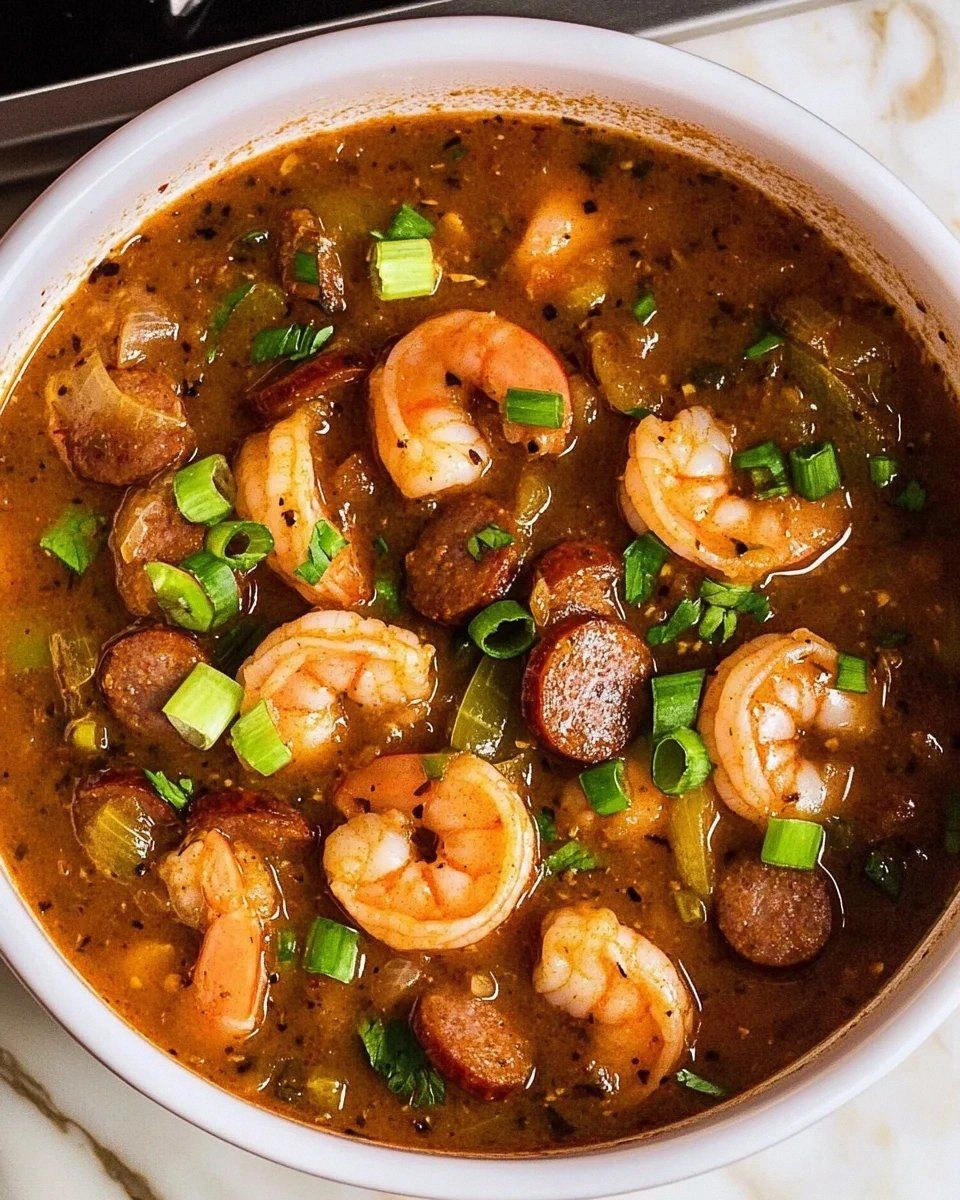
What makes this version different? I use smoked andouille sausage that I sear until the edges caramelize into little flavor bombs, releasing their paprika-laced oils into the pot. The shrimp get added at the very end, just long enough to turn pink and curl into sweet crescents that still have that ocean snap when you bite into them. Most recipes get this completely wrong — they throw the shrimp in too early and end up with rubbery seafood that tastes like you're chewing on a pencil eraser. Not here. We treat those little crustaceans like the delicate treasures they are, nestling them into the rich, dark broth just before serving so they stay tender and juicy.
The real game-changer? I finish with a splash of Worcestershire sauce and a whisper of filé powder that thickens everything just enough to coat your spoon like velvet. When you ladle this over steamed rice, the grains drink up that complex, smoky broth while still maintaining their individual personalities. Picture yourself pulling this out of the oven, the whole kitchen smelling like you've bottled up Mardi Gras and Thanksgiving dinner into one pot. Let me walk you through every single step — by the end, you'll wonder how you ever made it any other way.
What Makes This Version Stand Out
Depth of Flavor: This isn't your average watery soup pretending to be gumbo. We build layers upon layers — first the chocolate-dark roux, then the deeply caramelized vegetables, followed by homemade seafood stock that simmers for hours. Each component adds its own voice to the chorus, creating a final dish that tastes like it's been perfected over generations.
Texture Paradise: Every spoonful delivers a masterclass in contrasts — the silkiness of the broth against the snap of perfectly cooked shrimp, the creamy rice against the chewy sausage, the tender vegetables that still have just enough bite to remind you they're fresh, not mushy. It's like a textural playground where every element knows exactly when to show up and when to step back.
Weekend Simple: Despite sounding intimidating, this recipe breaks down into manageable steps that even a beginner can master. The secret? We front-load all the active work in the first 30 minutes, then let the pot do its thing while you sip a cold beer and pretend you're on a porch in Baton Rouge.
Uniquely Yours: While staying true to classic techniques, I've added subtle touches that make this version unforgettable — a dash of smoked paprika here, a splash of beer there, a final sprinkle of Crystal hot sauce that brightens everything up. Your guests will taste it and know it's something special, even if they can't quite put their finger on why.
Crowd Reaction Guaranteed: I've served this at everything from intimate dinner parties to rowdy game-day gatherings, and the response is always the same — people literally stop mid-conversation when they take their first bite. One friend actually stood up and slow-clapped. Another tried to lick his bowl. I'm not saying this will make you the most popular person in your friend group, but I'm not not saying that either.
Quality Over Everything: This recipe respects each ingredient — no shortcuts, no canned stock, no pre-cooked shrimp. Everything gets the attention it deserves, from the way we slowly toast the roux to how we season the shrimp with just salt and pepper so their natural sweetness can shine. The result tastes like you hired a professional chef, except the professional chef is you.
Make-Ahead Magic: The flavors actually improve overnight, making this perfect for entertaining. Make it Saturday, serve it Sunday, and watch your guests try to figure out how you pulled off something this complex while apparently doing nothing all day. The gumbo thickens and deepens, becoming even more luxurious after a night in the fridge.
Inside the Ingredient List
The Flavor Base
The roux is where everything begins — equal parts flour and oil cooked until it reaches the color of a Hershey's bar. This isn't just thickening; it's the soul of the gumbo, providing that deep, nutty backbone that carries every other flavor. Skip this step or rush it, and you'll end up with a sad, pale imitation that tastes like floury water. The trick is patience: medium-low heat, constant stirring, and accepting that your arm will get a workout. But when you taste the final result, you'll understand why Louisiana grandmothers have biceps that could crush walnuts.
Onions, bell peppers, and celery form the holy trinity — the Cajun version of mirepoix. Each vegetable plays its part: onions for sweetness, bell peppers for bright vegetal notes, celery for that earthy, slightly bitter balance. Dice them evenly so they cook at the same rate, and don't you dare use the food processor. Hand-cutting creates irregular edges that catch and hold the roux, creating little pockets of flavor throughout the pot. I like to dice mine while listening to jazz — something about the rhythm makes the knife work feel meditative rather than tedious.
The Protein Powerhouses
Andouille sausage isn't just any smoked sausage — it's coarser, porkier, and packed with garlic, pepper, and that distinctive paprika hit that stains your fingers orange. I source mine from a local butcher who makes it in-house, but if you can only find the supermarket stuff, look for one that's clearly labeled "andouille" and has visible chunks of fat and spice. Sear it hard in the pot first, letting those edges caramelize into flavor bombs that'll make you want to eat it straight from the pan (resist, barely).
Shrimp need to be treated like the delicate treasures they are — buy them shell-on, then peel and devein yourself. Yes, it's more work, but the shells go straight into your homemade stock, extracting every bit of ocean essence. Look for shrimp that smell like the sea, not fish, with firm bodies and bright shells. Size matters here: medium (31-35 count) work perfectly, staying tender even after their brief swim in the hot broth. Overcooked shrimp are a tragedy — rubbery, sad, and completely avoidable with proper timing.
The Liquid Gold
Homemade seafood stock sounds fancy, but it's literally just shrimp shells, vegetables, and water simmered for 45 minutes. The difference between this and store-bought is like comparing a live jazz band to a MIDI file — technically the same notes, but one makes your soul dance while the other just exists. Save your shrimp shells in a freezer bag until you have enough, then simmer them with onion peels, carrot tops, and celery leaves. The result is a liquid that tastes like concentrated ocean, adding depth that water or chicken stock could never achieve.
The Final Flourish
Filé powder, made from ground sassafras leaves, thickens and adds an earthy, almost root-beer-like note that screams authentic gumbo. Add it at the very end, off the heat, or it'll turn stringy and weird. If you can't find filé, a quick slurry of cornstarch works, but you'll miss that distinctive flavor that makes gumbo taste like gumbo. Crystal hot sauce, not Tabasco, provides the final acidic kick — it's fruitier, less aggressive, and melts into the broth rather than sitting on top like an angry little island of heat.
The Method — Step by Step
- Start with your biggest, heaviest pot — I use a 6-quart enameled Dutch oven that could probably survive a nuclear blast. Heat 1/2 cup vegetable oil over medium heat until it shimmers like a mirage, then sprinkle in 1/2 cup all-purpose flour while whisking constantly. This is the moment of truth: keep whisking as the mixture transforms from pale and pasty to the color of peanut butter, then caramel, finally reaching that deep chocolate brown that takes a solid 15-20 minutes. Your arm will ache, your patience will be tested, but when you catch that nutty aroma wafting up, you'll know you're building the foundation of something extraordinary. That sizzle when it hits the pan? Absolute perfection.
- Immediately dump in your holy trinity — 2 cups diced onion, 1 cup diced bell pepper, and 1 cup diced celery. The vegetables will hiss and steam as they hit the hot roux, cooling it down just enough to prevent burning. Stir constantly for 5 minutes until the vegetables start to soften and the onions turn translucent around the edges. They'll look like they're coated in mud, but this mud is liquid gold, carrying all that toasted flour flavor into every nook and cranny of the vegetables. Don't walk away from the stove here — this is where many a good gumbo has gone to die a burnt, bitter death.
- Add 4 cloves of minced garlic and cook for 30 seconds — just long enough to release that pungent aroma but not so long that it browns and turns bitter. Garlic is a diva that demands precise timing, going from fragrant to acrid faster than you can say "jambalaya." Push everything to the edges of the pot, creating a little well in the center where you can see the bottom. This technique prevents the garlic from direct heat while still letting it perfume the entire mixture.
- Now for the fun part: add 1 pound of sliced andouille sausage in a single layer, letting it sear undisturbed for 3 minutes. We want those gorgeous caramelized edges that add smoky depth to every bite. Flip each piece individually — yes, it's tedious, but this isn't fast food, this is love in a pot. The sausage will release its paprika-laced oils, staining the vegetables a gorgeous sunset orange that promises flavor explosions ahead.
- Pour in 6 cups of your homemade seafood stock, scraping the bottom of the pot to release all those beautiful browned bits (fond, if you want to get fancy). Add 2 bay leaves, 1 teaspoon dried thyme, 1 teaspoon paprika, and 1/2 teaspoon cayenne pepper. Bring everything to a boil, then reduce to a lazy simmer — the kind where bubbles barely break the surface like they're too relaxed to make a fuss. Cover partially and let it bubble away for 30 minutes, during which your kitchen will start smelling like you've hired a professional chef.
- Season with salt and black pepper — but go easy on the salt since the sausage will contribute its own saltiness as it simps. This is where tasting becomes crucial: dip your spoon in and adjust. The broth should taste like concentrated comfort, with layers of smoky, spicy, and savory notes playing together like a well-rehearsed jazz ensemble. If it tastes flat, add a splash more Worcestershire. Too thick? A bit more stock. This is your moment to play conductor with the symphony of flavors.
- In a separate pan, melt 2 tablespoons butter over medium-high heat. Season 1 pound of peeled and deveined shrimp with salt and pepper, then sear them just until they turn pink and start to curl — about 1 minute per side. They should still be slightly undercooked in the center since they'll finish cooking in the hot broth. This extra step might seem fussy, but it creates a caramelized exterior that adds another dimension to the final dish. Set them aside on a plate where they'll wait patiently for their grand finale entrance.
- Stir in 1 teaspoon of filé powder off the heat, watching as it thickens the broth slightly and adds that earthy, root-beer-like note. Add the seared shrimp and let them finish cooking in the residual heat for 2-3 minutes — just until they curl into perfect crescents and turn opaque throughout. Overcooked shrimp are a tragedy that no amount of hot sauce can fix, so err on the side of slightly under rather than over. The residual heat will finish the job while you grab your serving bowls.
- Serve over steamed white rice, garnished with sliced green onions and a few dashes of Crystal hot sauce. The rice should be fluffy and slightly separate, creating little islands that soak up the rich broth while maintaining their integrity. Watch as the dark, complex sauce pools around the white grains, creating a yin-yang of color and texture that's almost too beautiful to eat. Almost. The first bite should make you close your eyes involuntarily — that's when you know you've achieved gumbo nirvana.
That's it — you did it. But hold on, I've got a few more tricks that'll take this to another level...
Insider Tricks for Flawless Results
The Temperature Rule Nobody Follows
Here's what separates good gumbo from legendary gumbo: temperature control during the roux phase. Most people crank the heat too high, thinking faster is better, but that just leads to burnt flour and bitter disappointment. Keep your burner between medium and medium-low, where the oil shimmers but doesn't smoke. The roux should bubble gently, like it's having a relaxed conversation rather than shouting. If it starts to smell like burnt popcorn instead of toasted nuts, you've gone too far — there's no saving it, so start over rather than trying to salvage burnt flour. I learned this the hard way after serving gumbo that tasted like liquid charcoal to my book club.
Why Your Nose Knows Best
Your nose is the most underutilized tool in your kitchen arsenal, especially when making gumbo. When the roux reaches that perfect chocolate color, it releases an aroma that's nutty, slightly sweet, and deeply comforting — like walking into a bakery that's also somehow a campfire. If you smell anything acrid or sharp, pull it off the heat immediately. Similarly, when you add the vegetables, they should smell like they're being sautéed in butter, not boiled in water. That aroma tells you the roux is still active and developing flavor, not just sitting there like a sad, floury puddle. Trust your nose; it's been evolving for millions of years to detect exactly these kinds of delicious transformations.
The 5-Minute Rest That Changes Everything
After you add the filé powder and shrimp, resist the urge to serve immediately. Let the pot rest off the heat for 5 minutes — this isn't laziness, it's strategy. During this brief pause, the flavors meld and marry, the shrimp finish cooking gently in the residual heat, and the broth thickens to that perfect coating consistency. It's like letting a fine wine breathe, except instead of wine, you've got liquid gold that makes grown adults weep with joy. A friend tried skipping this step once — let's just say it didn't end well, and she still texts me every time she makes gumbo to confirm she should wait the full five minutes.
The Rice Ratio Revelation
Most people drown their gumbo in rice, turning it into a sad, starchy soup. The correct ratio is 1/3 cup cooked rice to 1 cup gumbo — enough to soak up the sauce while letting the complex broth shine. The rice should be a supporting actor, not the star of the show. Fluff it with a fork before serving, and mound it slightly off-center in the bowl so the gumbo can pool around it like a delicious, edible moat. When you get the ratio right, each spoonful delivers the perfect balance of rich broth, tender seafood, and fluffy rice that still maintains its individual grains rather than dissolving into mush.
Creative Twists and Variations
This recipe is a playground. Here are some of my favorite ways to switch things up:
The Seafood Extravaganza
Turn this into a coastal celebration by adding lump crab meat, oysters, and chunks of firm white fish like cod or halibut. Add the crab and fish with the sausage so they have time to infuse their flavors, but wait until the very end to add the oysters — they only need 2-3 minutes to plump up and turn opaque. The result tastes like you've captured the entire ocean in a pot, with each seafood contributing its unique personality to the party. Serve this version with crusty French bread for sopping up every last drop of that incredible broth.
The Smokehouse Special
Double down on the smoky elements by using both andouille and smoked chicken thighs. Replace half the seafood stock with smoked chicken stock, and add a teaspoon of liquid smoke to really drive home that campfire flavor. This variation tastes like it was cooked over an open flame in the bayou, with layers of smoke that wrap around your tongue like a warm blanket. It's perfect for those days when you want comfort food that also feels a little wild and untamed.
The Green Gumbo
For a completely different direction, skip the tomatoes and make a green gumbo packed with kale, collard greens, and mustard greens. The roux stays blonde instead of dark, and you add the greens during the last 15 minutes so they stay vibrant and slightly crisp. This version tastes fresh and almost healthy, like springtime in a bowl, while still maintaining that satisfying, warming quality that makes gumbo so beloved. It's what you make when you want to feel virtuous but still indulge in something deeply comforting.
The Spicy Cajun Kick
Turn up the heat by adding a whole jalapeño (seeds and all) to the holy trinity, plus an extra 1/2 teaspoon of cayenne and a tablespoon of your favorite Cajun seasoning. This version doesn't just warm you up — it sets your mouth on fire in the most delightful way, making your lips tingle and your forehead break into a happy sweat. Serve with extra hot sauce on the side for those brave souls who think they can handle even more heat. I'll be honest — I ate half the batch before anyone else got to try it, and I have zero regrets.
The Vegetarian Victory
Skip the meat and seafood, but keep all the flavor by using smoked mushrooms (portobellos work beautifully) and vegetable stock. Add a tablespoon of smoked paprika and liquid smoke to mimic that traditional flavor, and bulk it up with chickpeas and chunks of roasted sweet potato. Even dedicated carnivores go back for seconds of this version, proving that you don't need meat to create something deeply satisfying and complex. The key is building those same layers of flavor through the roux and vegetables.
The Breakfast Gumbo
Serve your gumbo over cheesy grits instead of rice, and top each bowl with a perfectly poached egg. When you break the yolk, it creates a rich, golden sauce that mingles with the dark broth in the most incredible way. This variation turns dinner into breakfast, or breakfast into dinner, depending on when you decide to serve it. It's what you make when you want to feel like you're breaking some kind of culinary rule while actually creating something genius.
Storing and Bringing It Back to Life
Fridge Storage
Gumbo keeps beautifully in the refrigerator for up to 4 days, during which time the flavors continue to meld and deepen into something even more spectacular. Store it in an airtight container, but keep the rice separate — mixing them together creates a starchy mess that nobody wants to deal with. When reheating, add a splash of water or stock to thin it out, since the broth will thicken considerably as it chills. Heat gently over medium-low, stirring occasionally, until it's steaming hot throughout but not boiling violently. Your future self will thank you when you can come home to a gourmet meal that just needs a quick warm-up.
Freezer Friendly
This gumbo freezes like a dream for up to 3 months, making it perfect for meal prep or those nights when you need comfort food but don't want to cook. Freeze it in portion-sized containers, leaving about an inch of space at the top since liquids expand when frozen. Thaw overnight in the refrigerator, then reheat slowly on the stovetop. The texture might be slightly different after freezing — the shrimp can get a bit firmer — but the flavor remains incredible. Pro tip: freeze the rice separately in freezer bags, and you'll have a complete meal ready whenever the craving strikes.
Best Reheating Method
The microwave works in a pinch, but stove-top reheating preserves the texture and prevents hot spots that can overcook the shrimp. Add a tiny splash of water before reheating — it steams back to perfection, restoring that silky consistency without becoming watery. Heat over medium-low, stirring frequently, until it's just steaming and the shrimp are heated through. Resist the urge to crank the heat — patience prevents rubbery seafood and maintains that luxurious broth consistency. If you've frozen individual portions, you can reheat them straight from frozen in a covered pot with a splash of water, stirring occasionally until everything is hot and bubbly.